Pay Attention to the Tactile Universe
Expressive forms draped in bold color. Shadows against a textured backdrop. Fanciful and extravagant, otherworldly, a bit tribal, sometimes ominous, and always in motion, these striking vignettes grabbed my attention and brought the scrolling to stop. Mimi Haddon’s creations urge you to pause, look, and really see.
The use of “creations” is intentional.
I first came to know Mimi’s photography many years ago, through her colorful portraits that harked back to the glamour of mid-century vintage fashion. Indeed, last year, Chronicle Chroma published Palace Costume: Inside Hollywood’s Best Kept Fashion Secret, a coffee-table tome full of sumptuous photography from the “labyrinth of vintage clothing”.
But to box Mimi’s work into that one category is not really seeing it.
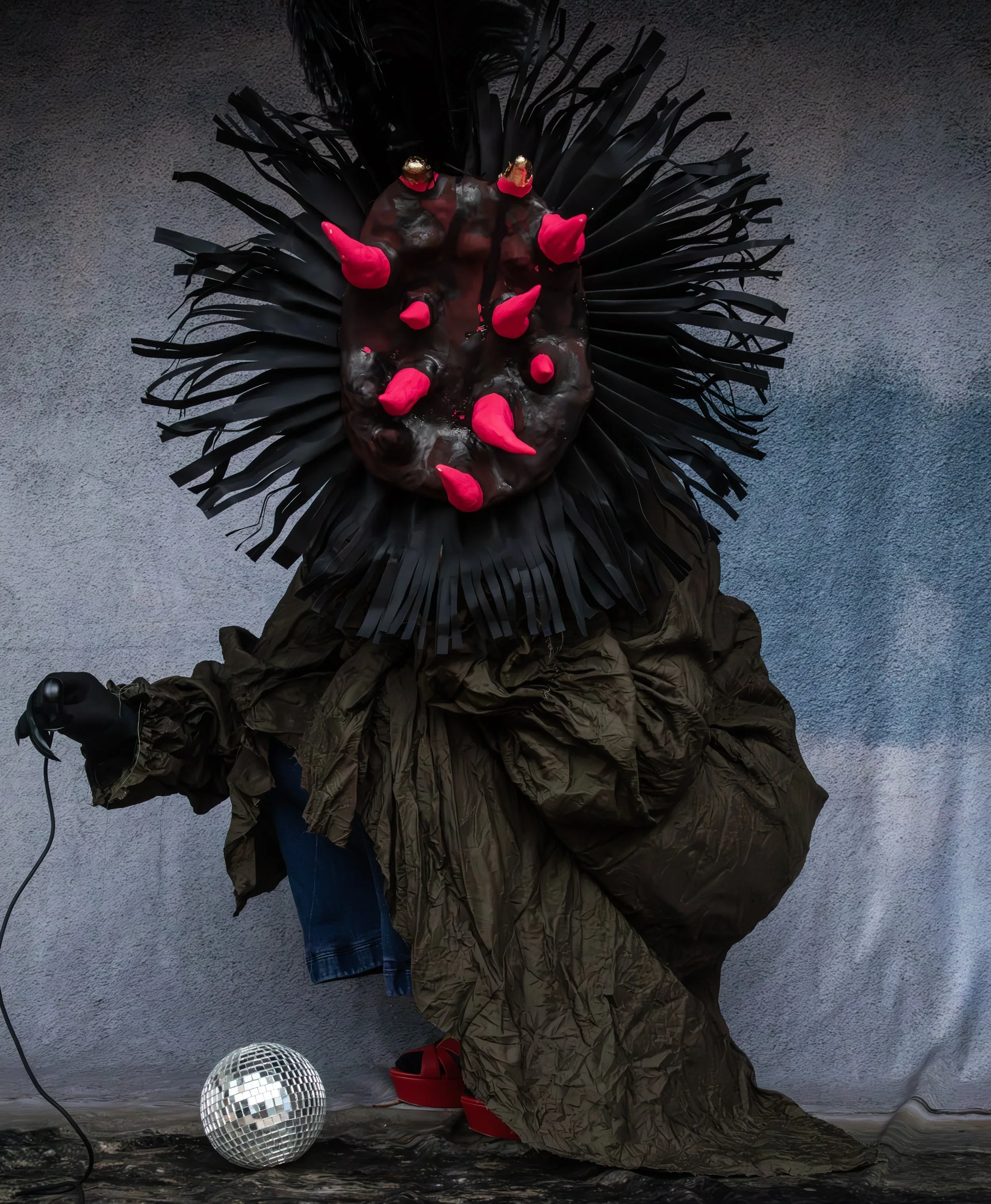
Self-portrait, Mimi Haddon.
Chaos and Order
Fiber, texture, sculpture. Mimi earned a master’s in Fiber Art from Cal State Long Beach, which cracked her previously two-dimensional work open to the third. After three years experimenting with plaster, paper mâché, and textiles, her garage was full of material—some more finished and some less so. And Mimi knew she wanted to create creatures.
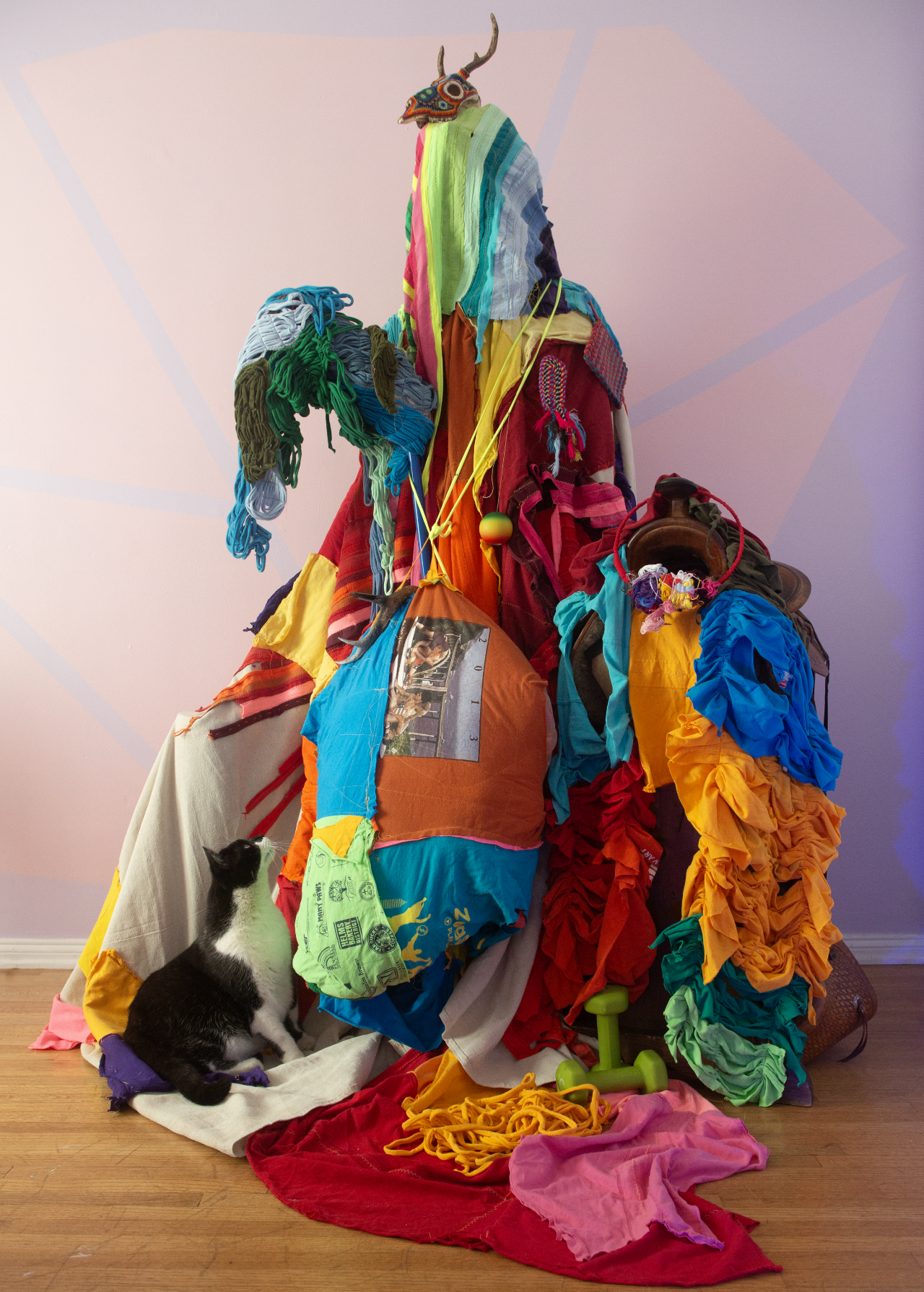
“I would wake up in the morning, my son would leave for school, and I put a dress form in his room.” She started to pile on the dress form, things evolved organically, and the creatures emerged—as the Talmasque series.
This work called to her when the house was empty. And then, before Finn returned home, Mimi would put everything back as if nothing had ever happened. “I called them ephemeral visitations,” Mimi says. “It reminded me of The Cat in the Hat, when he comes in with his suitcase and chaos ensues with Thing One and Thing Two. Then he packs everything up in the suitcase and no one notices that anything happened.
“My practice is a lot like that—expanding and contracting.”
Piling the Palace
Taking a cue from her Talmasque series, Mimi reached out to Melody Barnett, owner of Palace Costume, with an idea: Dancers, vintage costumes, and piling. “She understood what I was doing immediately,” remembers Mimi. Just like that, The Palace Wild began.
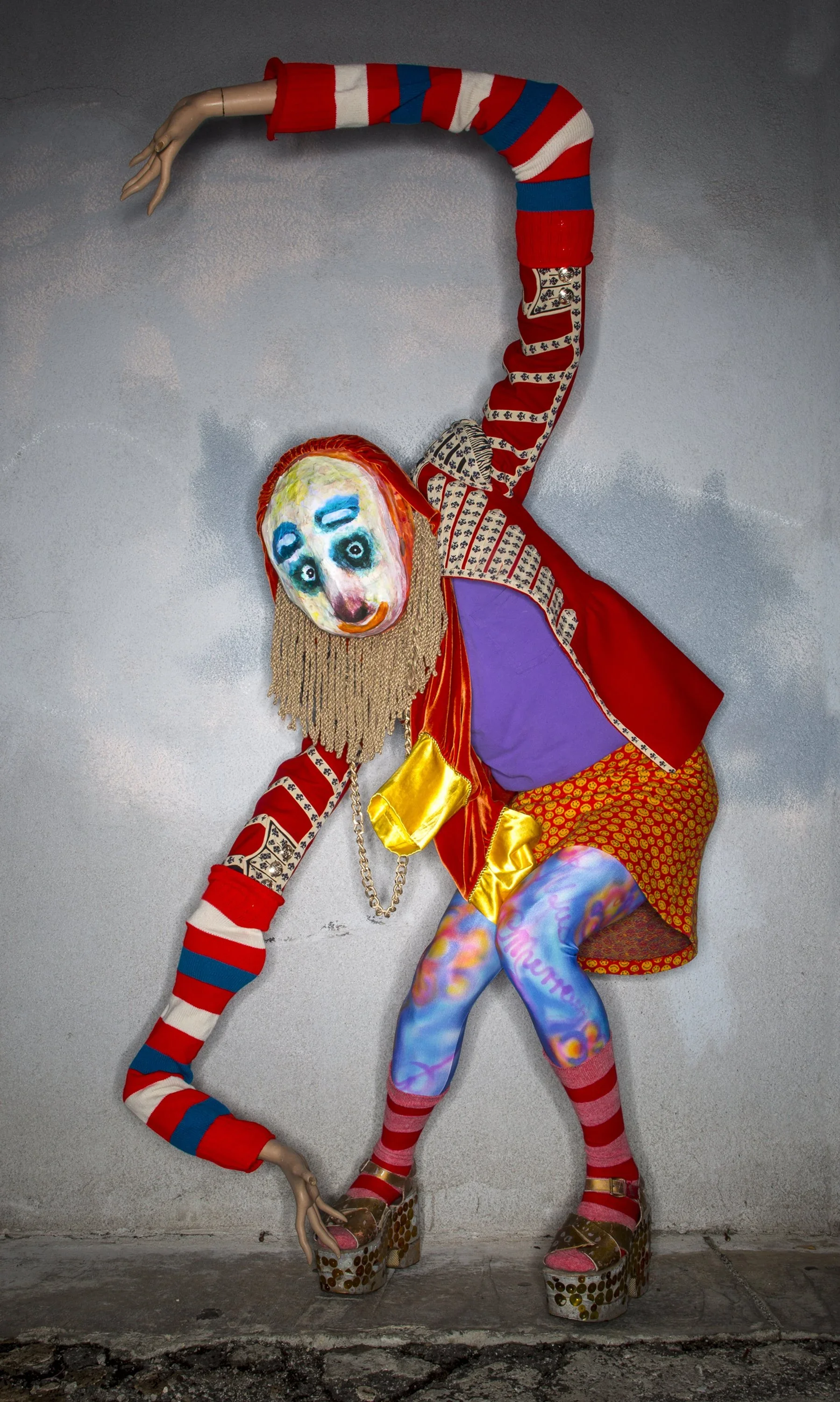
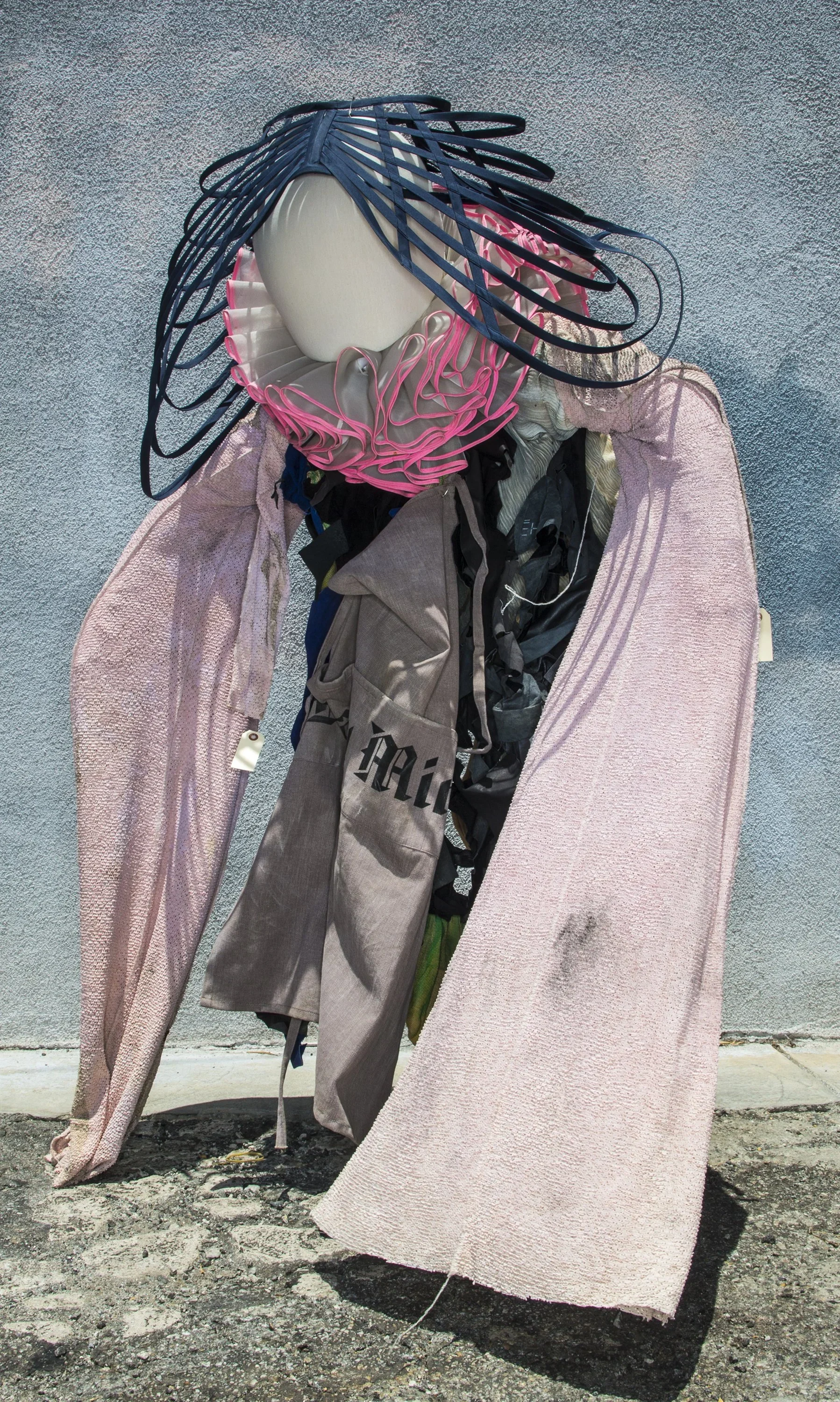
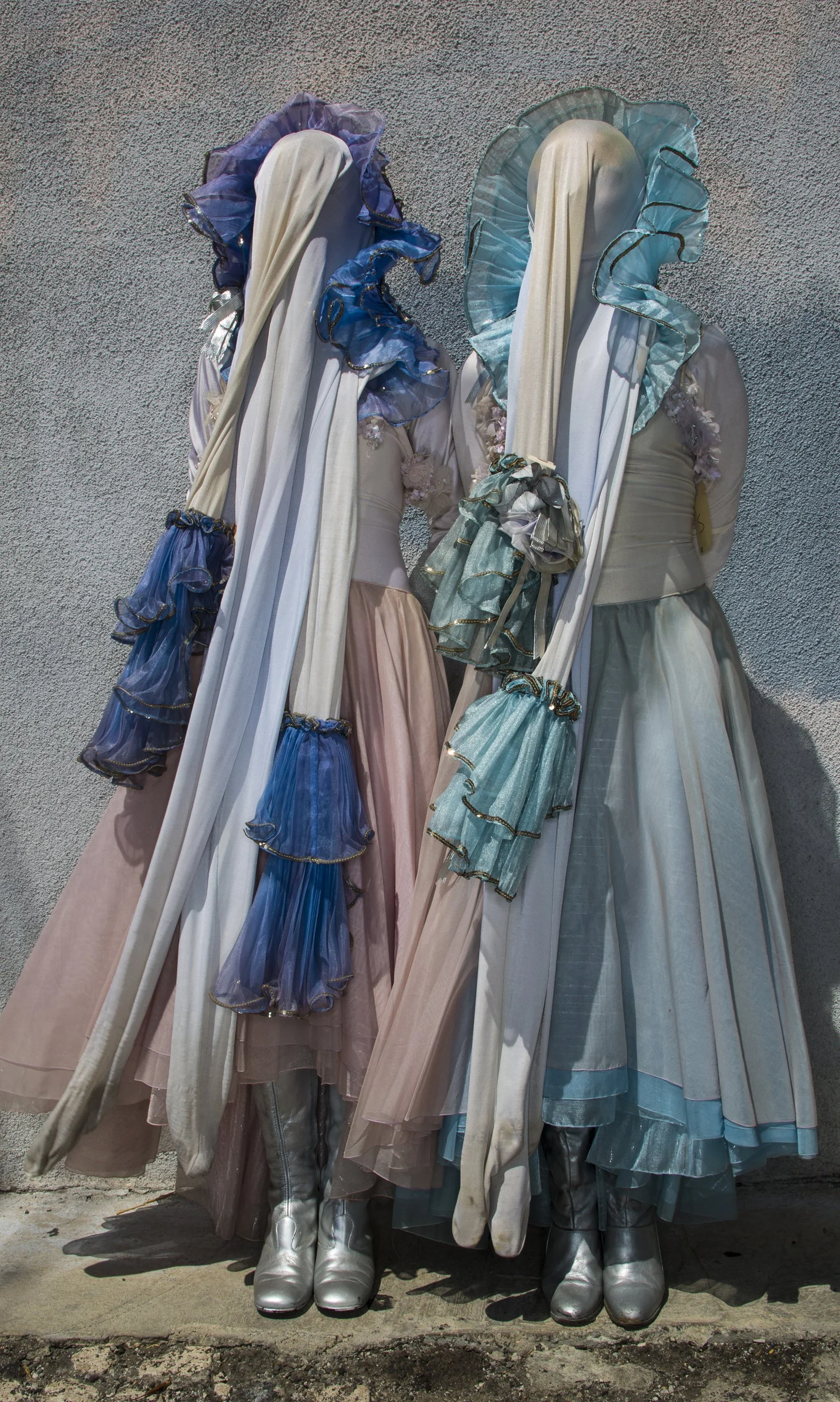
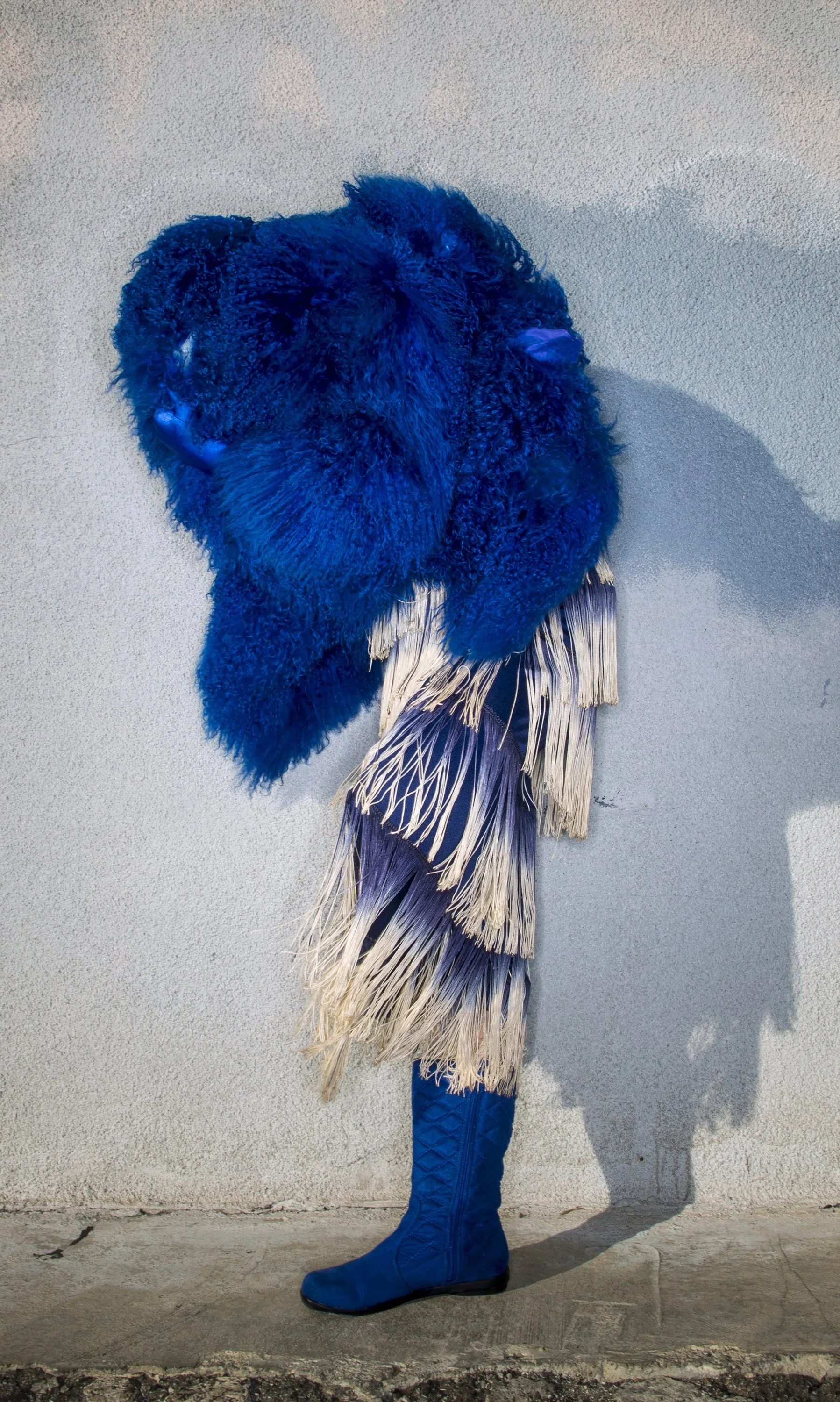
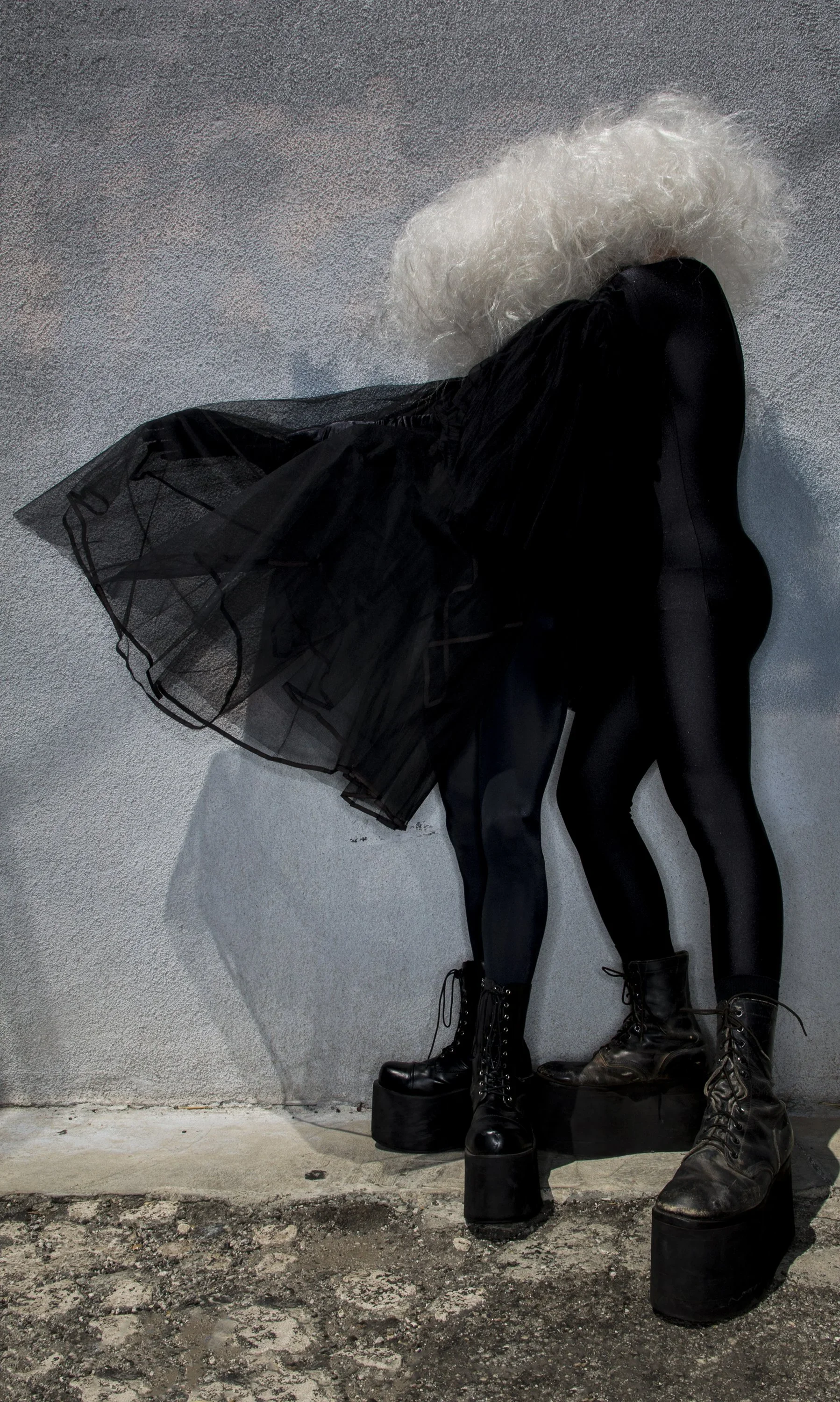
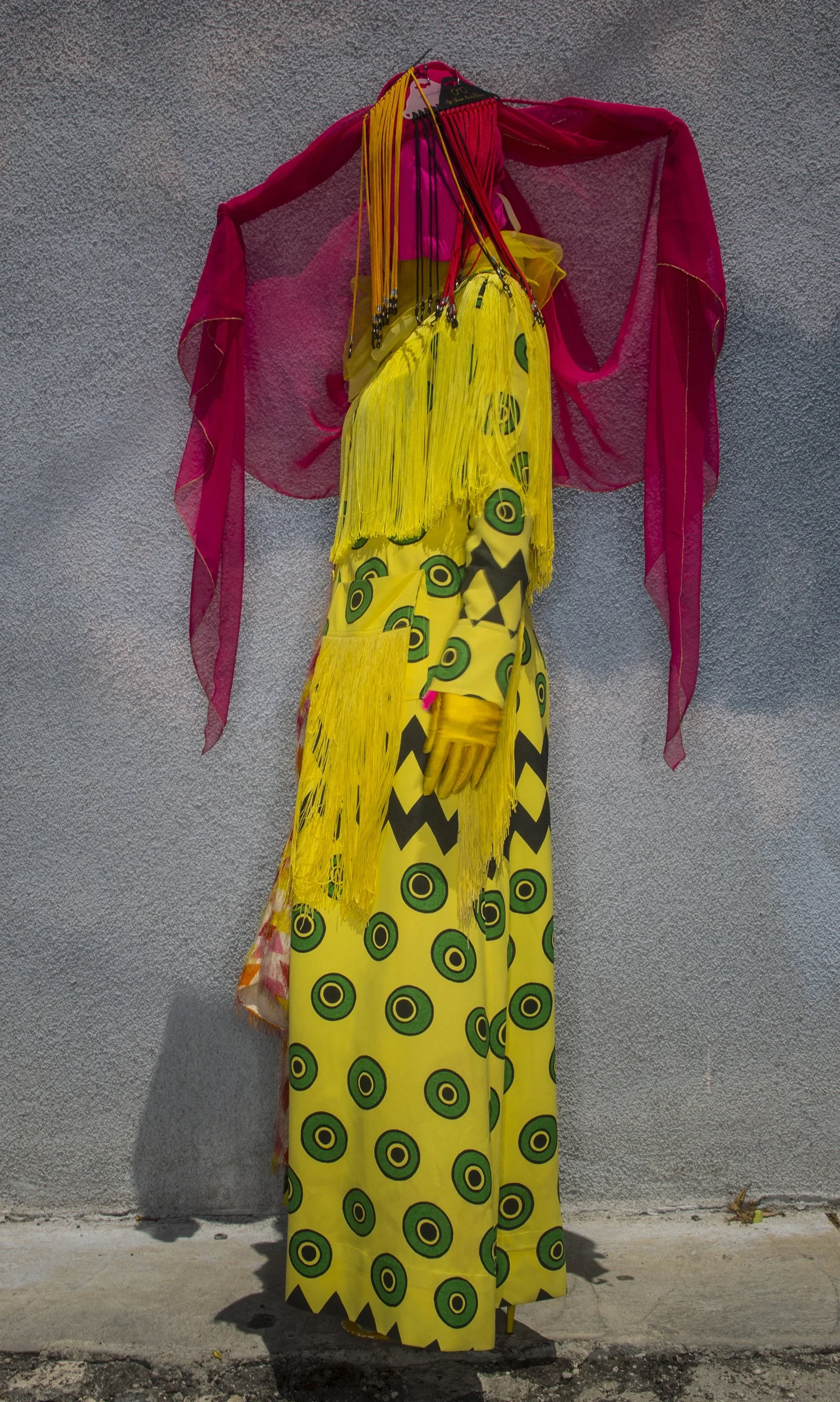
“I love the fact that it’s shot in the parking lot,” she says. Against a textured gray wall that’s been spray painted over so many times that Mimi describes it as “accidental Irving Penn-esque” or reminiscent of those early 19th-century European sky paintings by the likes of John Constable. “Sometimes you've got some debris on the floor, nails or rubber bands,” she continues. “And when the sun is out, a shadow emerges alongside the creature, becoming an entity in and of itself.” Another character in this mise en scène.
Thanks to Melody, Mimi had the pick of the store, like a kid in a candy store, for these weekend shoots. She’d walk “miles” around the Palace, fetching this and that, knowing what was needed to make the look. “We had a home base in the kitchen area where the dancers would try things on. The magic was already happening. And then we’d walk outside.”
Dancers moved, and creatures revealed themselves. A collaboration infused with the spirits of the Palace, perhaps? “It was magic, and a little bit indescribable,” recalls Mimi.
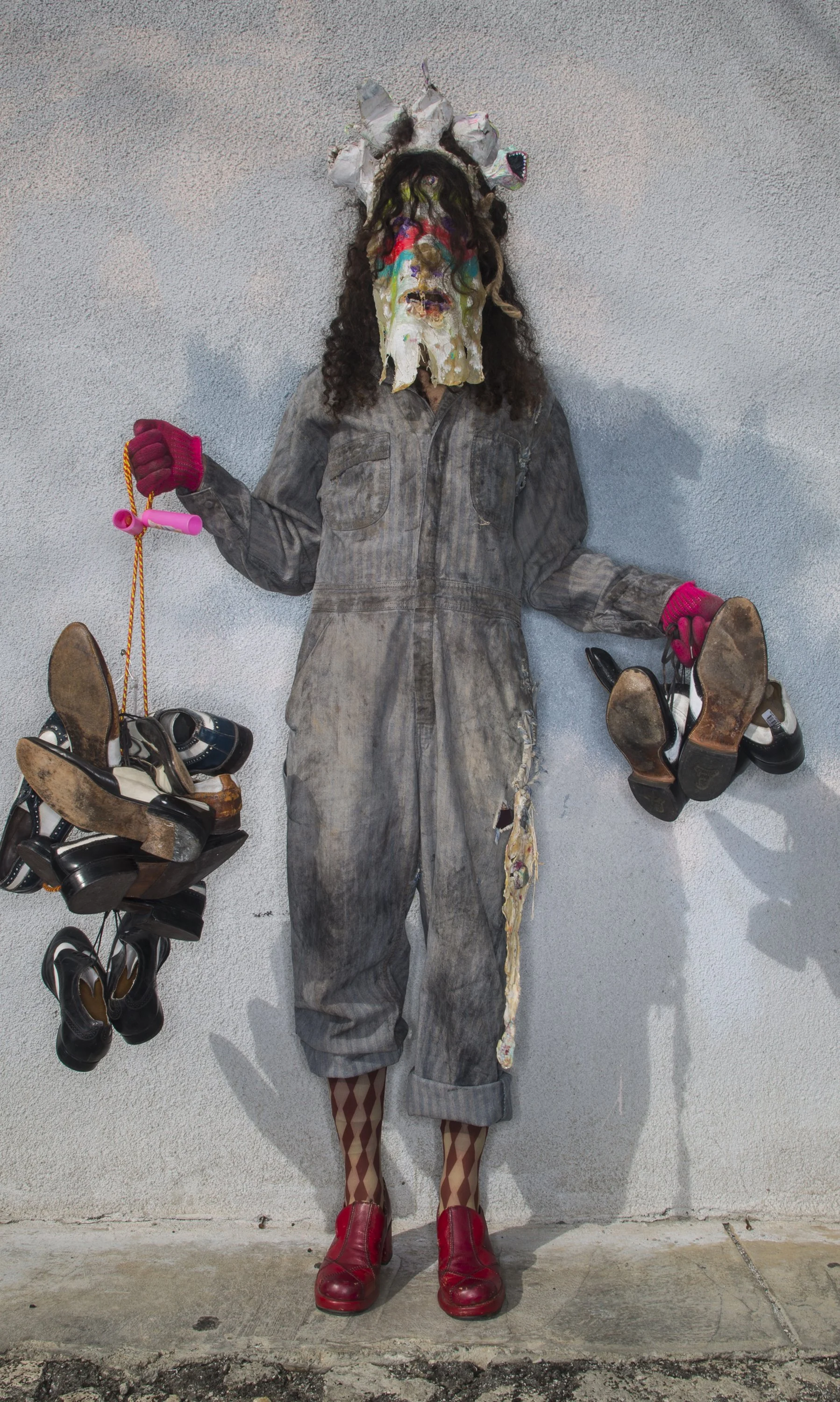
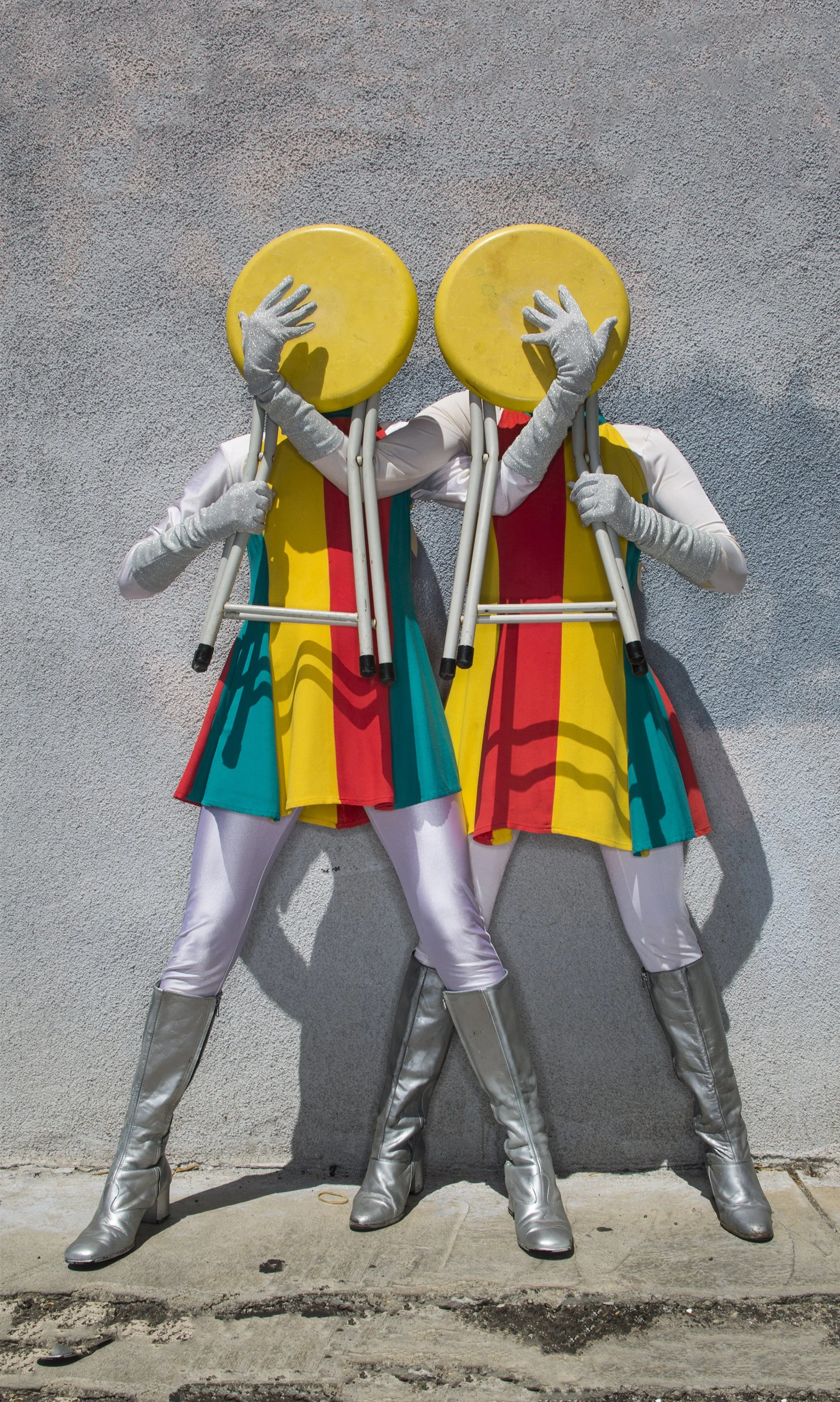
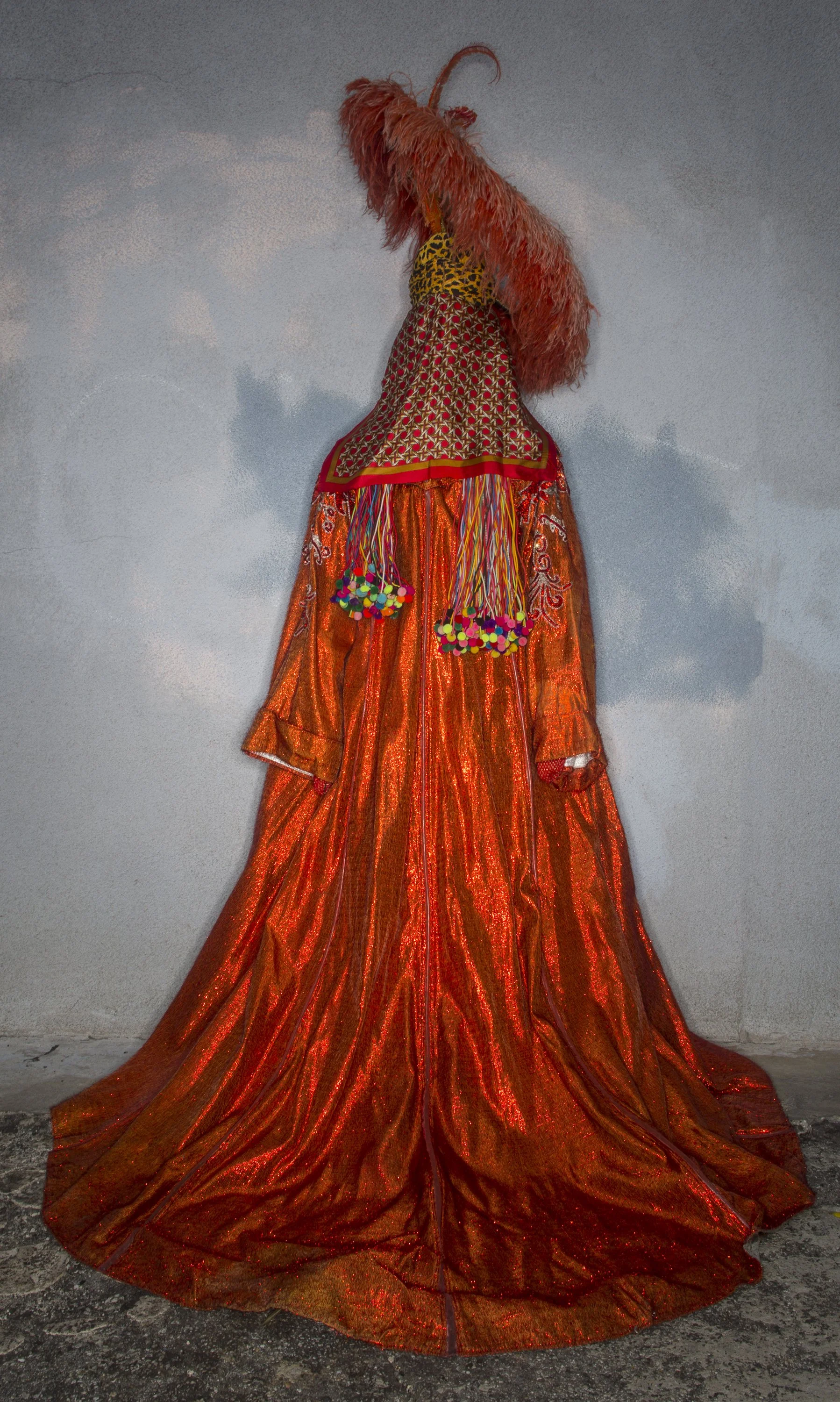
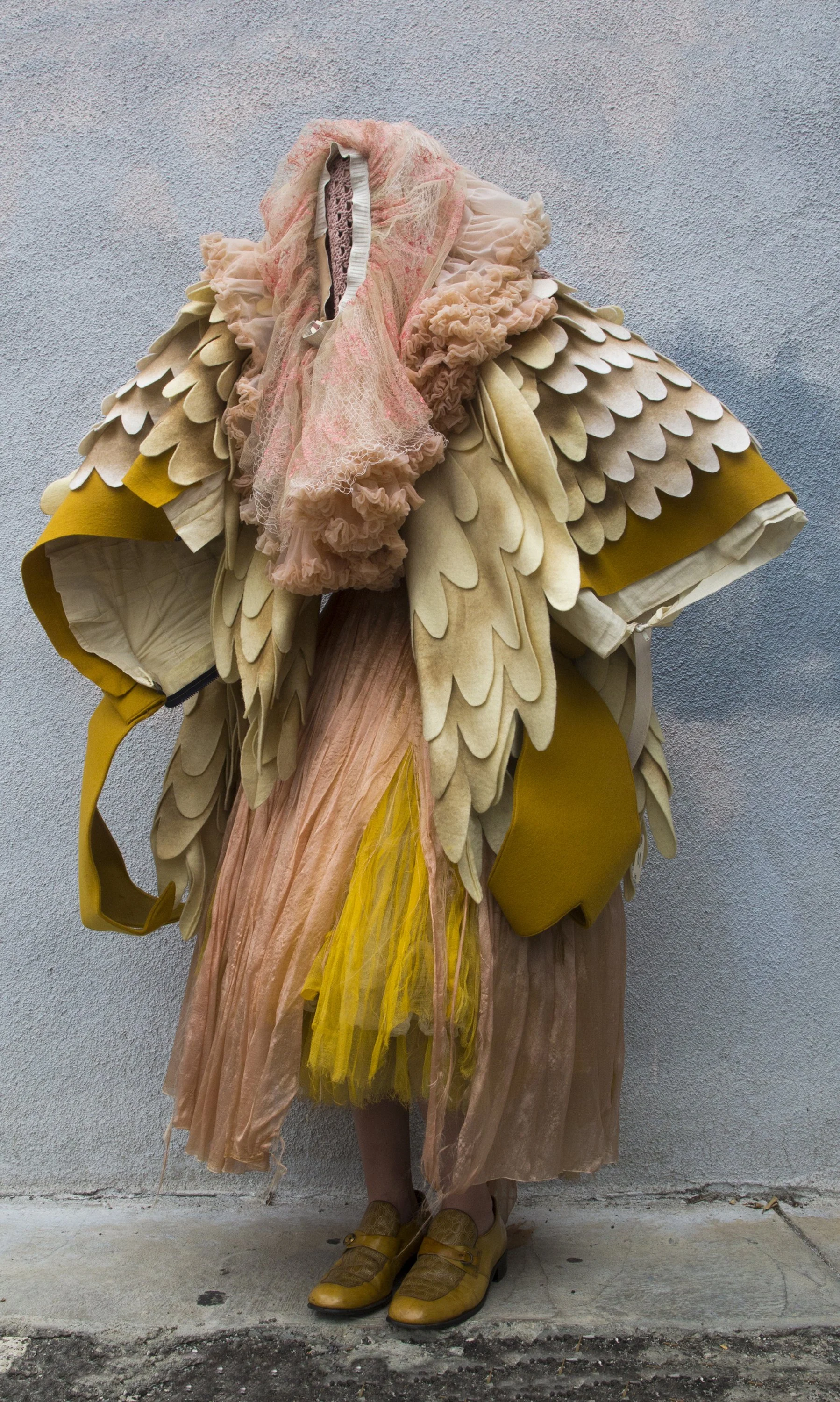
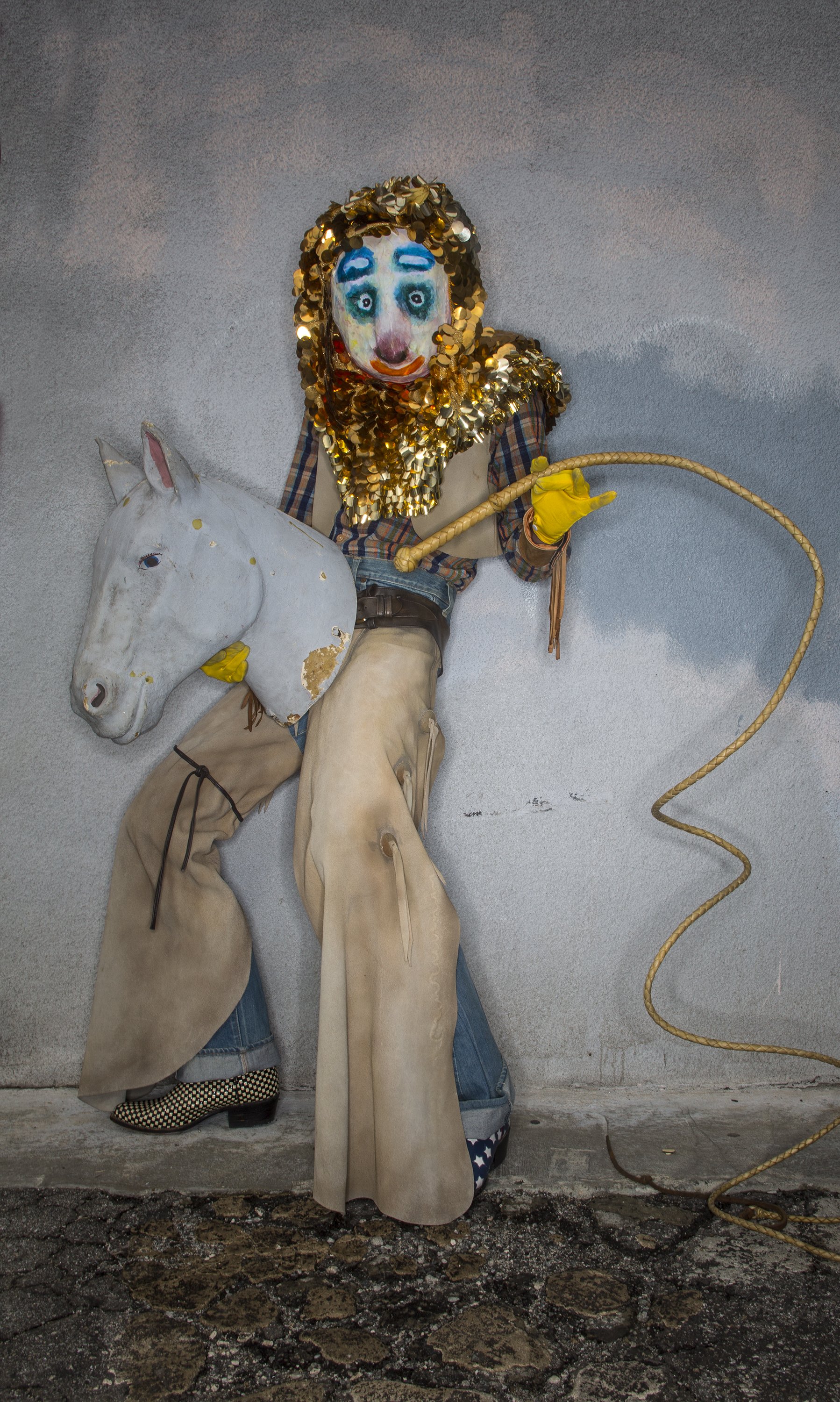
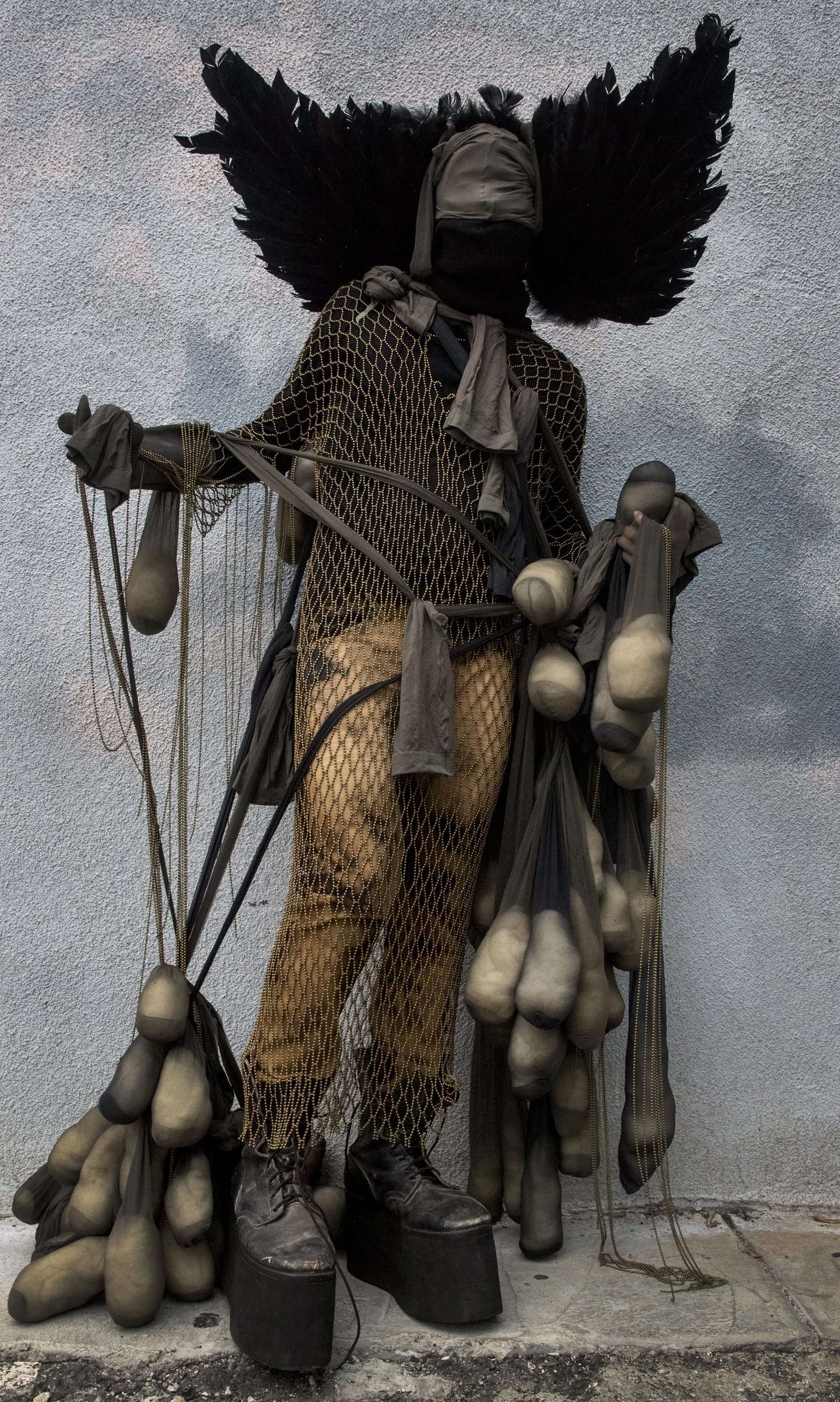
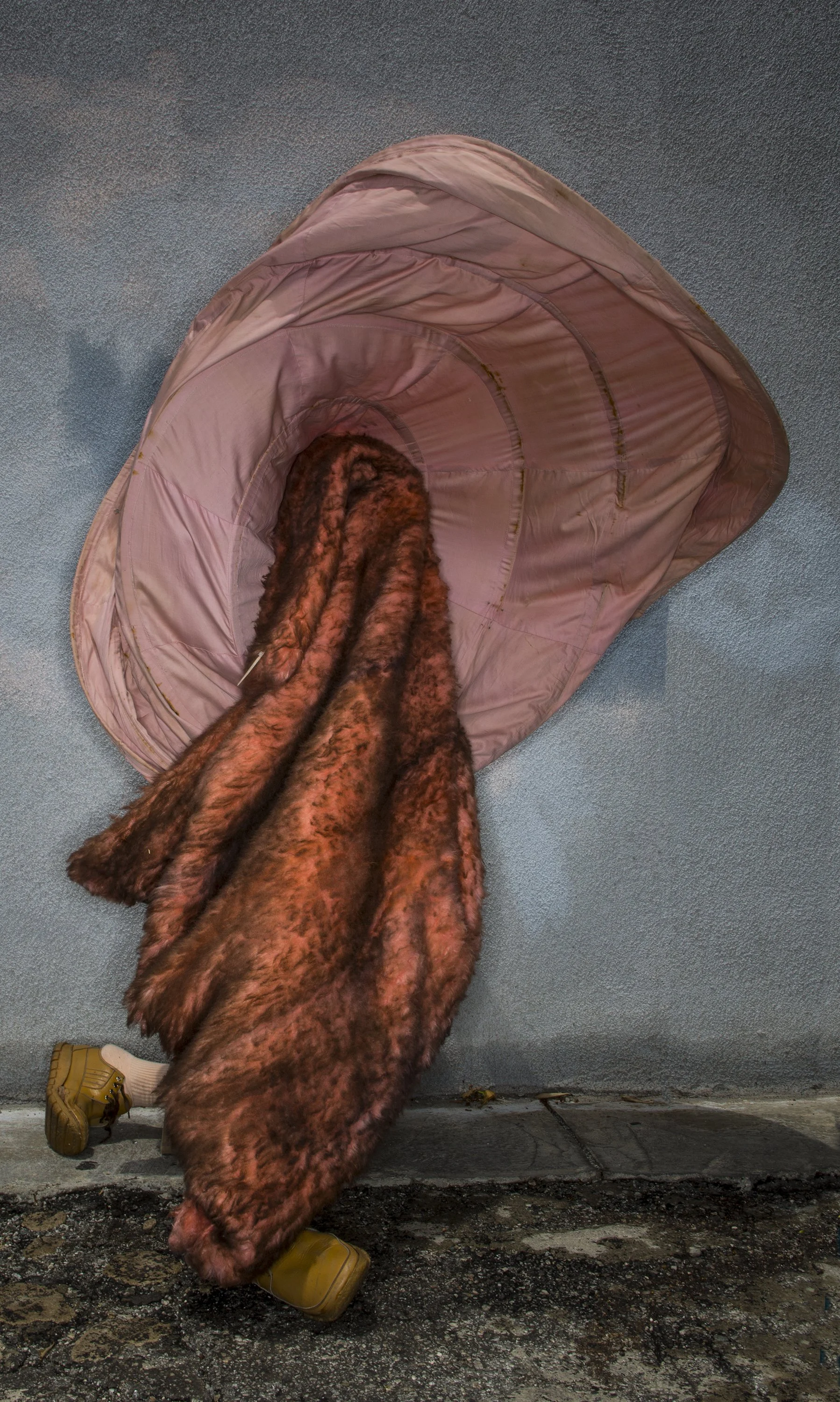
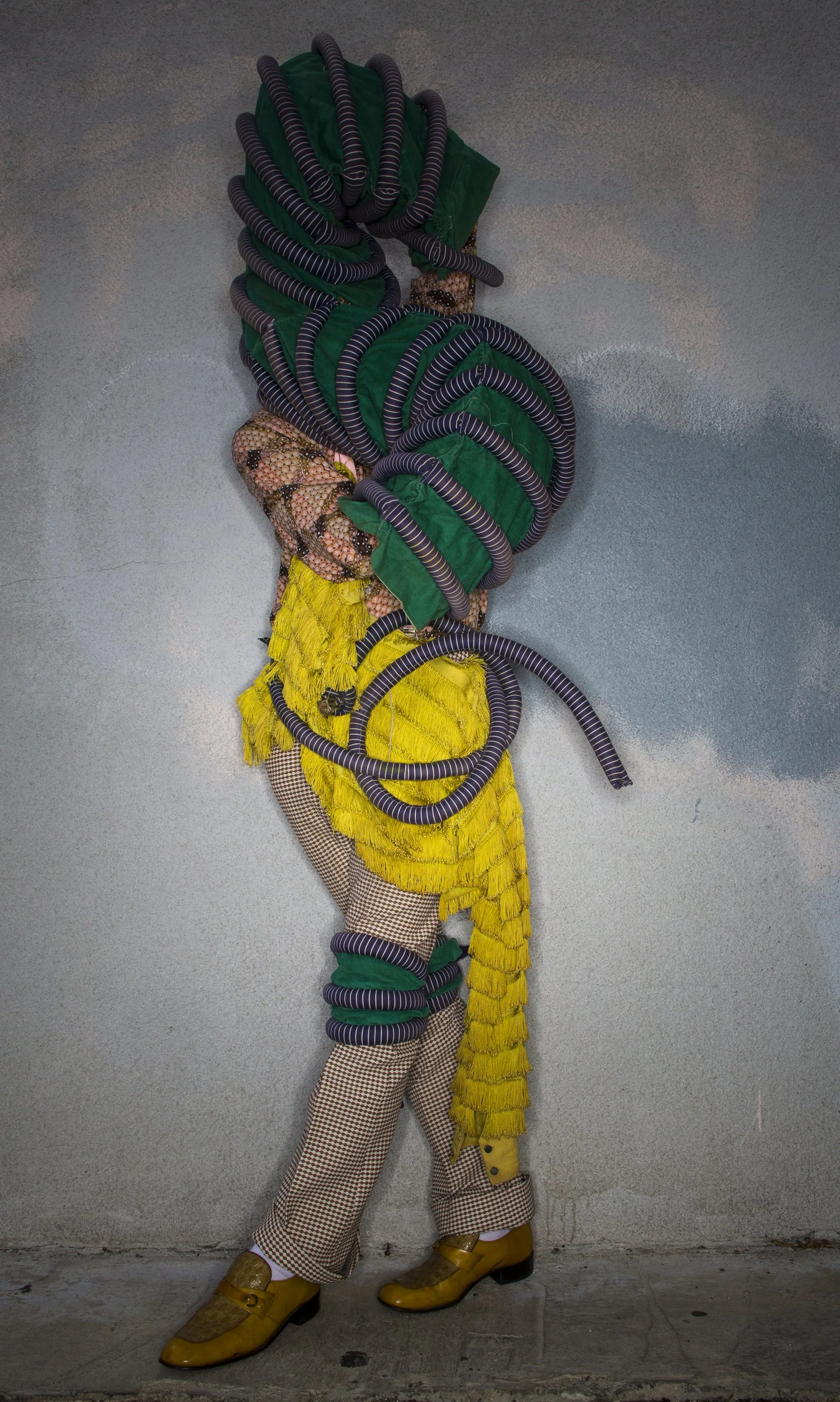
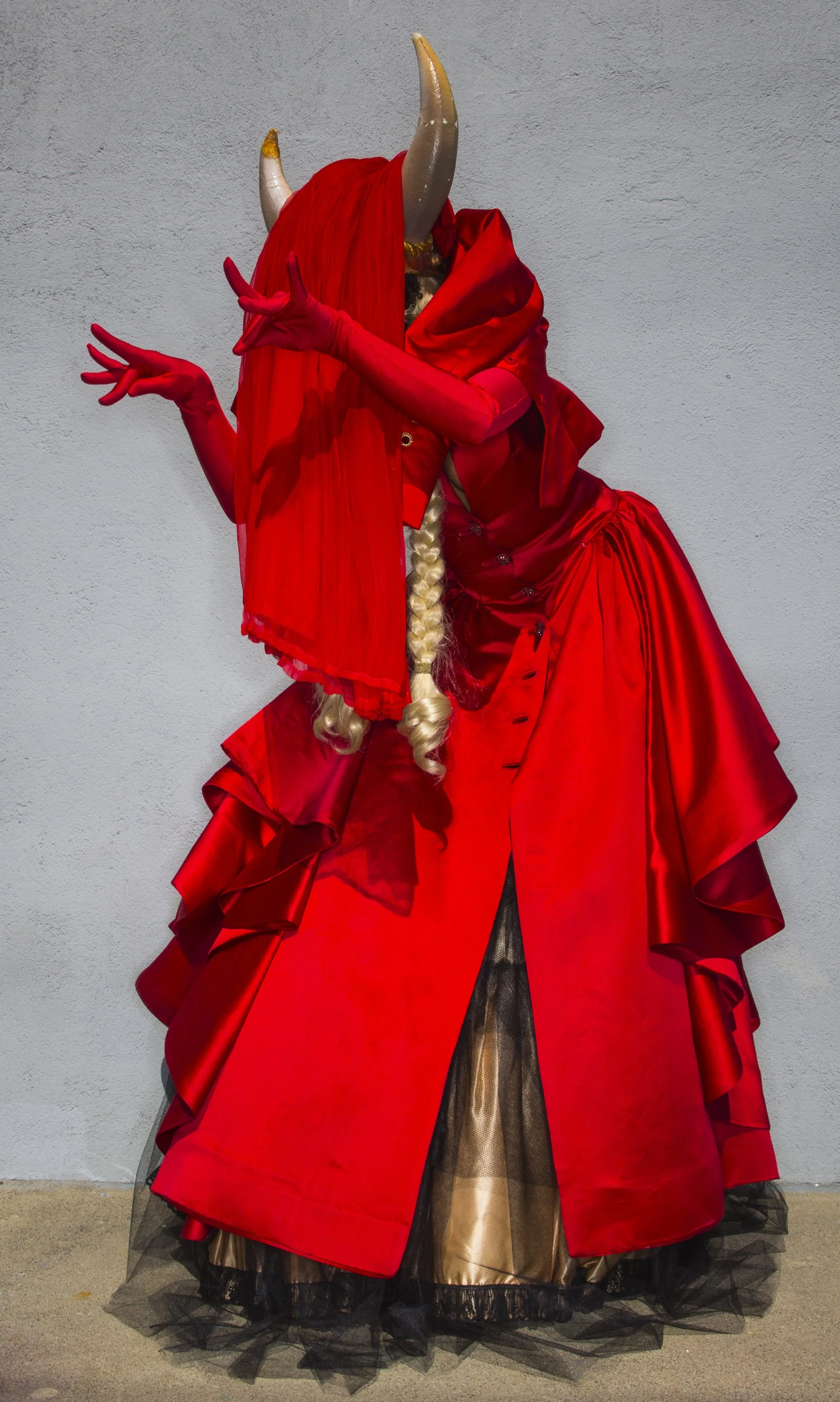
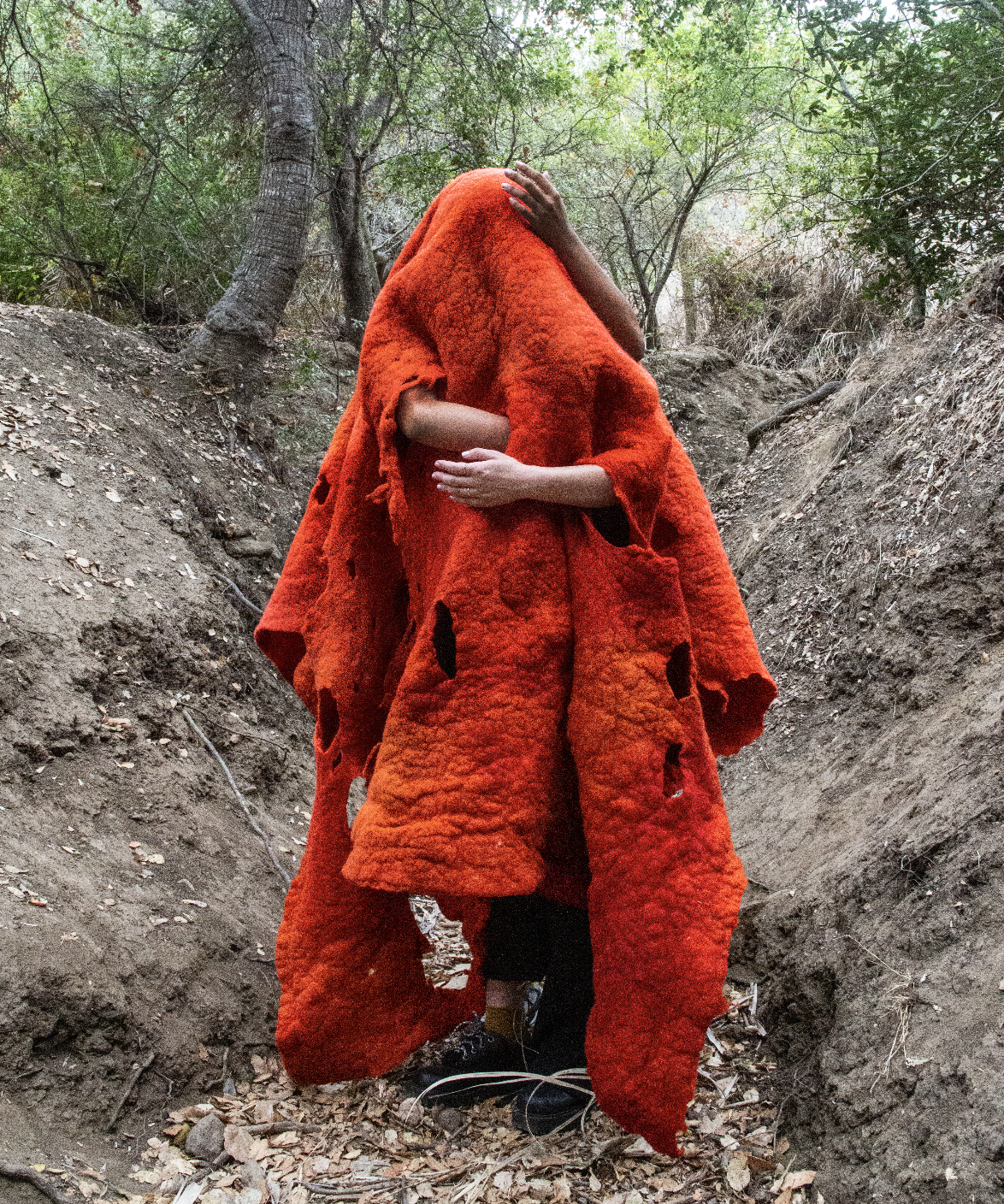
“I love the super minimalist and esoteric where it's just a hint of something and not being grounded by the body,” she admits.
Despite creating her work in, around, and on the body, it creates tension. “I struggle with body as a topic.”
Because of this internal tug of war, Mimi kept mask use minimal. A mask admits there’s a head on that thing, and she finds that limiting. Her approach: “Let's get away from even having a head. They could just be a blob or a multi-limbed thing. Having a head is too anthropomorphic.”
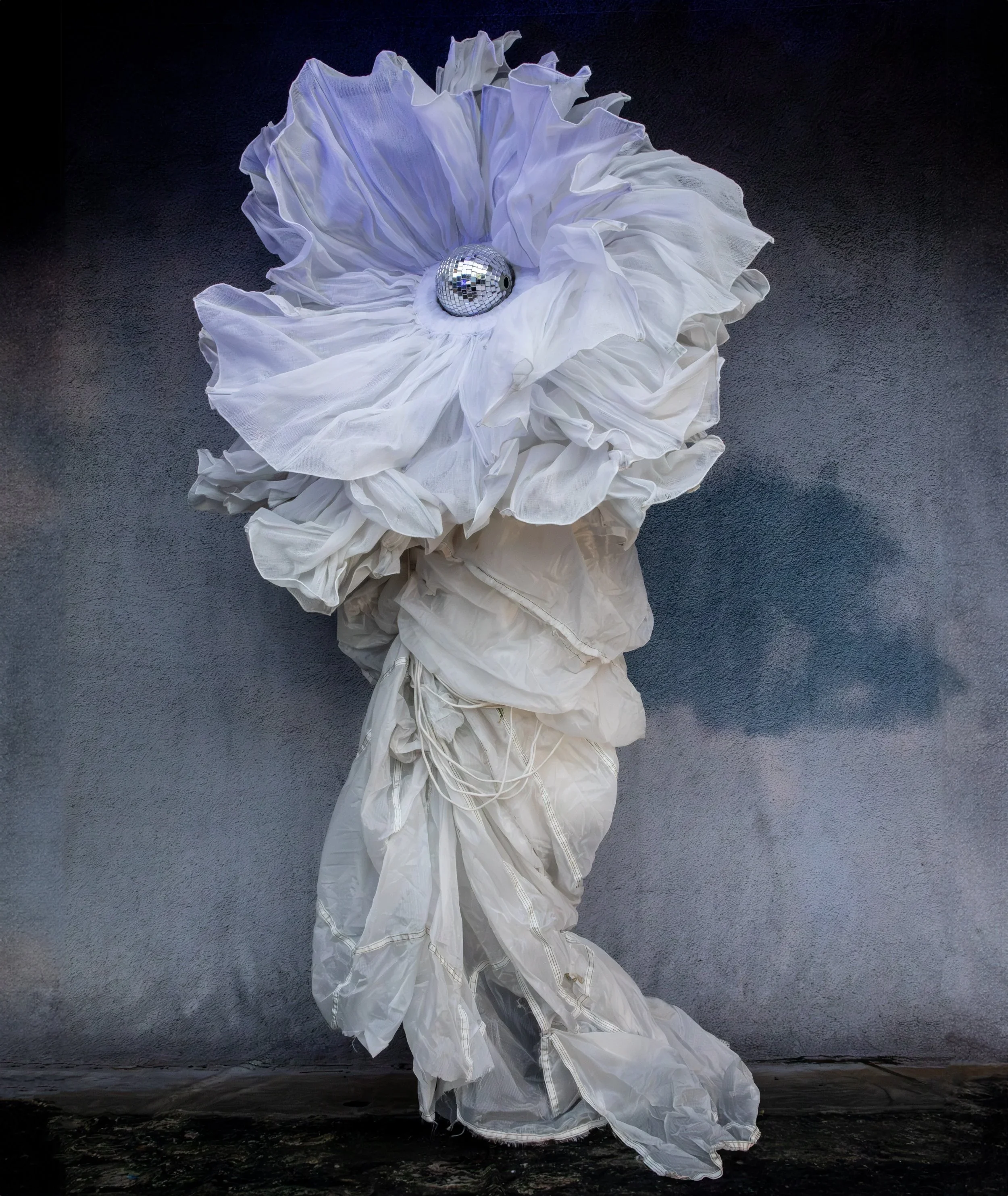
Breathing room
During one of our conversations, Mimi referred to herself (and her work) in two ways. The documentarian side, her early work capturing vintage costumes at the Palace, and then the “soul me,” her creatures. “There's something really coming from the gut about the Talmasque series,” she says. “I made all those things and dyed them—and there's the connection to Finley… then the Palace, even though it's not from that same place, there's something quite emotional in the process.
“I guess that's what I love, having a material and just trusting that working with it in a curious way—or with curiosity—and allowing that material to have a voice.”
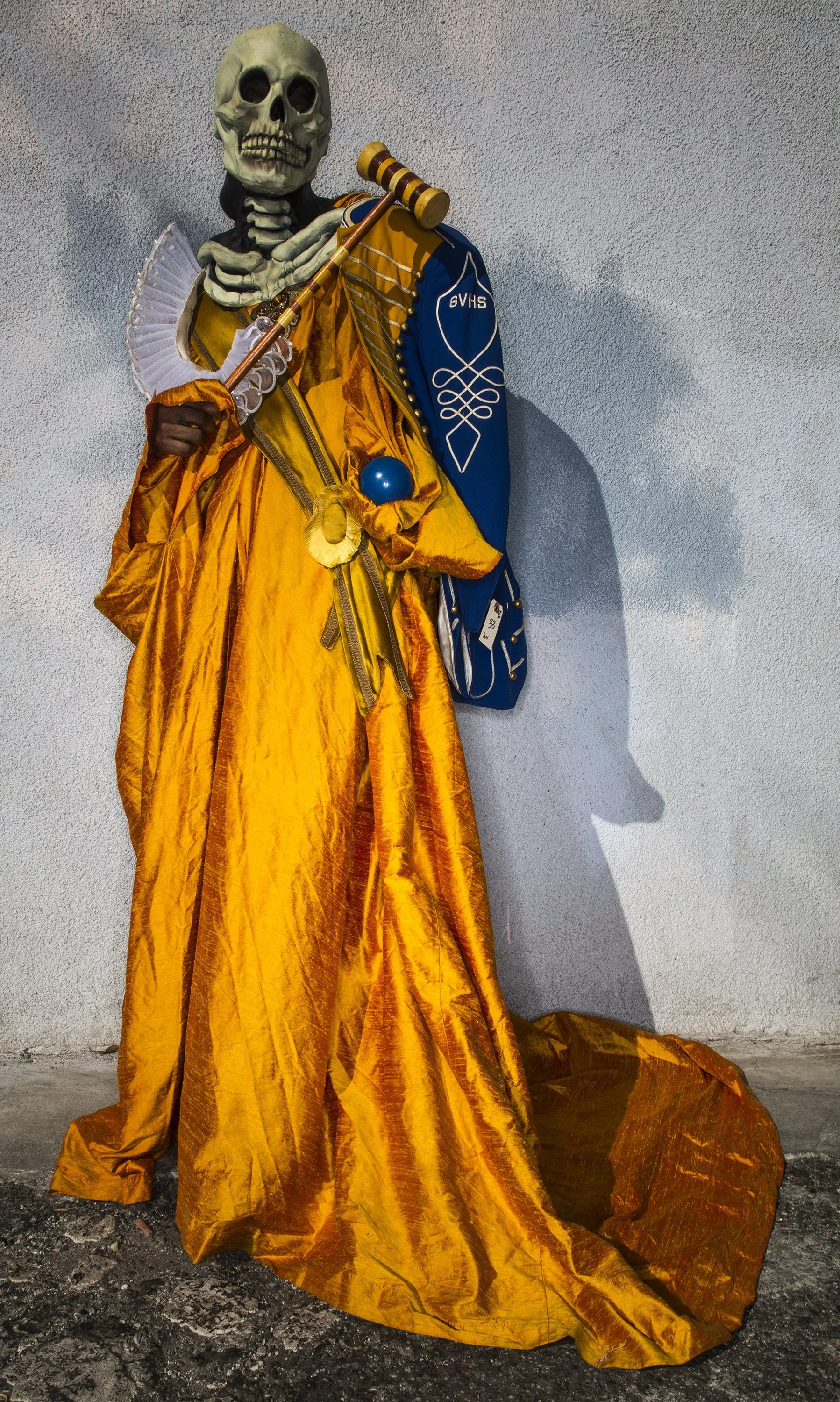
While at Cal State Long Beach, Mimi recalls a meeting she had with Argentinian artist Delia Cancela. “Her advice to me when she saw my work was, ‘Always leave breathing room in the work.’ And I love that so much.
“I always think about her [Delia] when I'm with a work,” Mimi continues. “By allowing the material to have a voice, rather than forcing it, just by nature, there's breathing room. It's not all me dominating the material. Instead, we're kind of doing a dance. It leaves room for chance and room for questions and dialogue.”