Last Tango in Buenos Aires
He had the cold, dead "I don't give a fuck" stare that only a grizzled veteran of the '80s club scene could pull off. Bike gang meets Billy Idol, hanging off an "I've seen it all" frame. "No tarjeta," he says, shaking his head with his eyes. Emiliana explains she doesn't have cash. "How about Mercado Pago?" she asks. Again, his eyes tell the story.
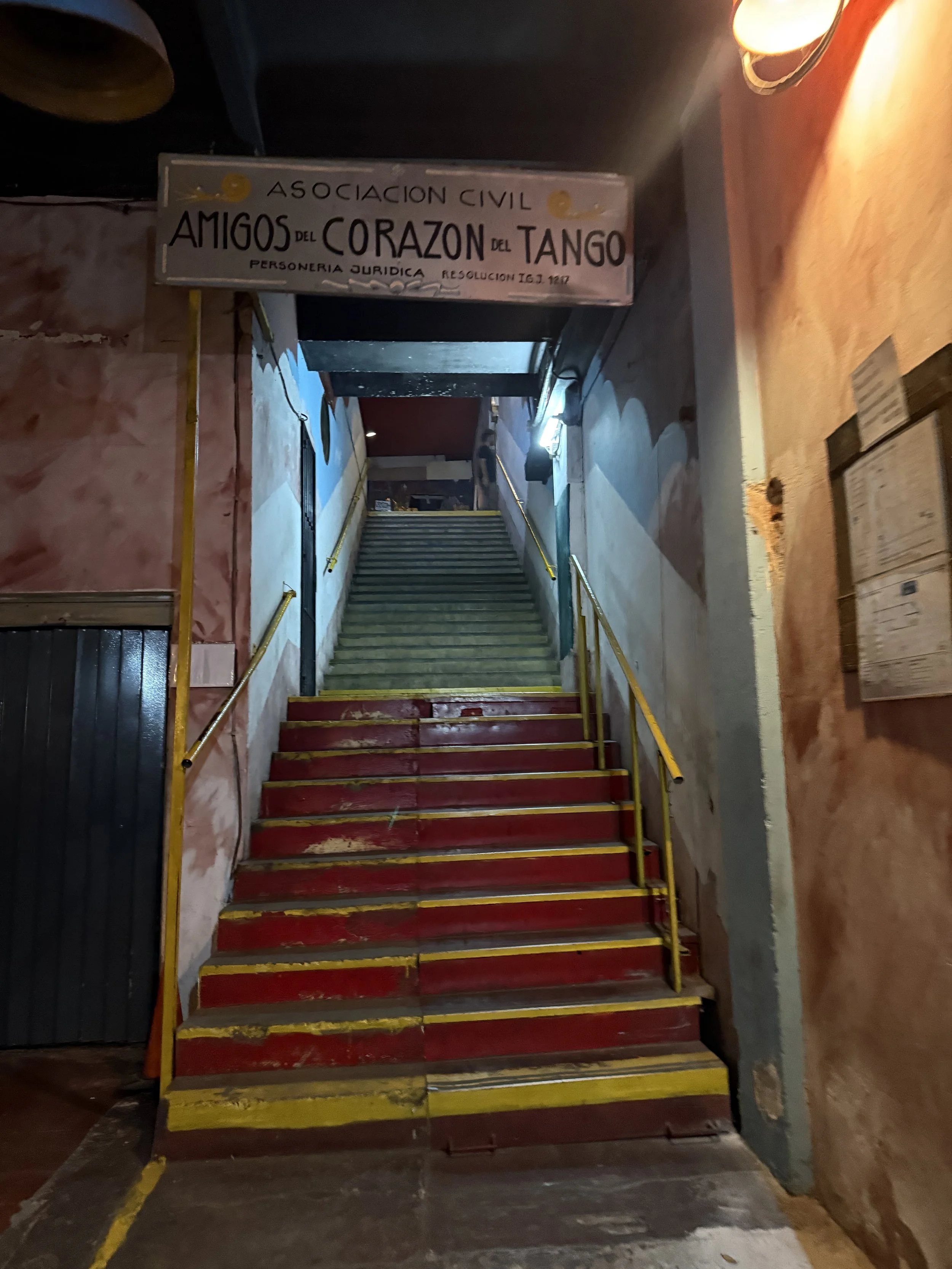
We are in a time machine, transported to an era before credit cards and mobile phones existed. Argentine "Lemmy" is not giving an inch. Emiliana asks if he uses another payment app—something like Venmo in the US. He nods, barely perceptibly. OK, now we're in business. The time machine slows just enough for us to jump out. A new world awaits at the top of some distressed stairs inside an old factory tucked between homes in the Almagro neighborhood of Buenos Aires.
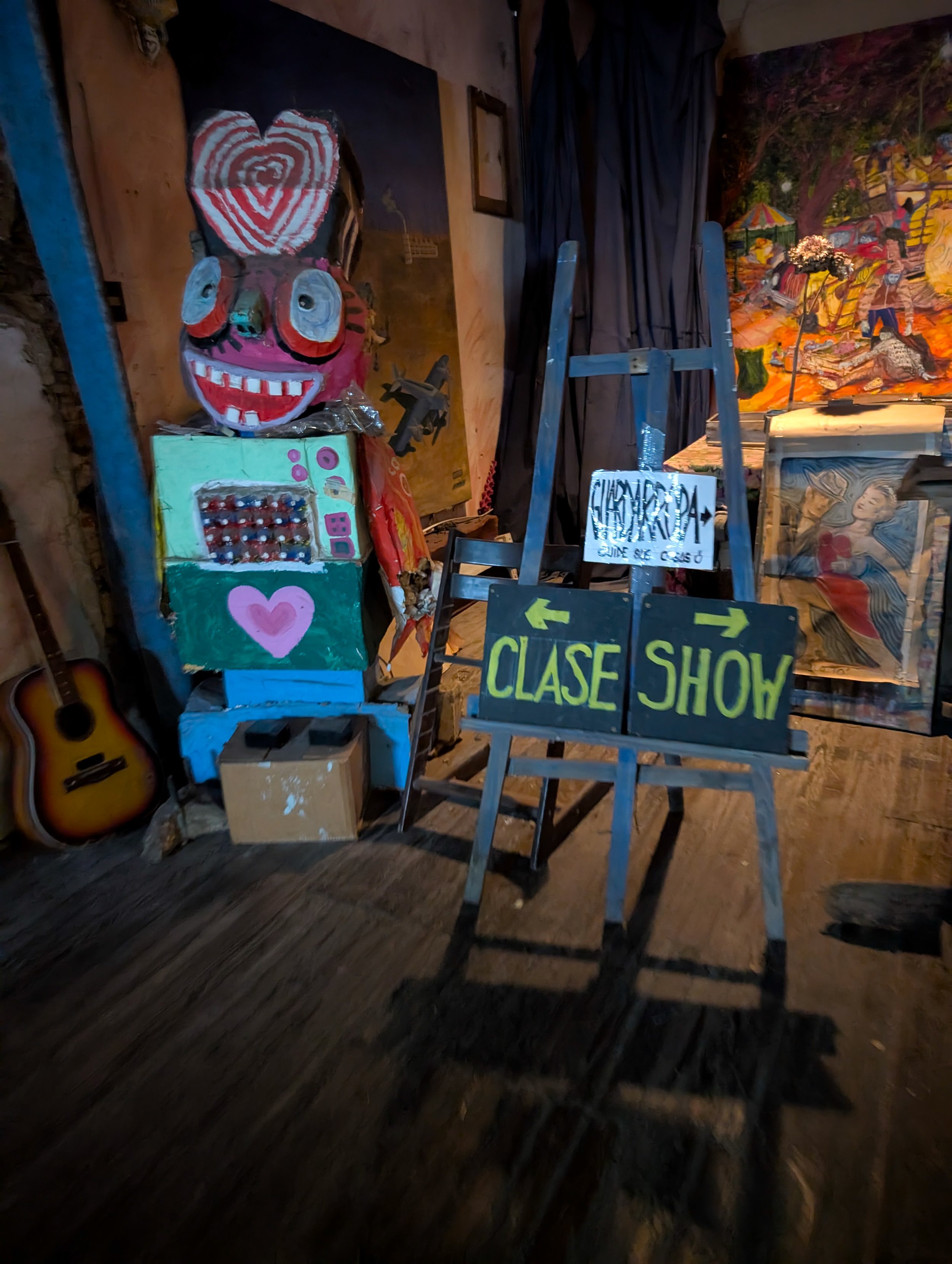
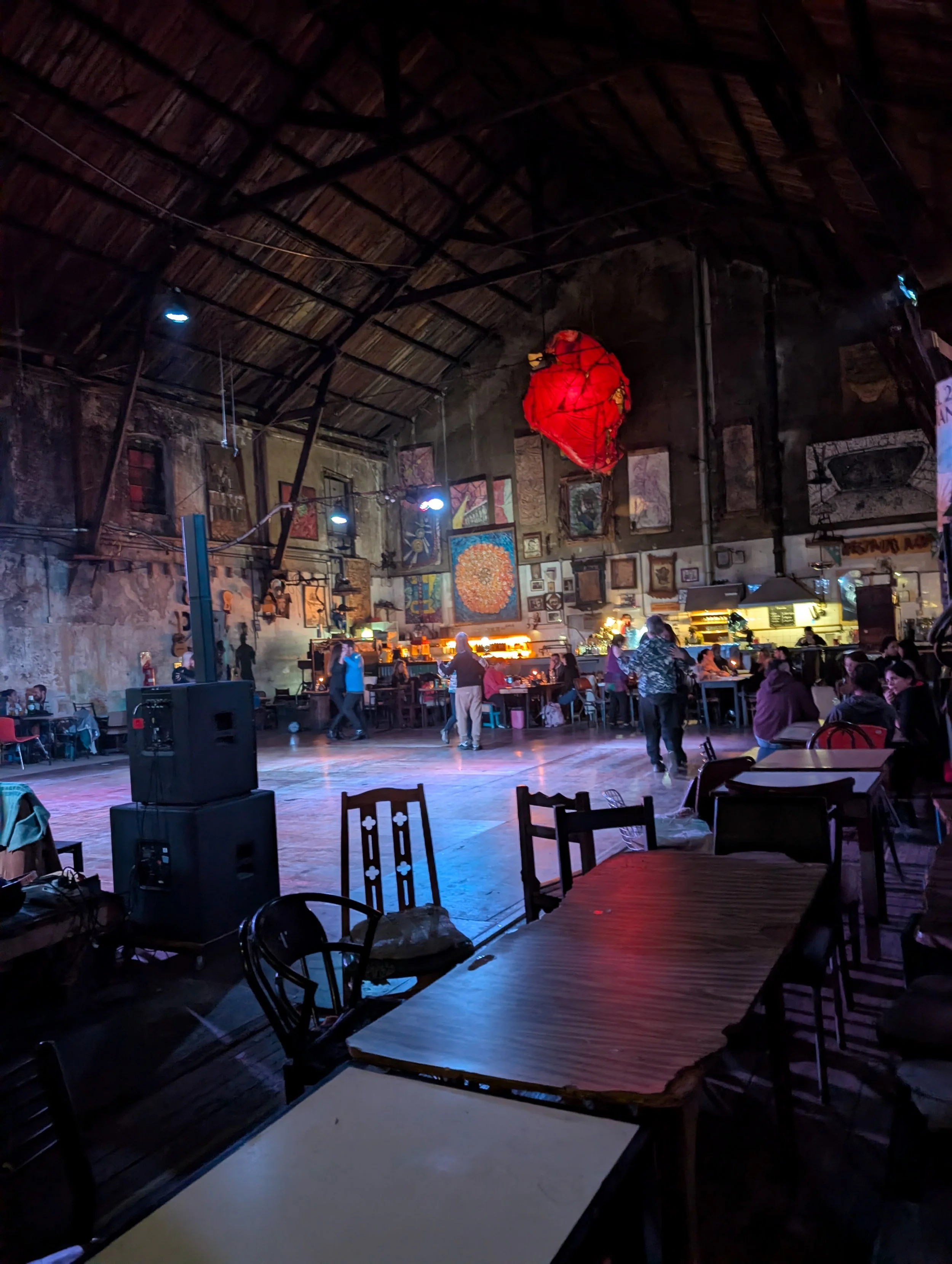
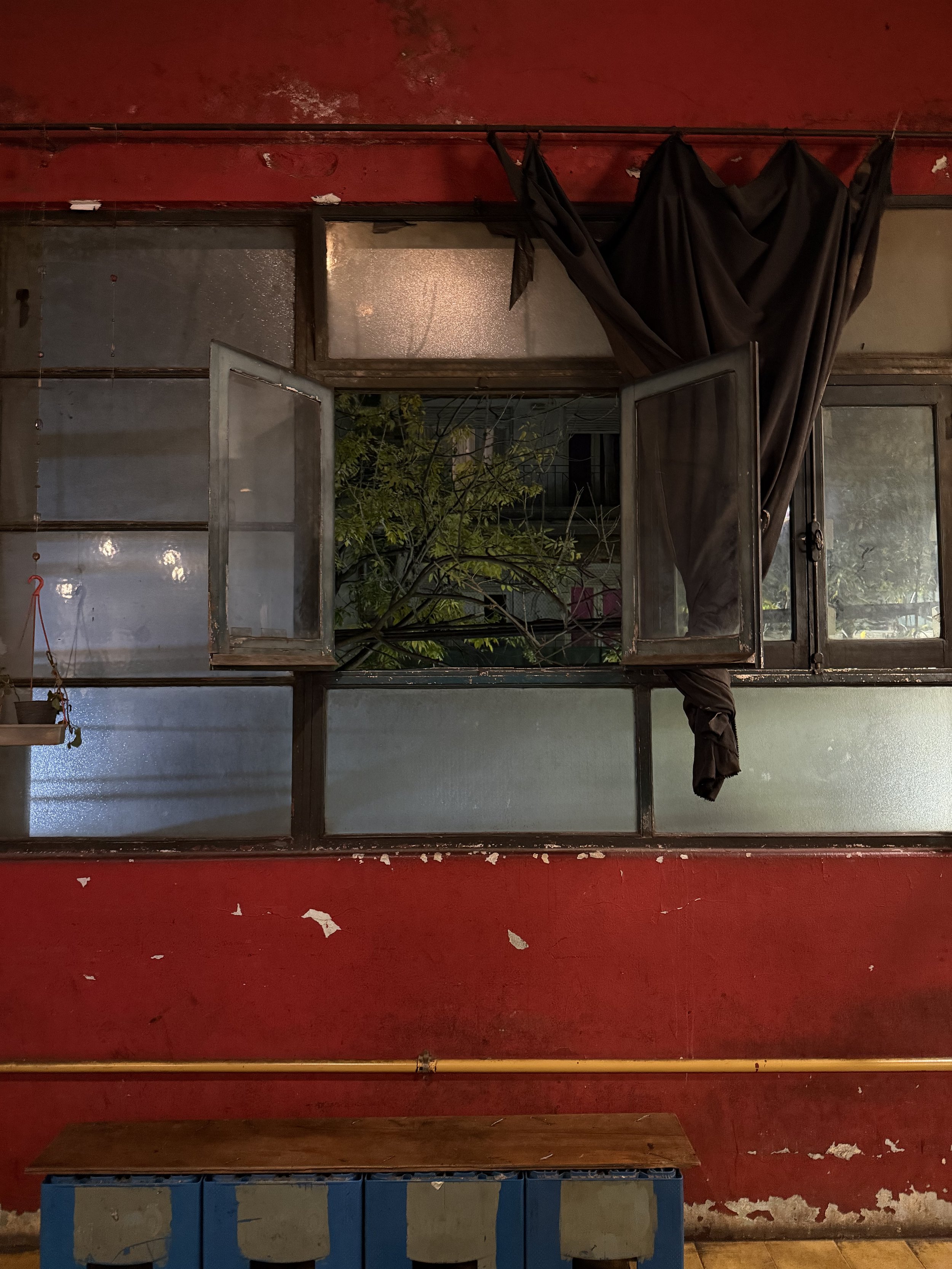
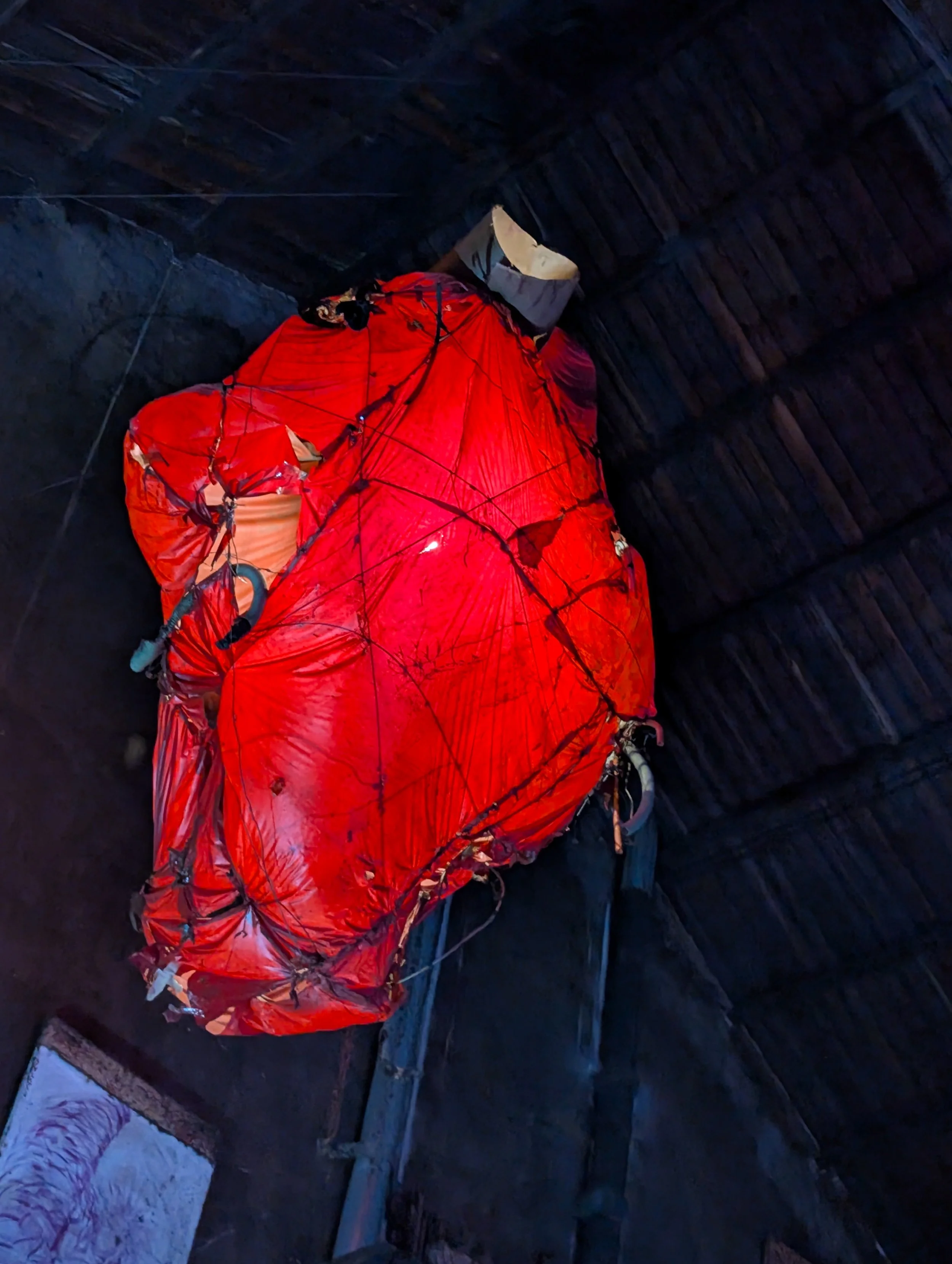
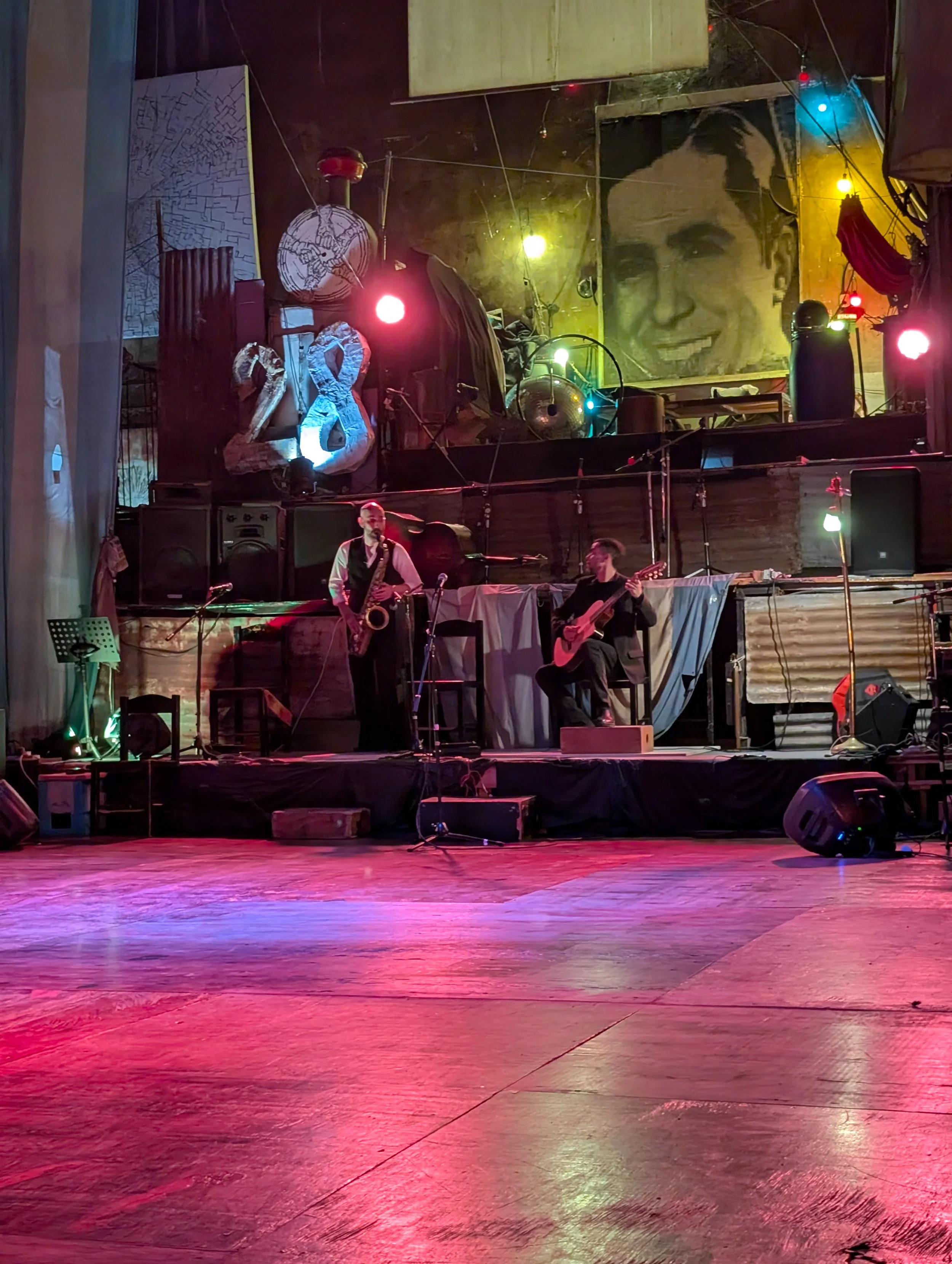
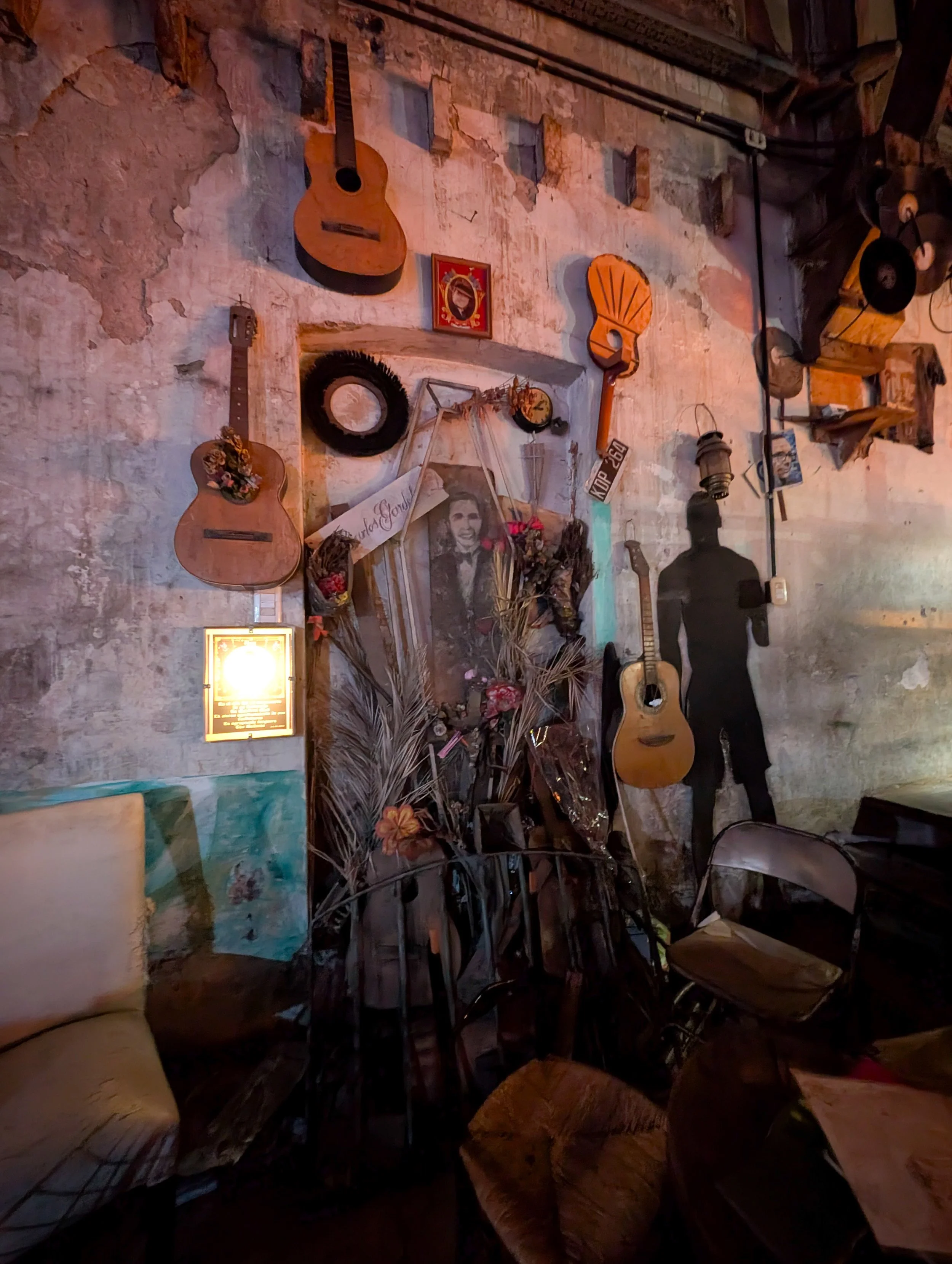
At the top of the landing, you have a choice: to the left is the class, to the right is the show. We go right, past the cardboard robot with a heart, through the black curtains. The dark room opens into a vast space filled with flea market art and a stage anchored by a grand black-and-white photograph of Carlos Gardel, the father of tango. Opposite the stage, a tattered large red fabric heart clings to its interior frame, looming above the bar. The dance floor is filled with amateur tango dancers practicing their moves.
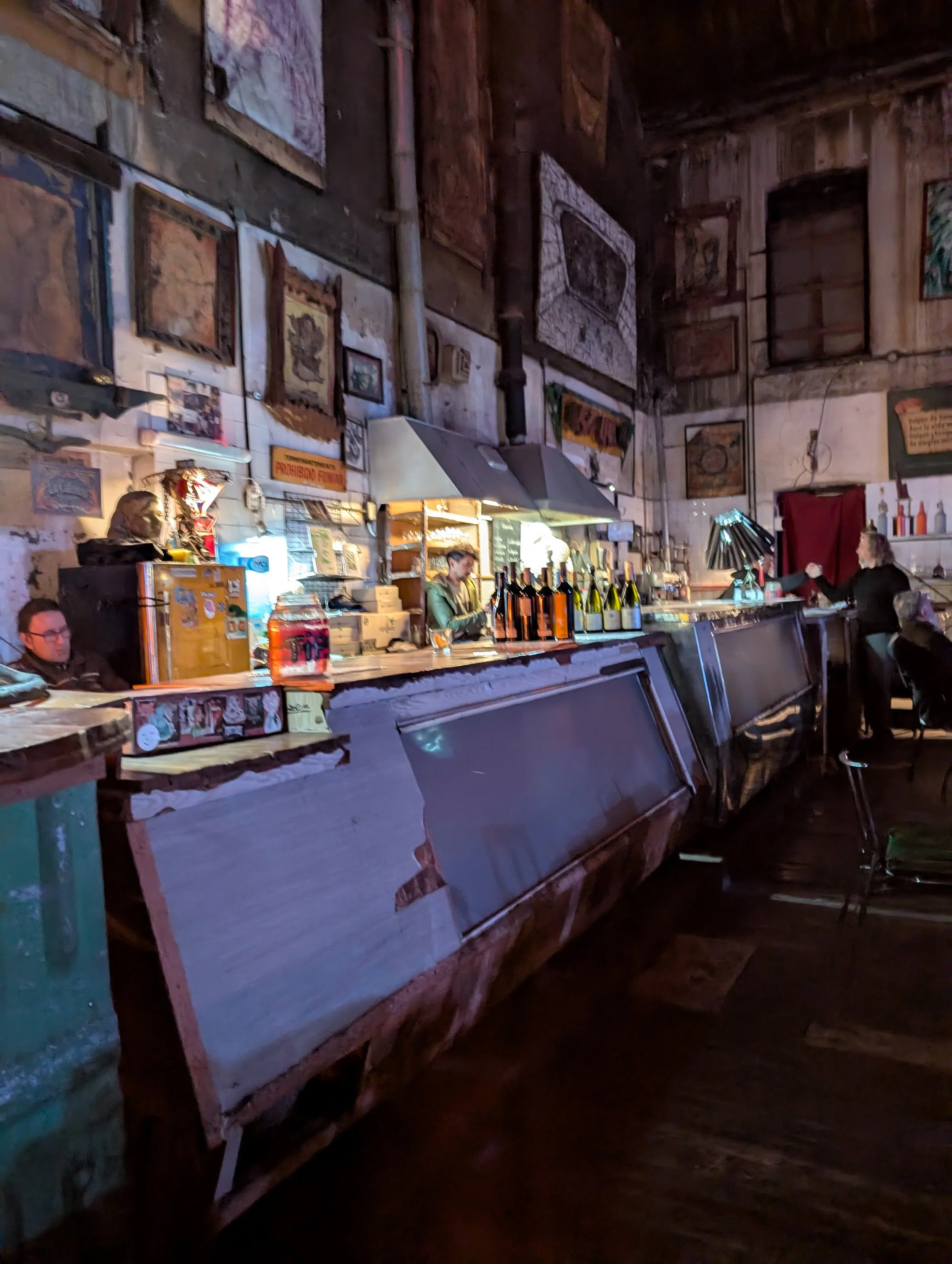
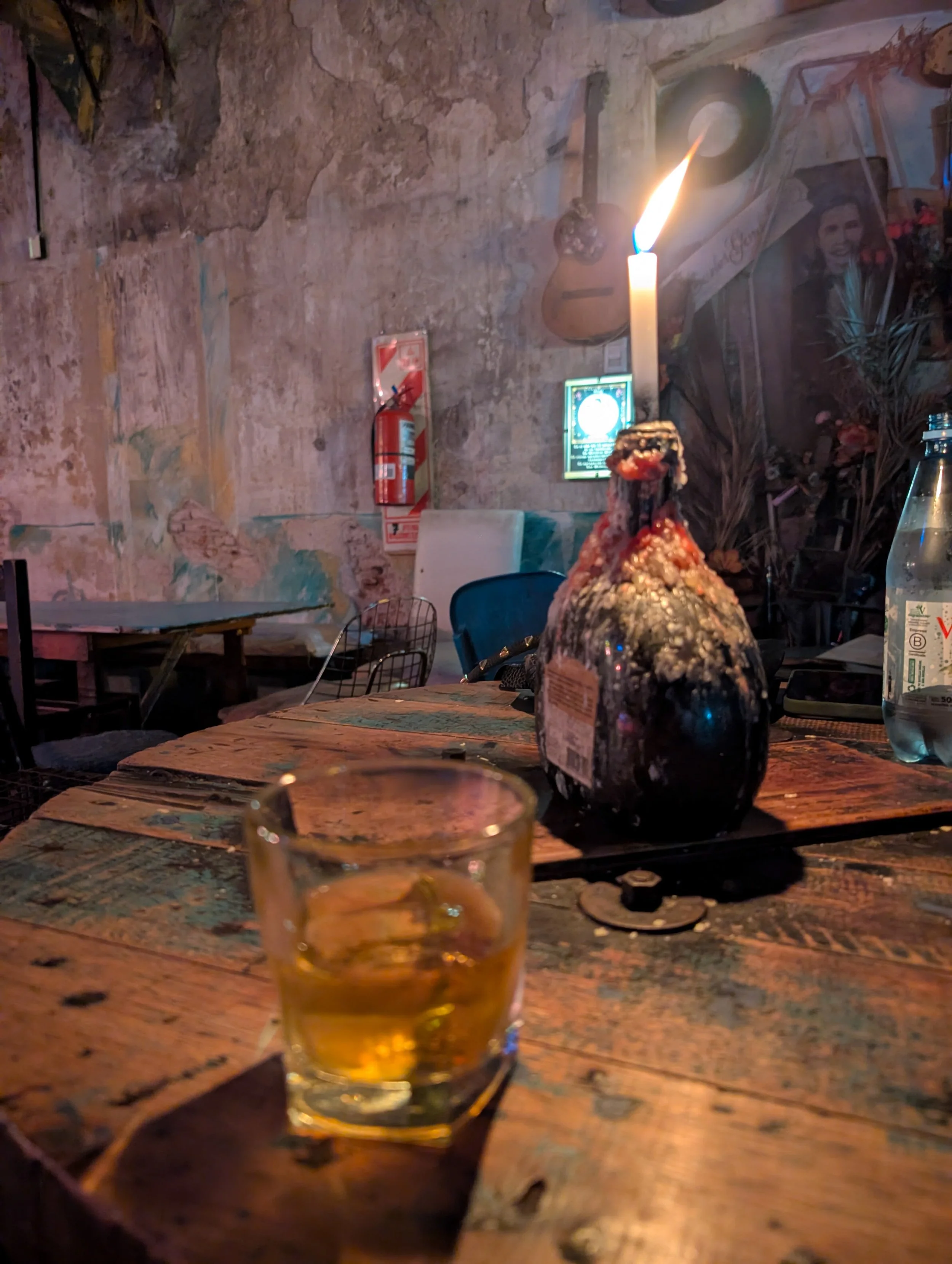
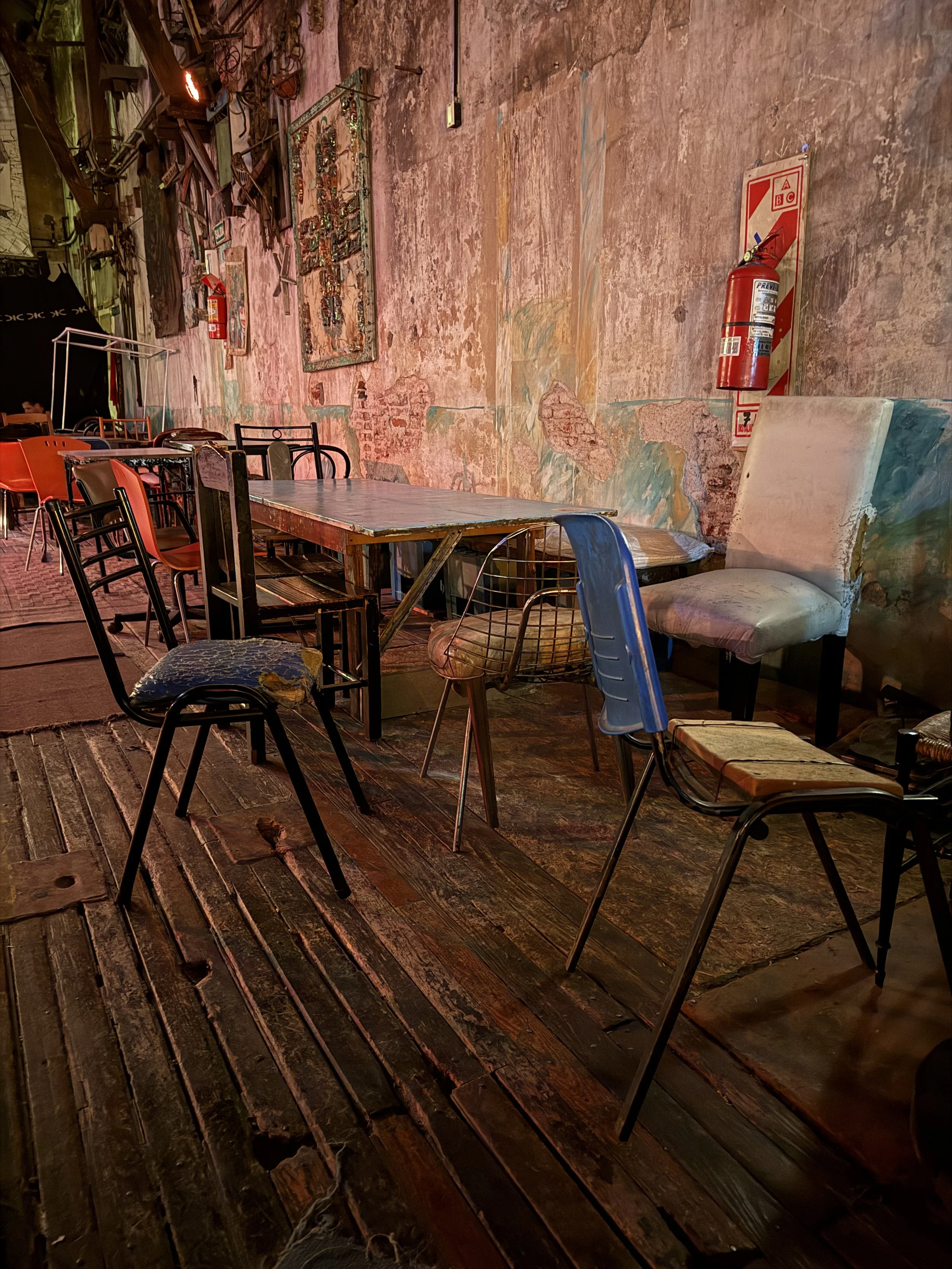
We find a table and I head to the bar. I ask for a scotch. Johnnie Walker Black is what they have—on the rocks it is. I ask if they take credit cards. They do. The bartender switches on a handheld card reader and we lock eyes; that particular long gaze—the one that only happens between lovers, or while a credit card machine slowly spins up searching for a WiFi signal. Four to eight minutes later it blinks green and pings. I tap my card and head back to the table. Then a voice emerges from the sound system, preparing us for the show about to begin.
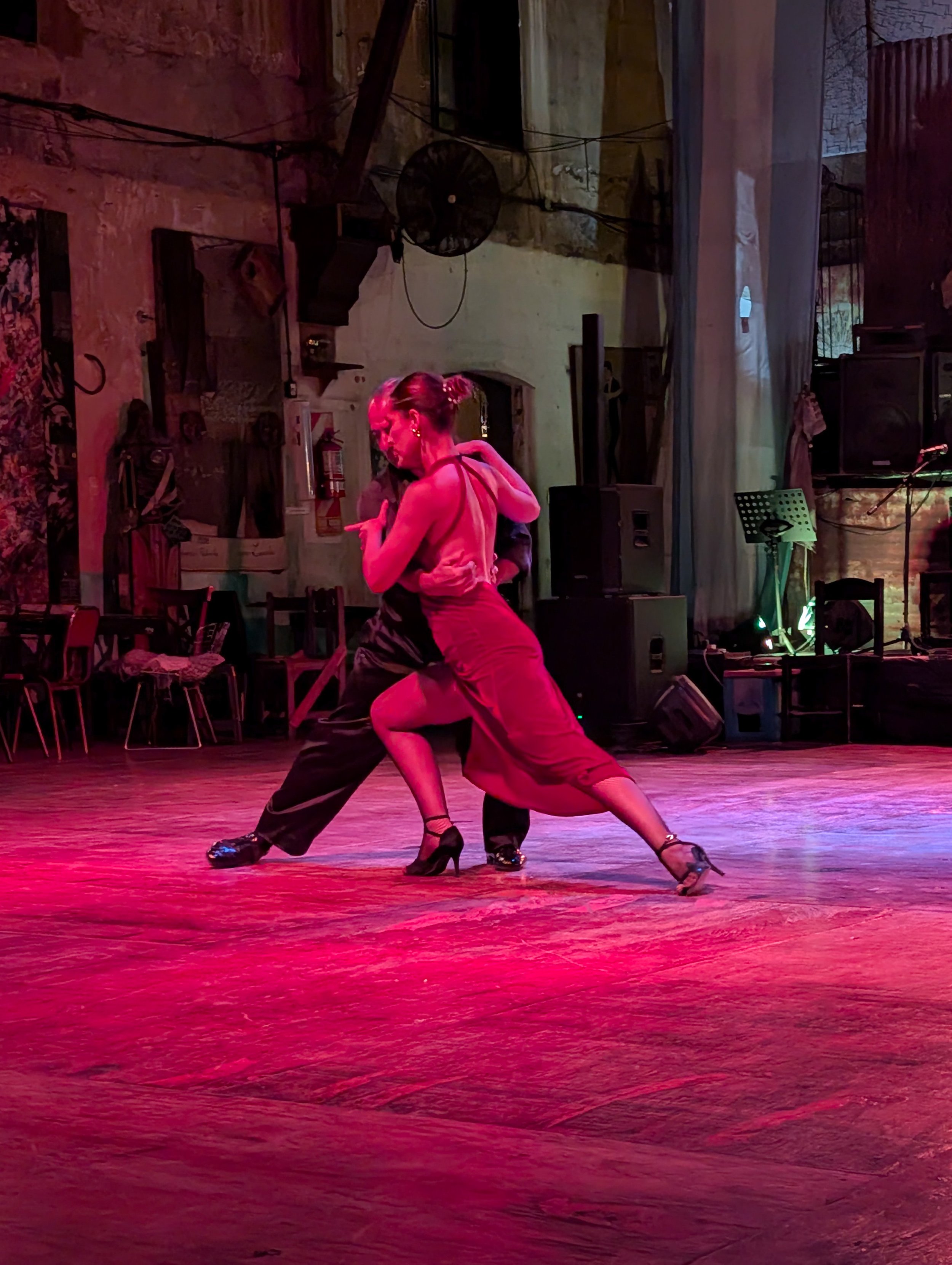
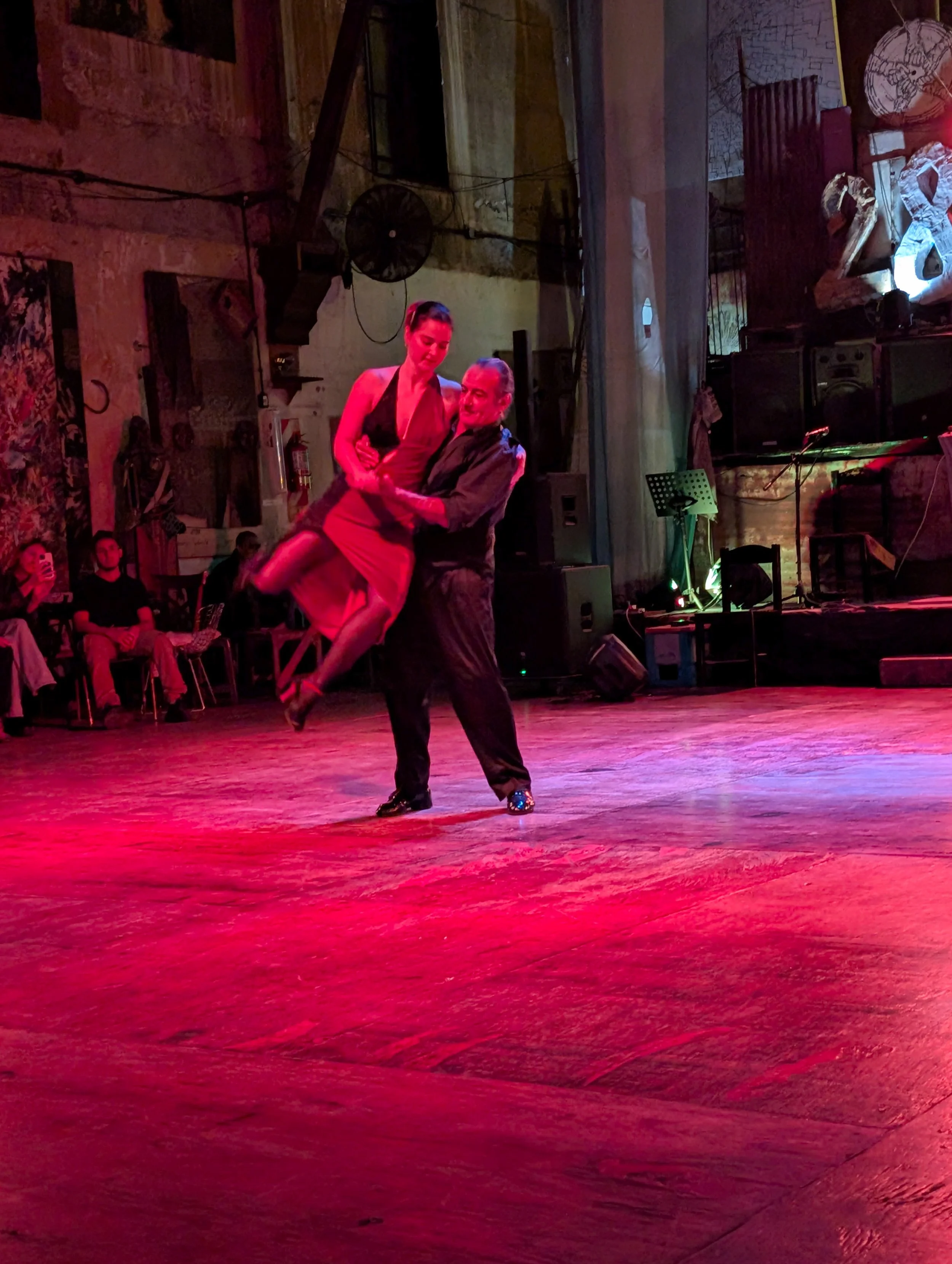
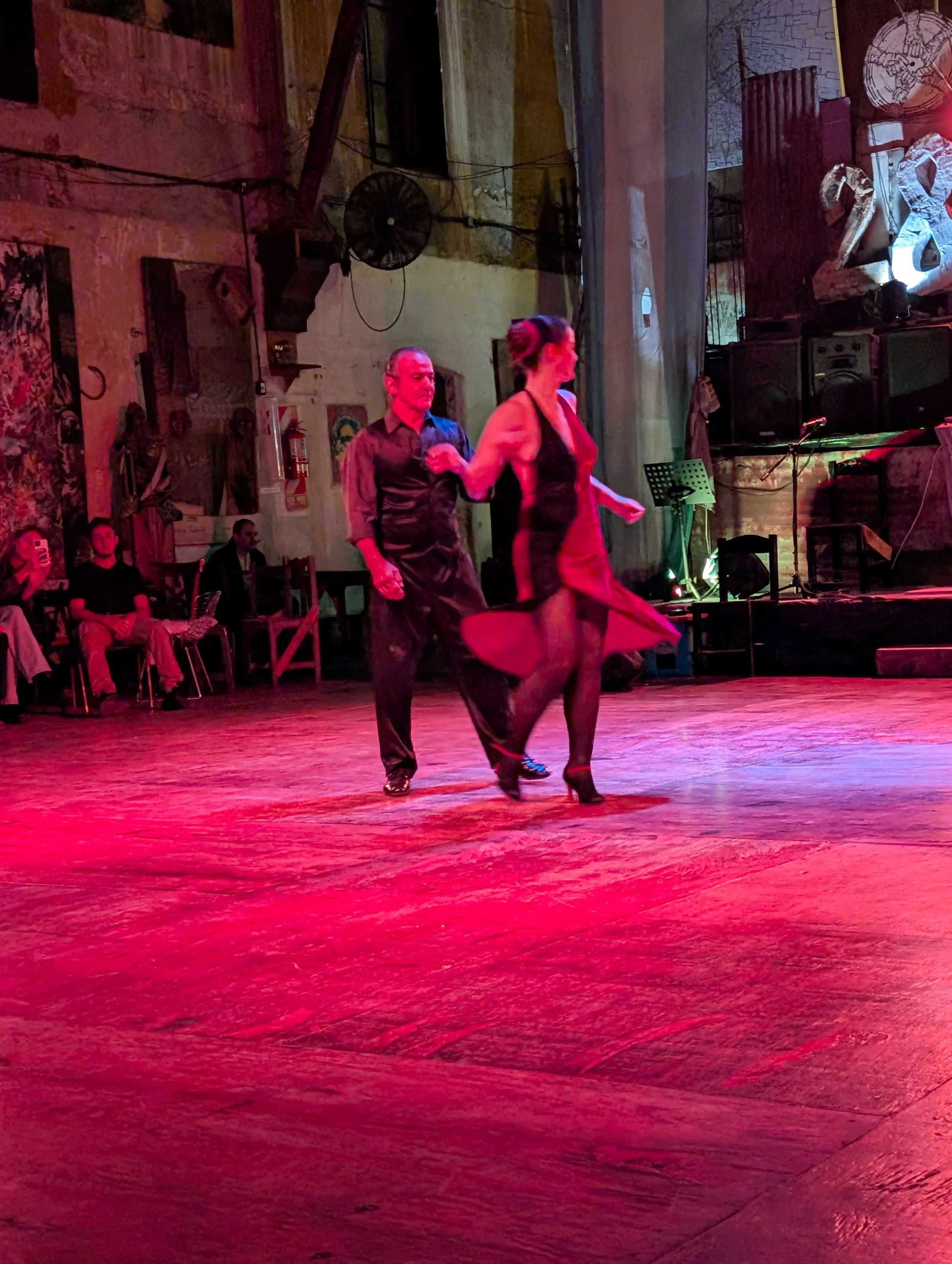
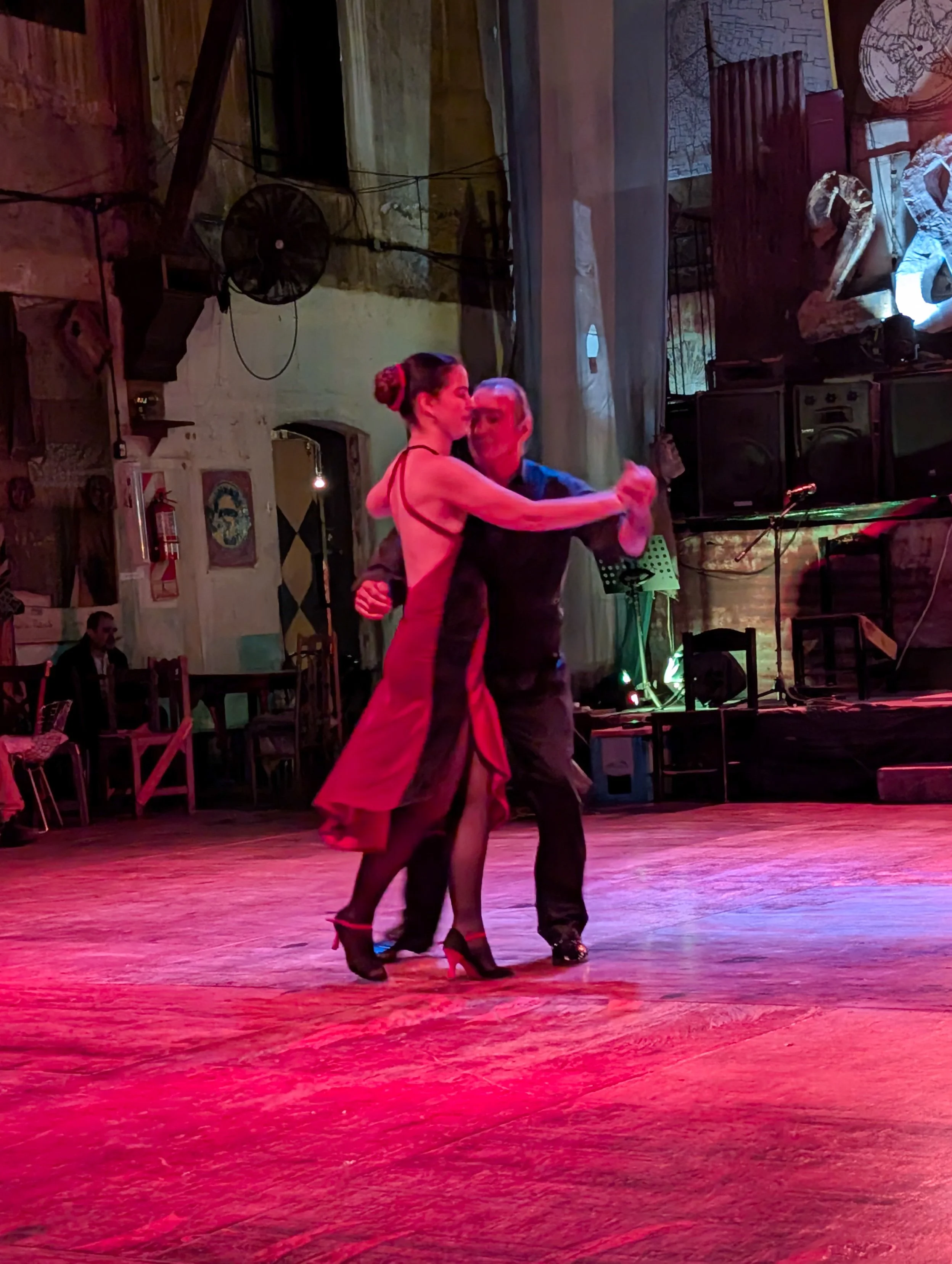
From stage left, a female dancer cuts across to the center of the floor—strappy dress, strappy black shoes, hair pulled back—and holds perfectly still, like a statue waiting for a pigeon. The male dancer enters from stage right and the pair begin the tango. The dance looks intensely passionate: the chest-to-chest embrace, the slow deliberate touches. Emiliana leans over and explains that tango is actually highly technical, and that the passion is a performance.
Next, a small band plays classic Argentine music while two pairs of couples take to the floor and tango in unison. It's absorbing, fascinating, and entirely new to me. The scene is classic noir. The appreciation of the small crowd is palpable. Then they throw us a curveball: a beefy guy performs acrobatics with plastic tubing, some of which has LED lights installed. He dramatically points a pocket-sized remote at the tube to activate them. Suddenly the performance is part tango, part Burning Man, and one hundred percent strange in the most wonderful way.
This is a true variety show. The original male dancer returns to the stage for a solo vocal performance before the final couple tangos. The announcer calls each performer out for applause and bows. That's the show. I look across the candlelit table at my companions, my amazement spread across an ear-to-ear grin, and begin taking in every inch of the room. I don't want to forget a thing.
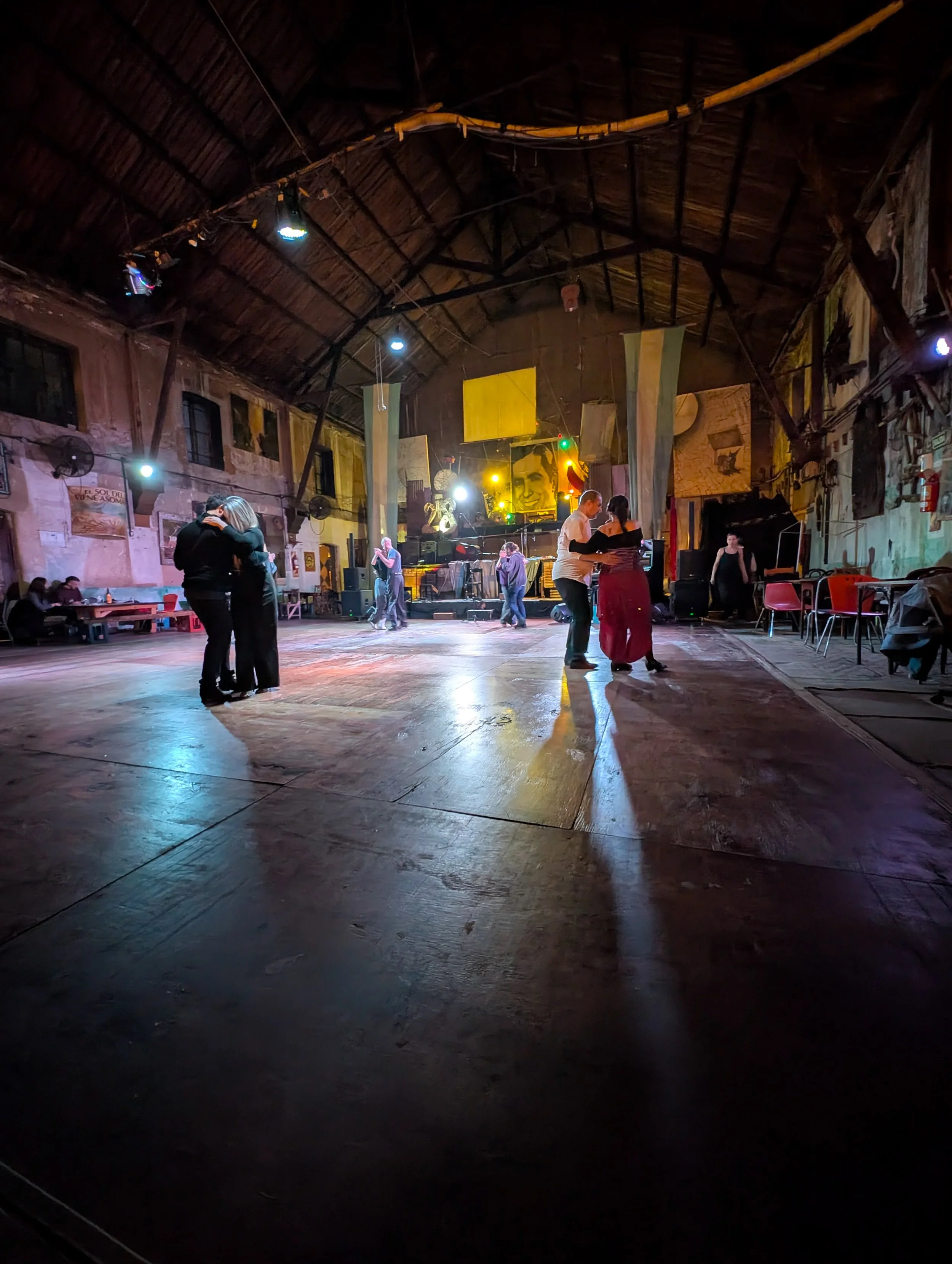
Then the performers emerge from backstage in their street clothes. The audience applauds again, lining up for photos. One by one, each performer circulates through the crowd, choosing partners to tango. The music starts again and the dance floor fills.