Colectivos
We grabbed an Uber outside Aeroparque Internacional Jorge Newbery in Buenos Aires—an airport sandwiched between the Río de la Plata and Tres de Febrero Park, with the Palermo neighborhood just on the other side. It was a short drive to our apartment.
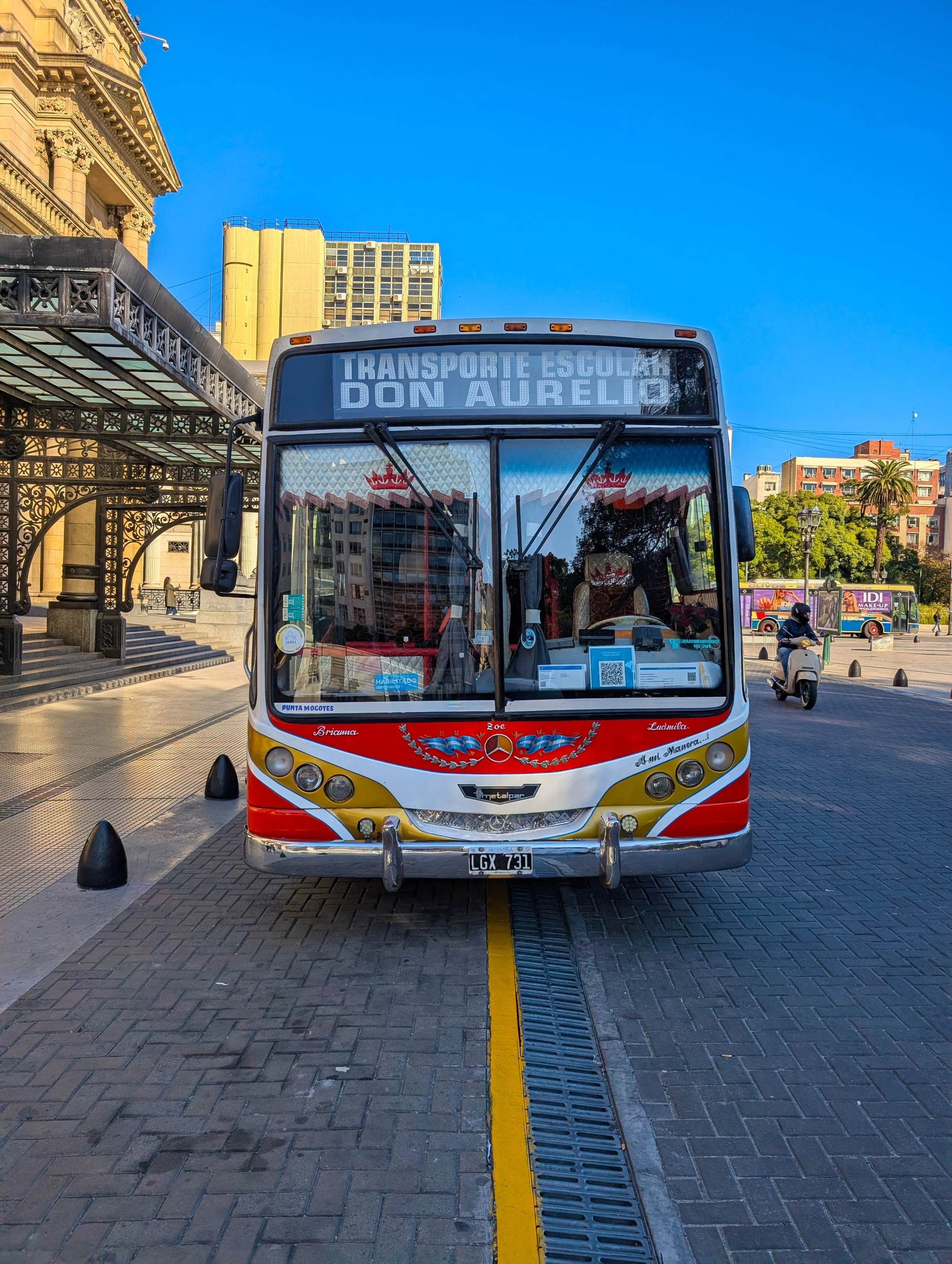
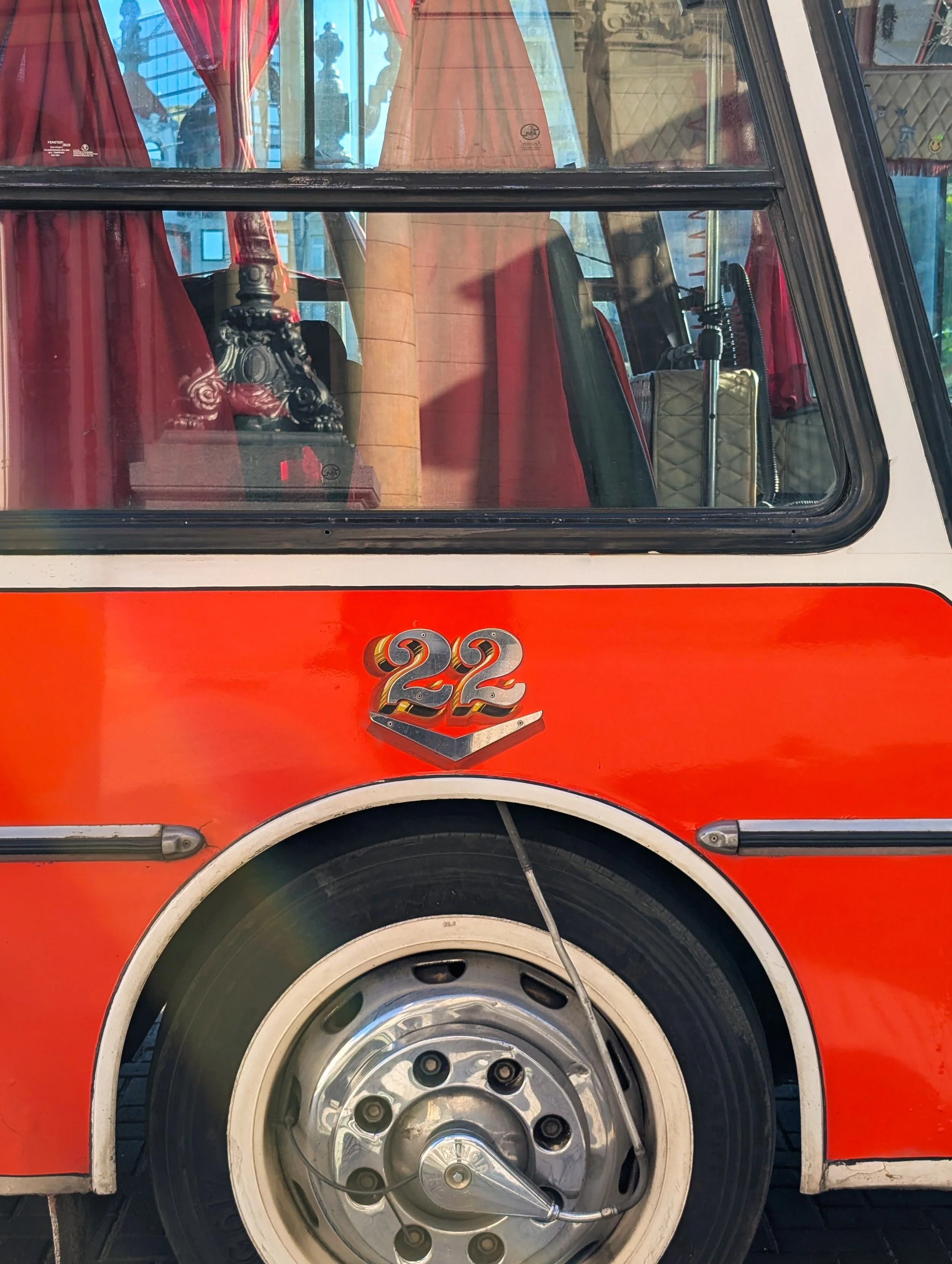
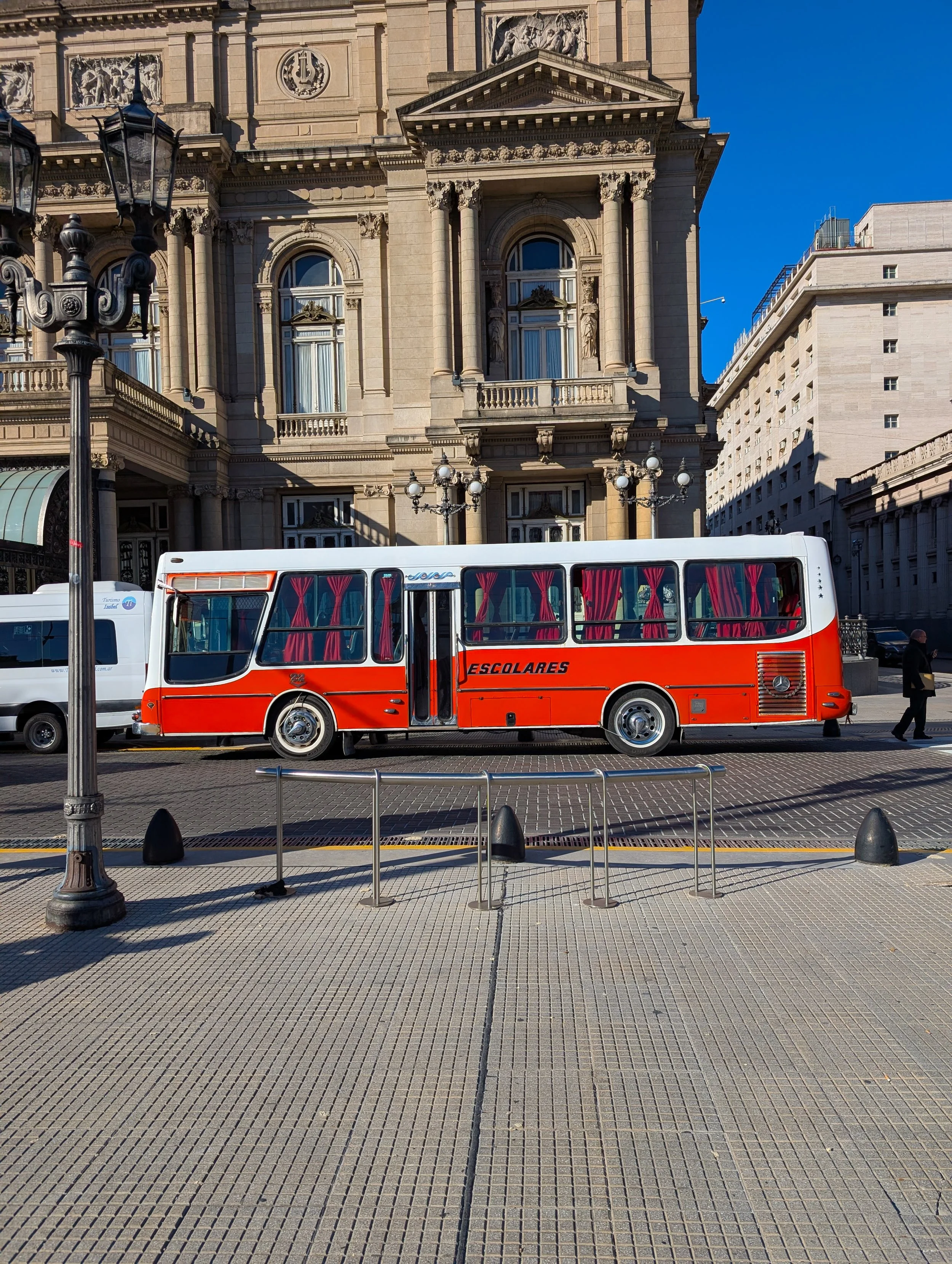
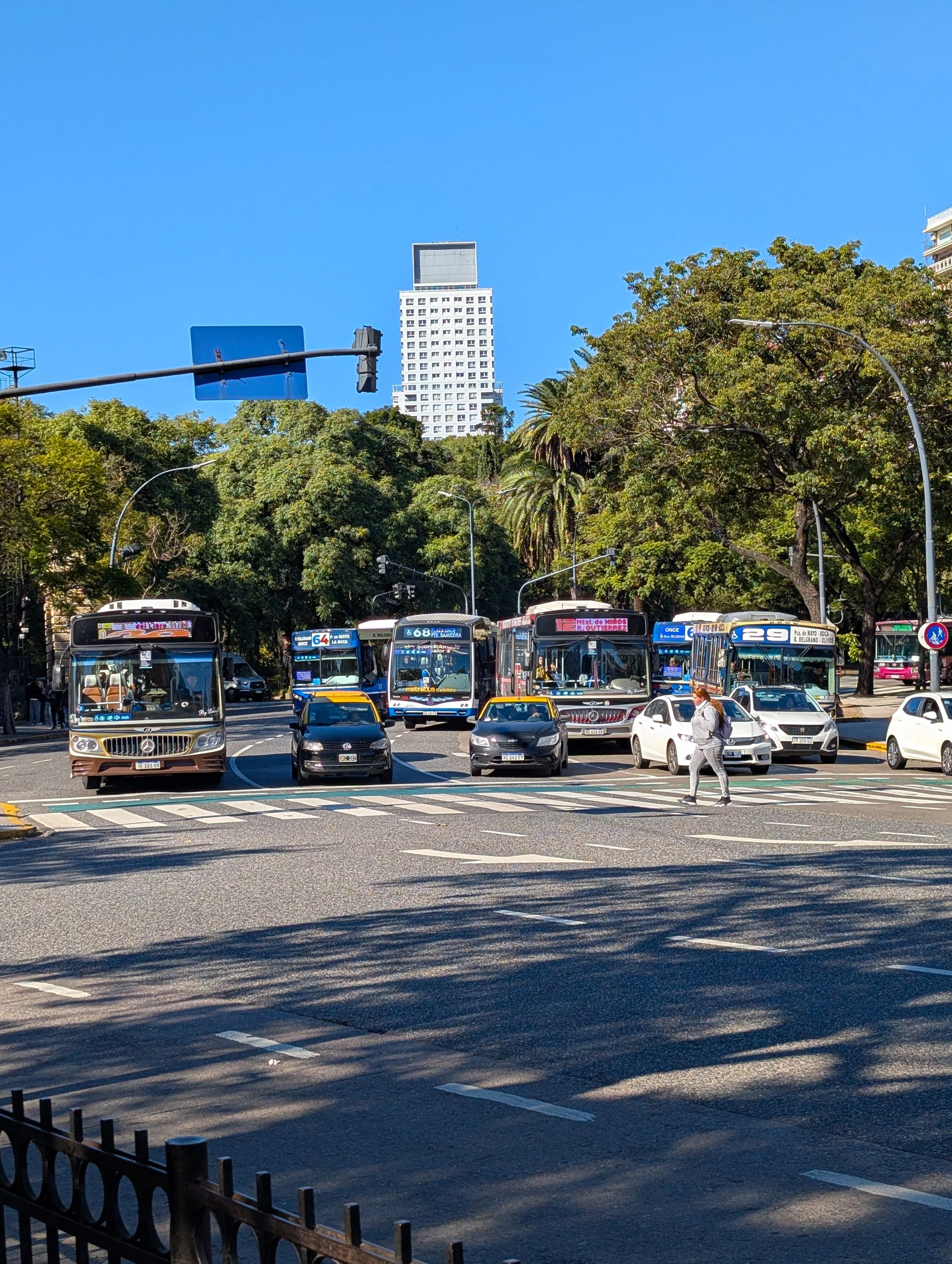
A few minutes into the ride, I began noticing an abundance of vintage chrome-trimmed buses darting in every direction—classic beauties speeding along, packed with commuters. Once we arrived, I stepped out onto our balcony to survey the neighborhood and spotted a beehive of activity below: buses stopping and going through the gap between two neighboring buildings. A red, white, and blue one from the '70s rolled past, followed by a Celtics green-and-yellow, then a cream-and-orange monster with gleaming chrome wheels.

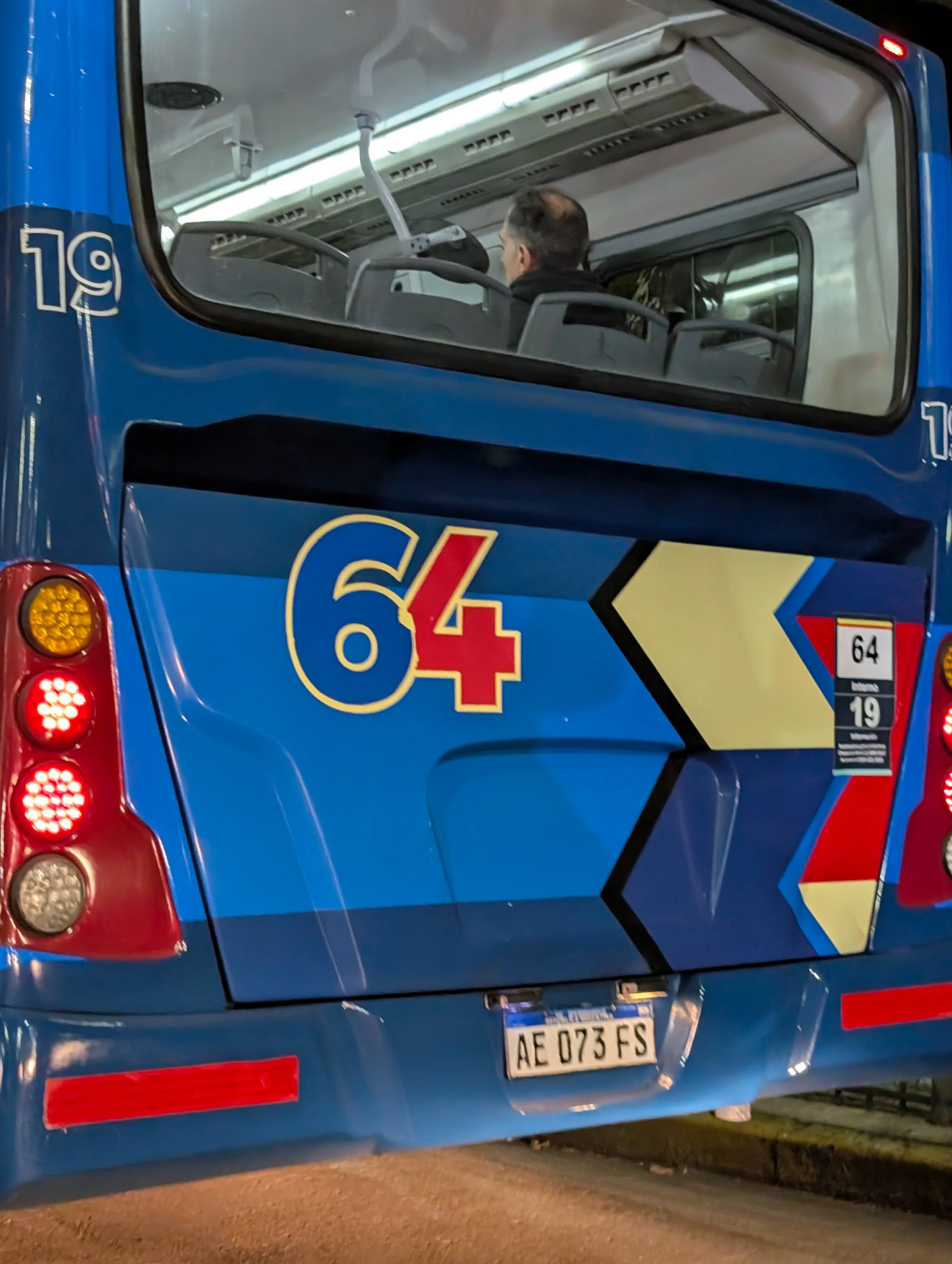
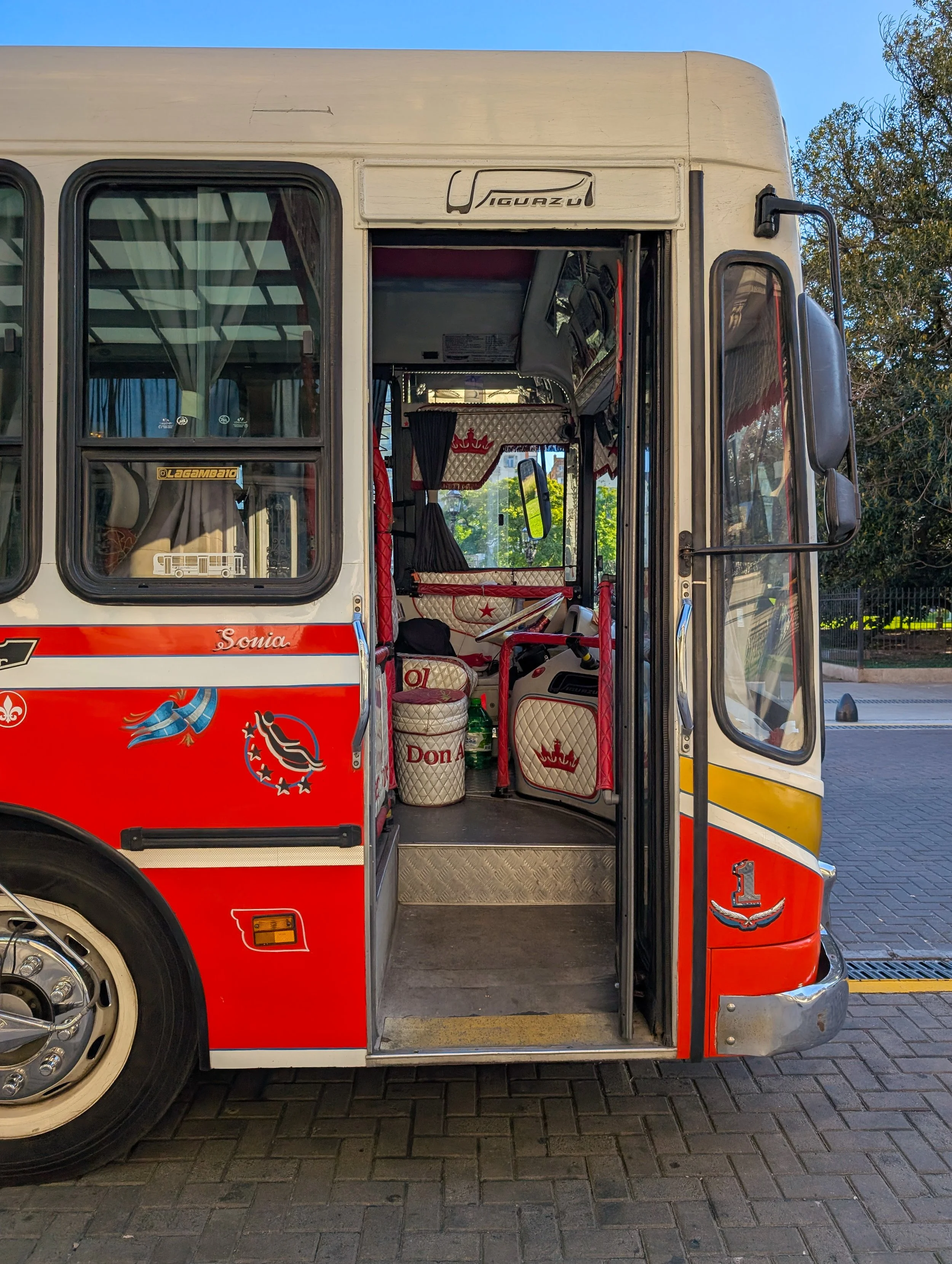
These are the colectivos—legends of Buenos Aires. Each one is unique, adorned with Fileteado, Argentina's distinctive folk art of ornate lettering and scrollwork. The first colectivos appeared in the 1920s, and the lines have been privately owned ever since, serving every nook and cranny of the city. The government attempted to regulate them from the 1950s through the 1980s, but ultimately failed as the individual operators banded together into collectives. The buses were privatized and deregulated in the 1990s, and while many were modernized and standardized, the classics still swim among the new fish.
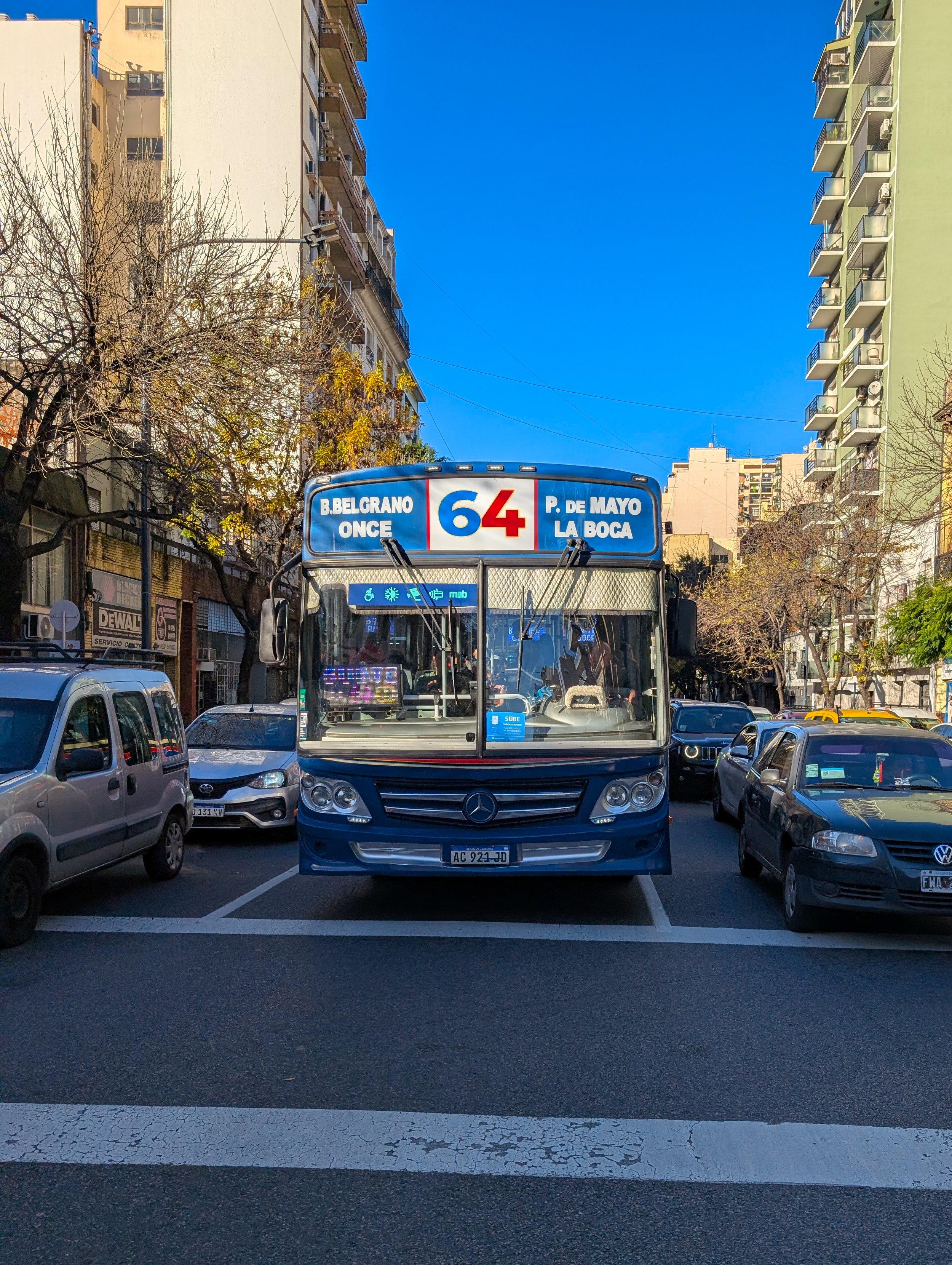
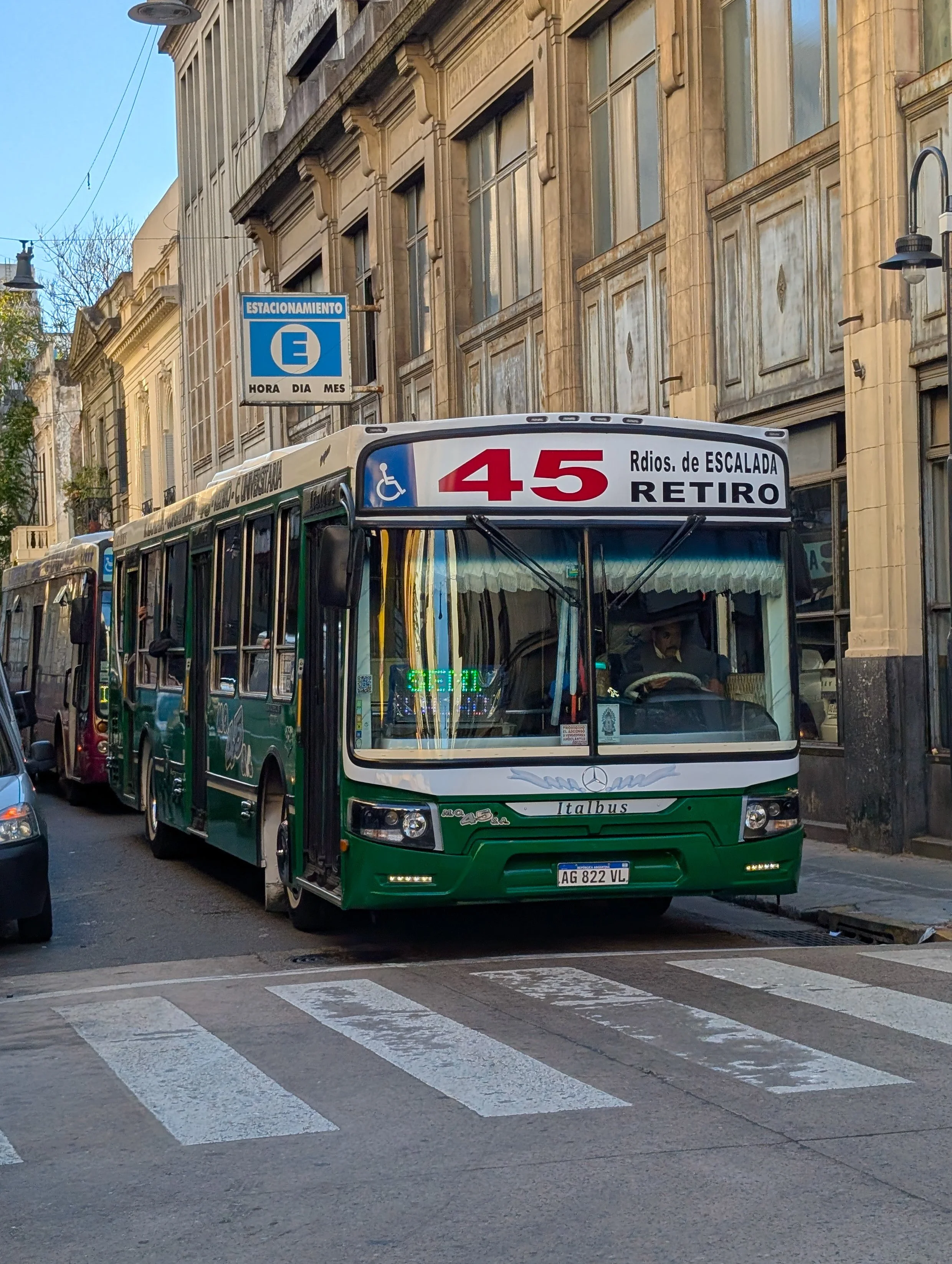
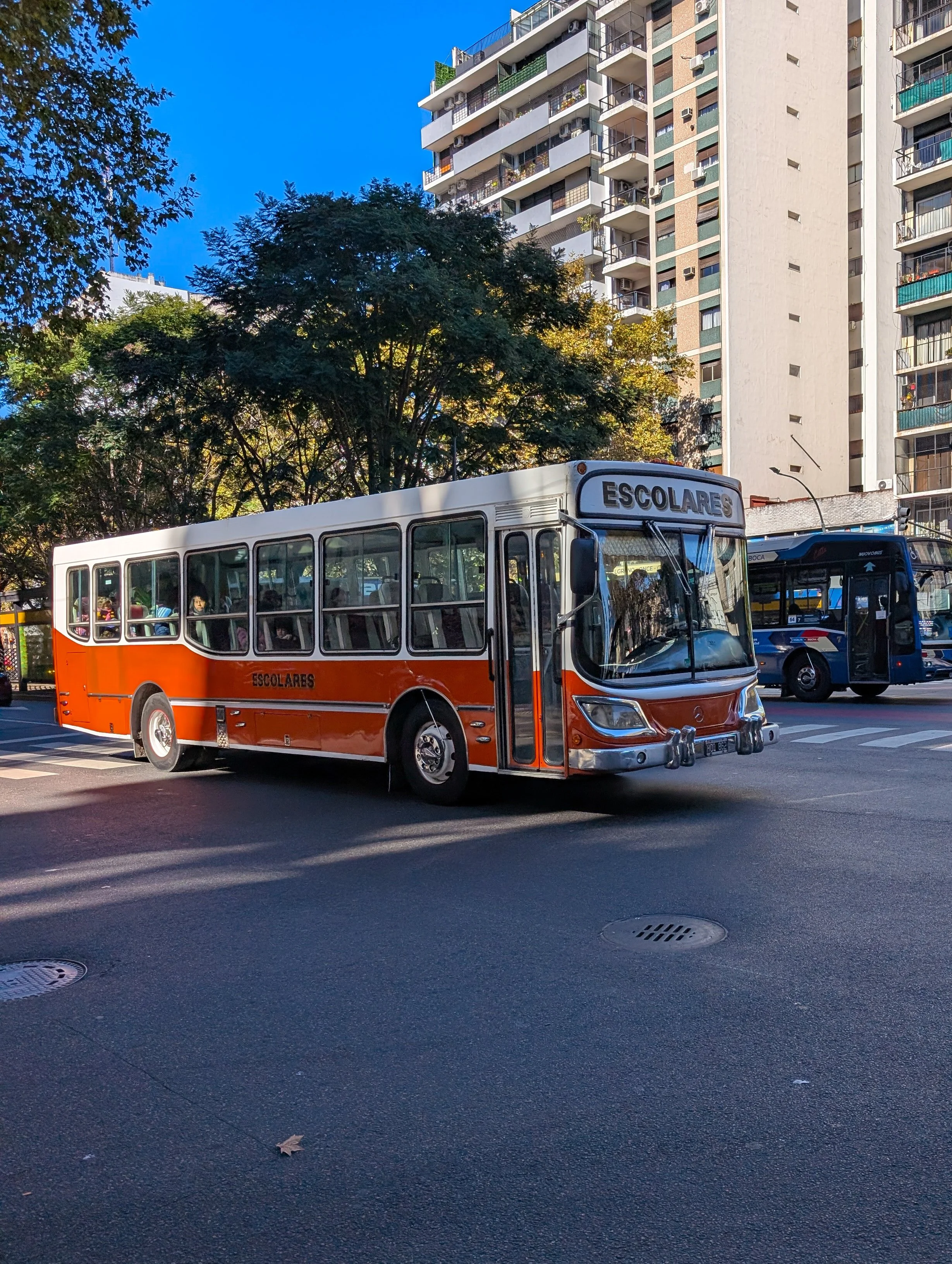
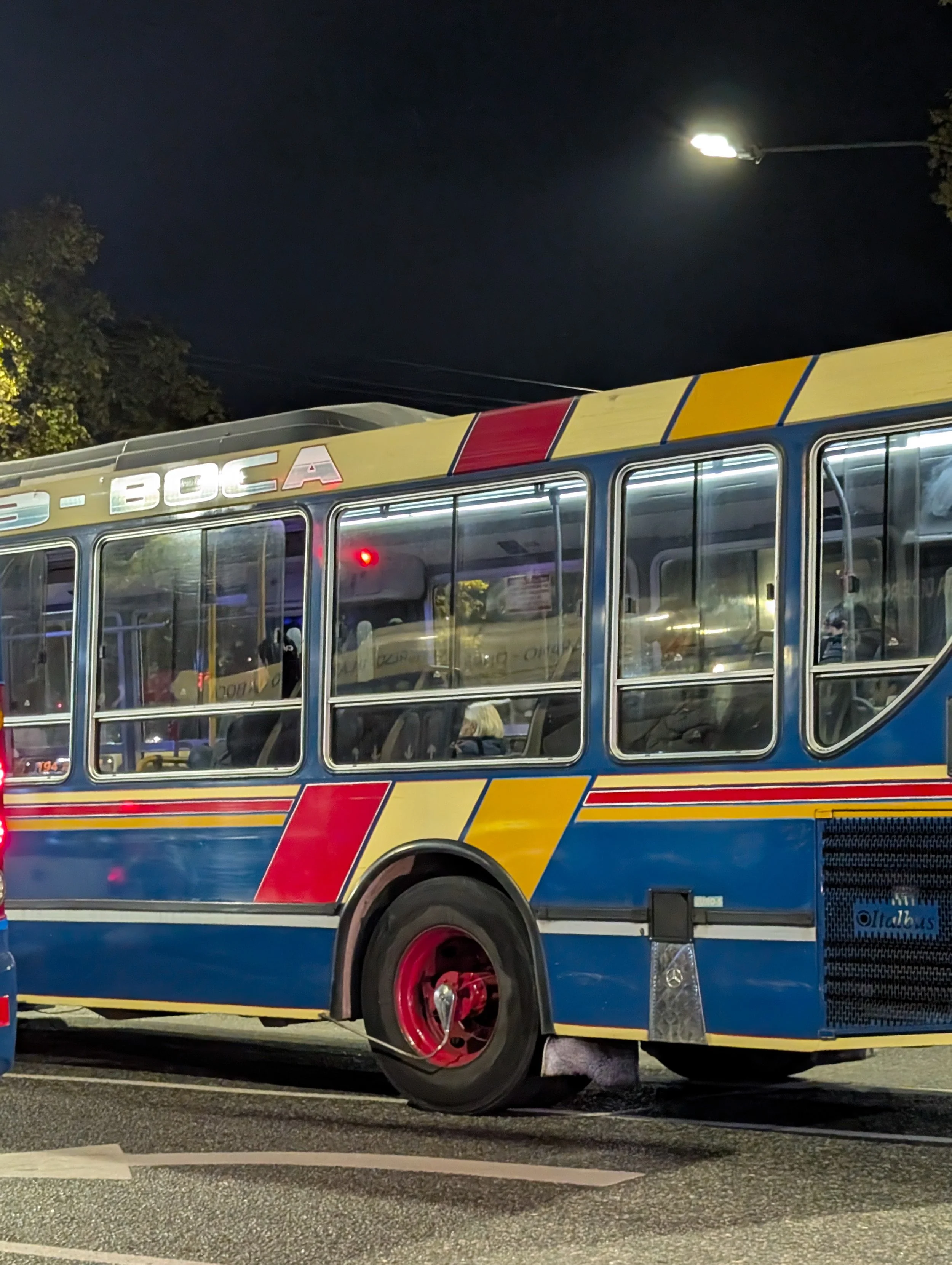
Walking home late at night. Paris, Tokyo, and Portland. Sometimes a warm, boozy gauze settles over me. I look at the lights coming from the houses and apartments. Here in Buenos Aires, the same curiosity draws my eye to the bus. Passengers on full display. Mother with a child struggling to get home after a long workday, or just catching a ride after playing in the park? Young dude with headphones. Isolated and alone, hoping for friends to sit next to, or a DJ listening to a new track? Moveable dramas, the colectivos...
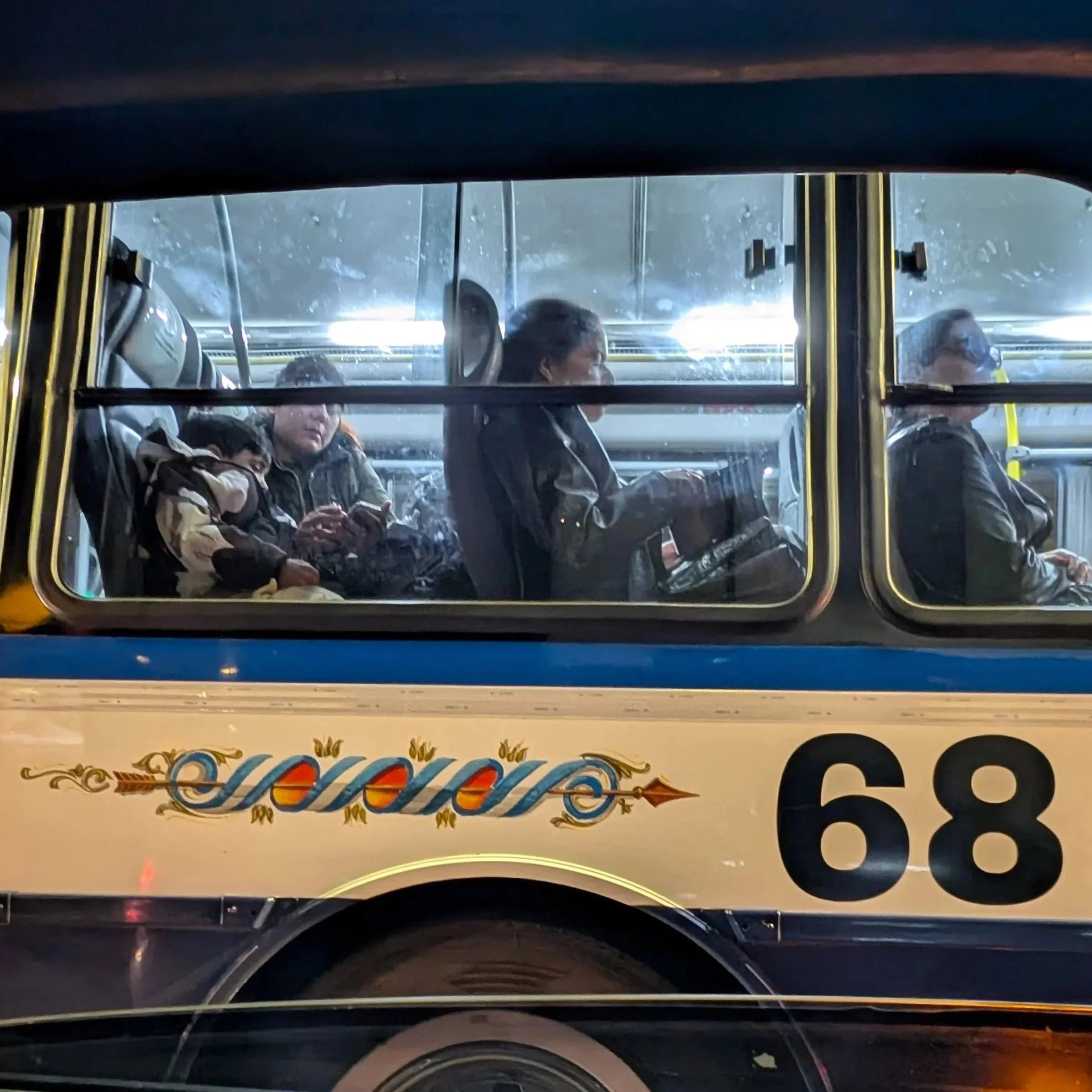
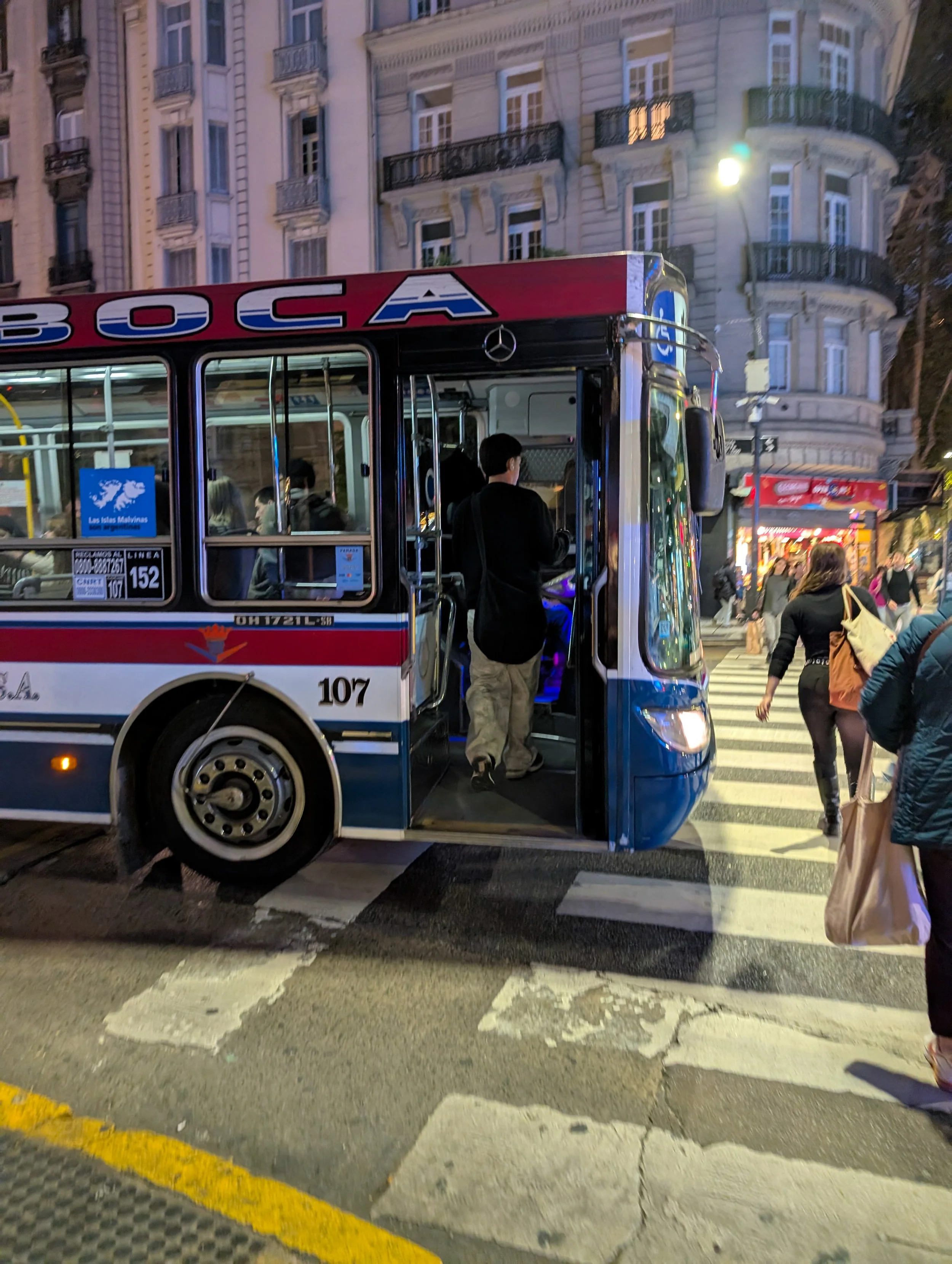
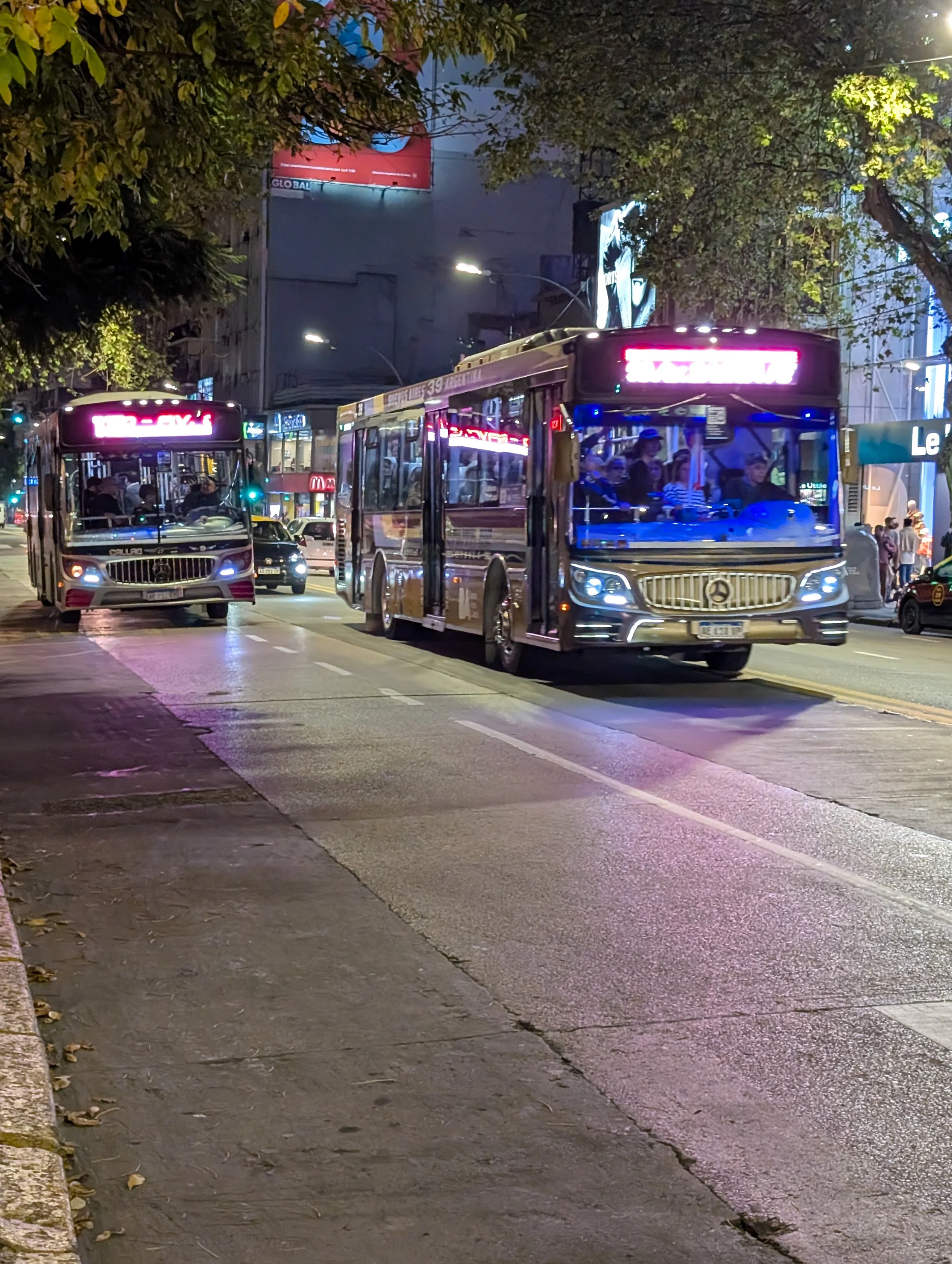
Today, over 130 bus companies operate in Buenos Aires—a saturation that all but guarantees door-to-door service anywhere in the city.