
Cheers from the Cauldron
The 2,000-degree furnace—the heart of glassblowing—is called, amusingly, a “glory hole.” What comes out of it, a glowing, heavy wad of molten glass gathered on a hollow metal rod, otherwise known as a “crucible”, must be quickly and athletically manipulated before it’s too late.
In Adelaide, Australia, where Jessica Murtagh plies her trade, this requires two fans and an evaporative cooler at all times in summer, where outside temperatures can top 100 degrees. Not that she minds.
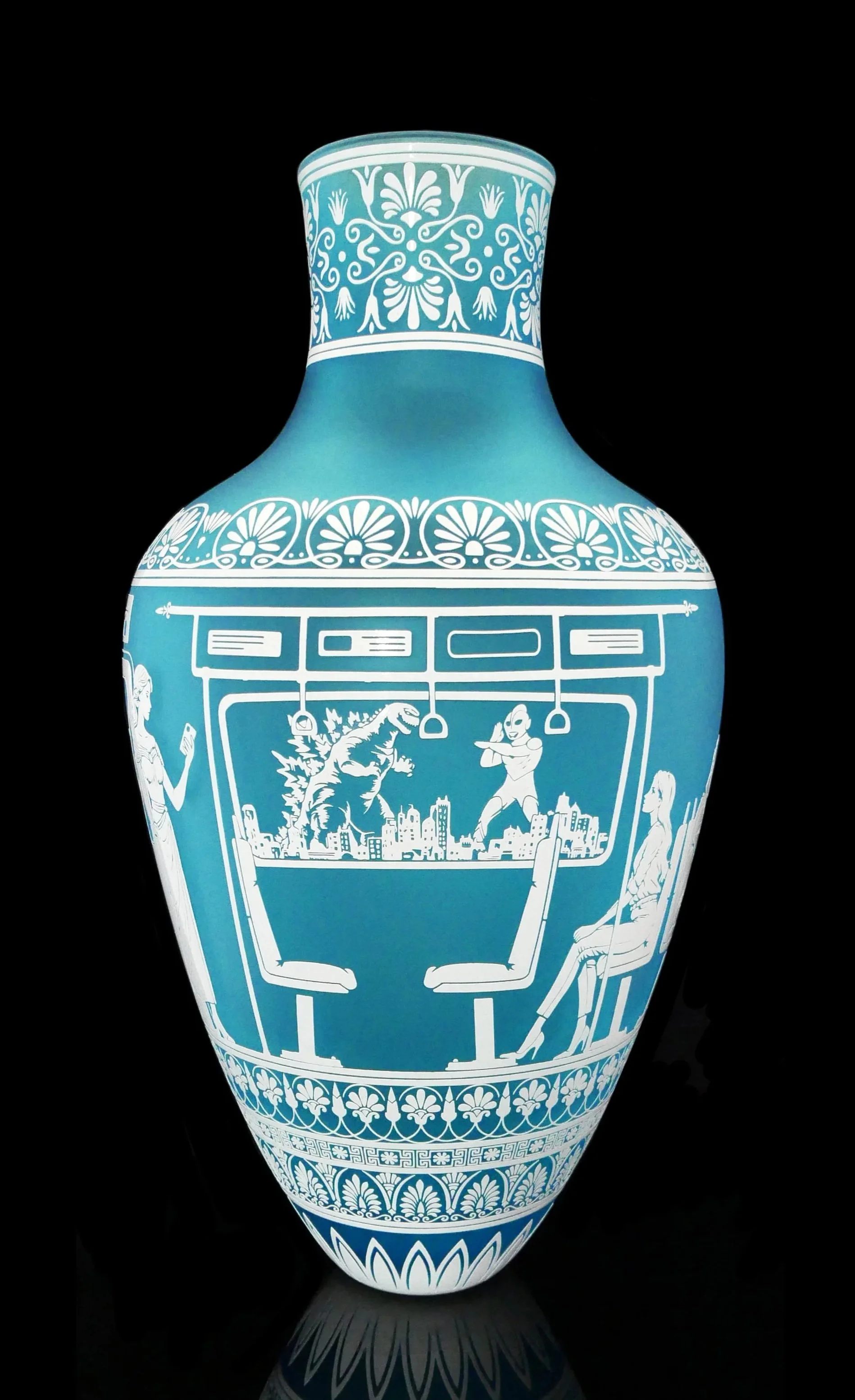
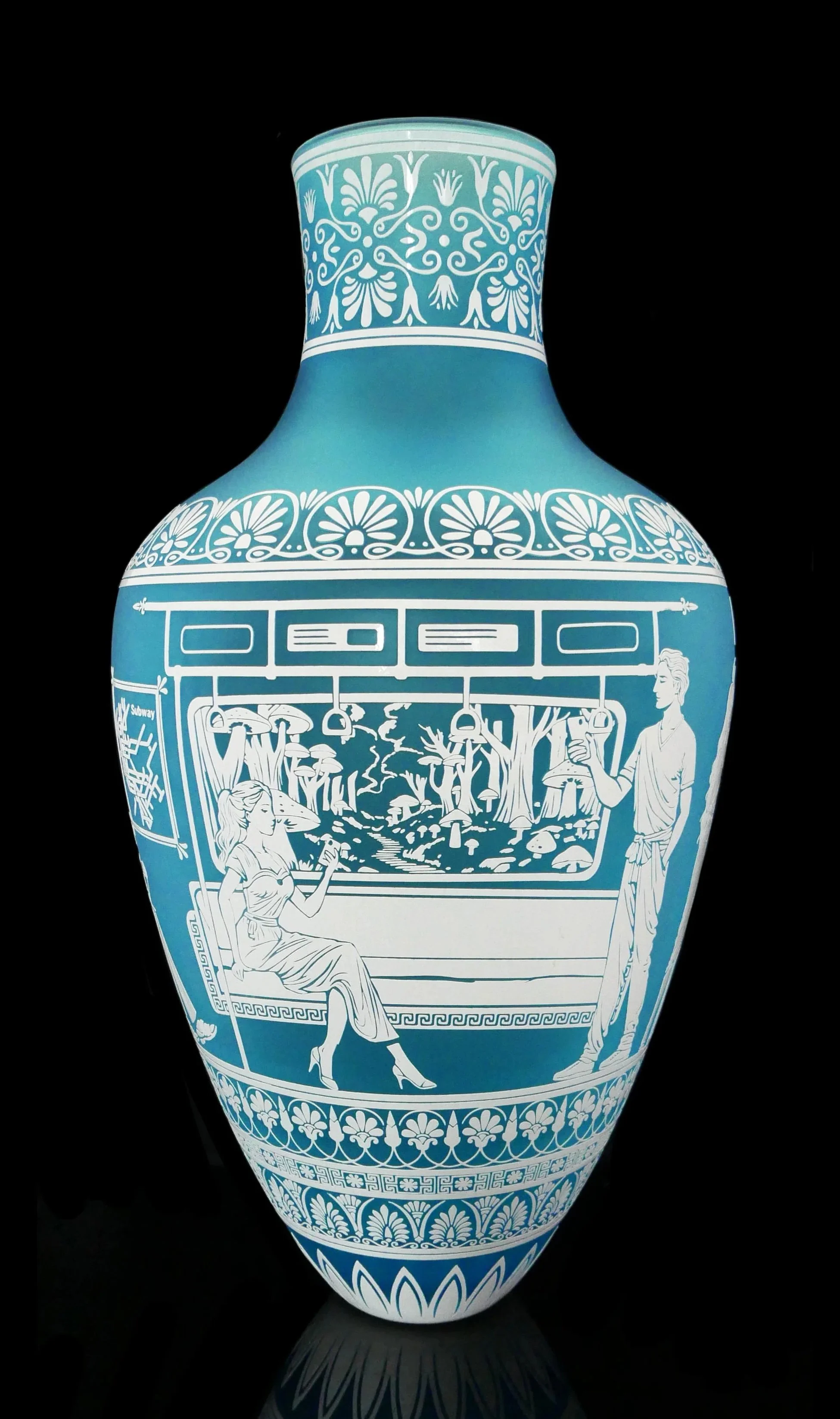
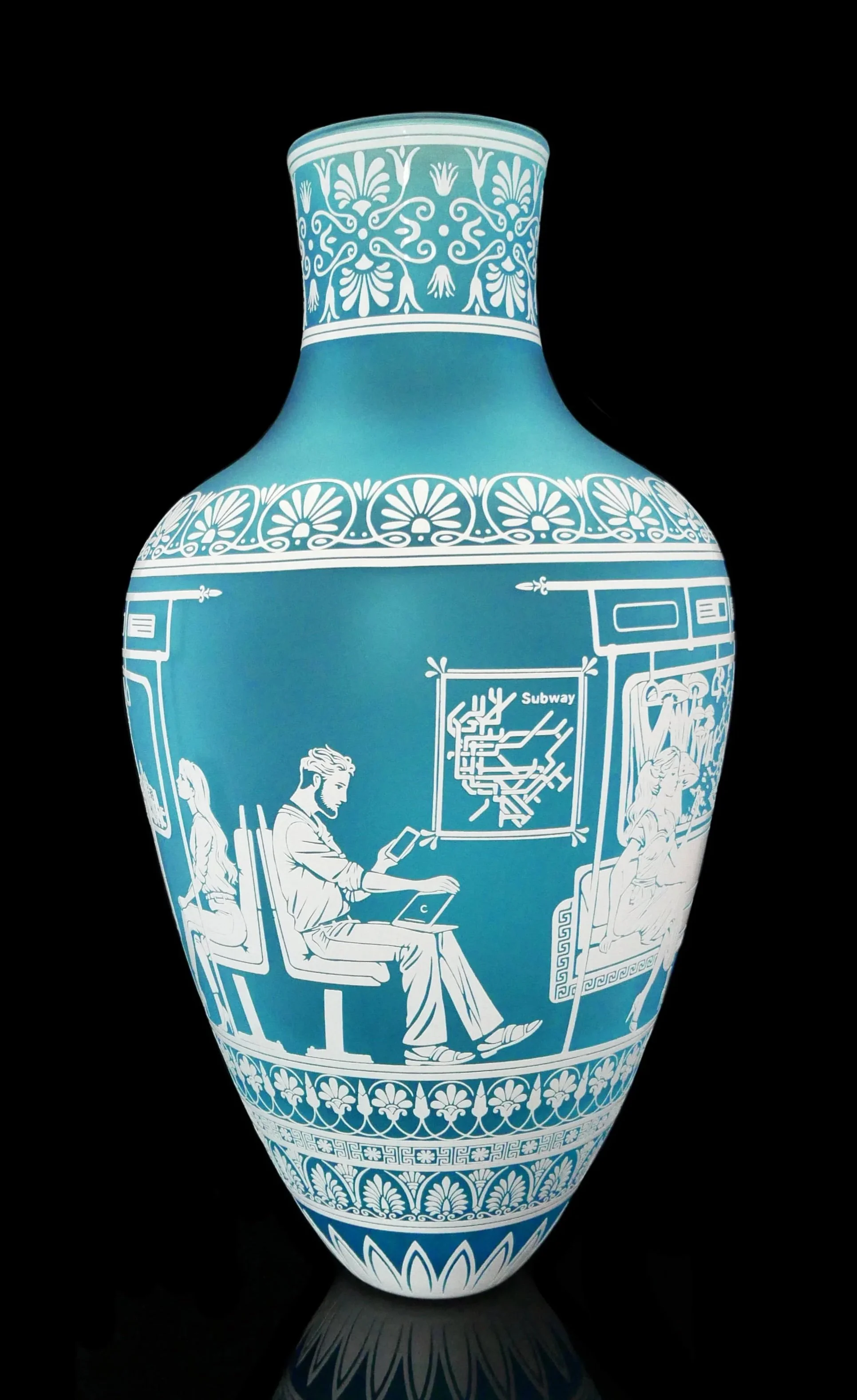
Digital Dreams, Surreal Subways, from the Modern Relic series.
“It’s a wall of heat that hits you,” she says. “But the adrenaline sustains you, and you don’t even feel it until the end of the session.”
In her hands, the end result is cool and contemplative, starkly different from the fiery and kinetic act of creation. Though primarily for Roman-inspired, white-on-blue “cameo” glass, her more recent work has veered into the purely aesthetic—large botanical vases that exist as much for their beauty as any deeper meaning.
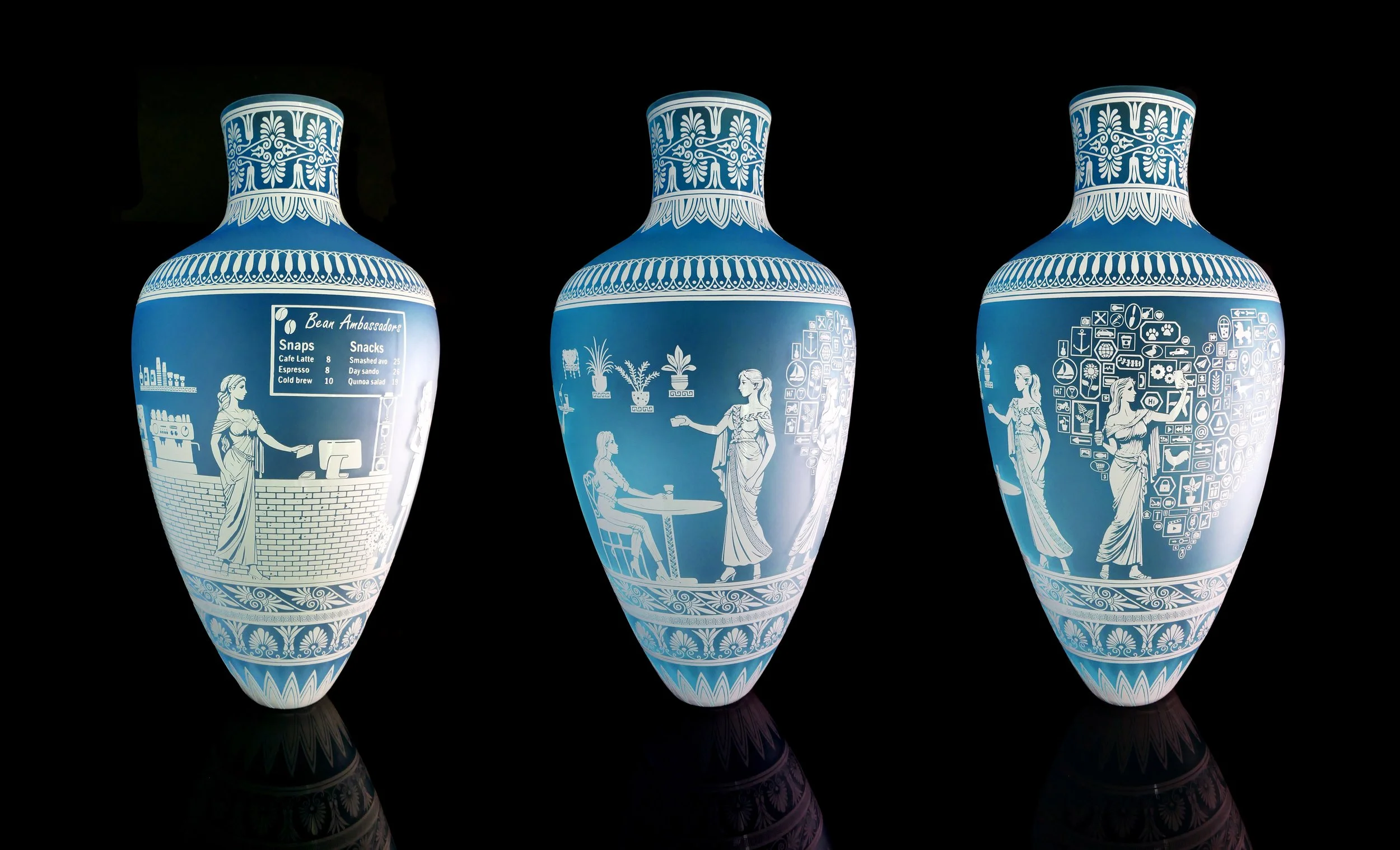
Brunch with Narcissus, from the Modern Relic series.
Her journey to this unusual medium interrupted a more conventional career in the corporate world. That happened when she stumbled on a glassblowing workshop; and the heat, the adrenaline, and, above all, the end result proved irresistible. She enrolled in the University of South Australia, where glassblowing was an elective, and was soon underway.
Glassblowing is nothing like most arts. The workshops can cost hundreds of thousands of dollars, space is limited, and the work physically and mentally taxing. The artists usually work in teams, and for bigger pieces, larger people are needed. The end results reflect an individual’s vision, but the effort is invariably collaborative. And, given the high bar to entry, almost everyone doing it has to be exceptionally skilled.
So, what differentiates the eliter from the elite? To stand out, glassblowers typically go beyond skill and artistry and seek out “stories.” Murtagh has found a quirky niche, building her reputation on white-on-blue, narrative “amphorae.”
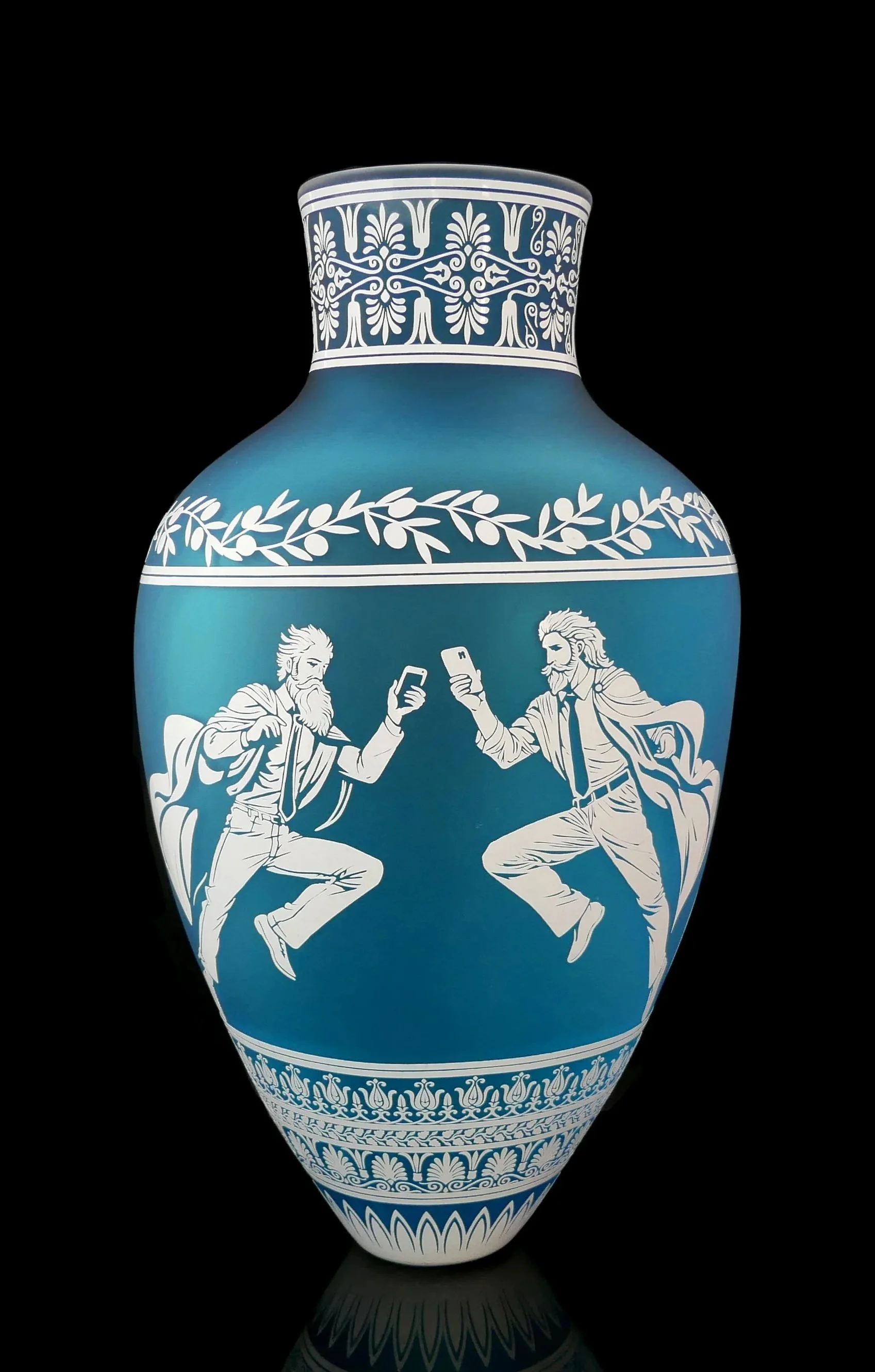
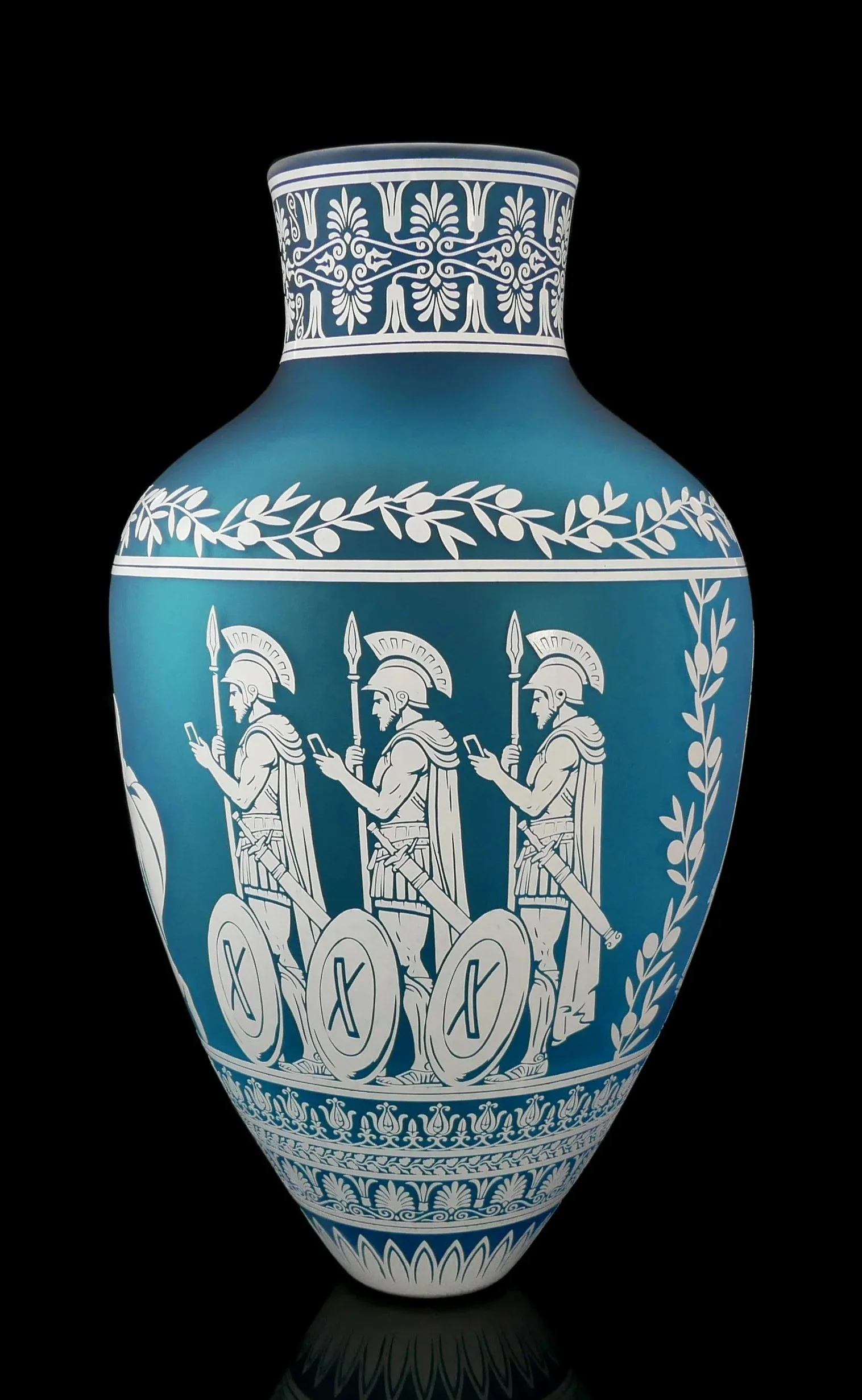
Zeus vs Kronos, Battle for the Universe (When Titans tweet), from the Modern Relic series.
These draw their inspiration from a curious mix of sources. The most obvious of these are Ancient Roman white-on-blue cameo vases, and notably the Portland Vase. Murtagh weds this to the narrative tradition of Greek red-and-black figure pottery, which depicts subjects ranging from everyday life to gods fighting mythological battles. However, her subject matter also lives in the present, with mobile phones and other tech taking center stage.
“When it comes to themes, we fight our battles differently. It's no longer a phalanx of soldiers against soldiers; we're talking about a Twitter war with someone,” she says.
“Instead of Zeus and Kronos battling it out for the universe, we’re battling it out online in the comments section.”
To create these stories, Murtagh begins with an overall concept that inspires the shape of each vase. She blows the objects with two layers of glass, one thick blue inside, and a thin white covering it. Once the form is complete, she then reapplies herself to the design, turning the idea into a story, which is printed on vinyl. During the “cold phase,” she sandblasts off the white glass to reveal the blue below, allowing the design to stand out.

Yellow Box Eucalyptus, from the Botanical series.
Her vases might offer a parade of Greek hoplites in plumed helmets staring at their cell phones. Or a group of women “gathering water from a well,” i.e., chatting next to a water cooler. But the whimsy doesn’t overshadow more enduring themes of disposability and preservation.
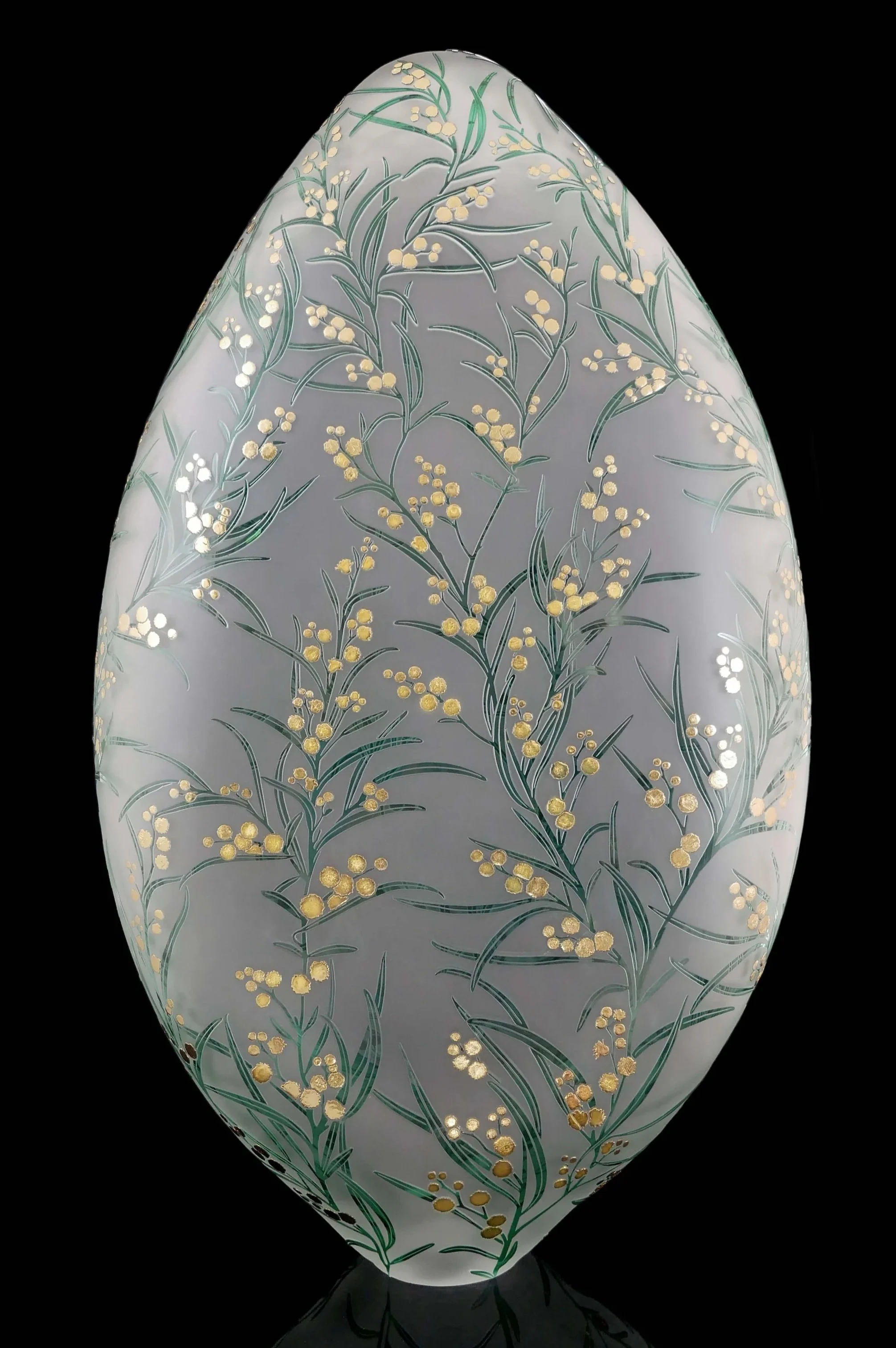
Golden Wattle, from the Botanicals series.
“So much of what we leave behind is plastic and degradable. The idea is to leave something that’s more solid.””
Although the narrative vases built her reputation, she also continually “plays” with less rigorous themes: delicate botanical designs that emphasize aesthetics for their own sake. At Martin Browne Contemporary, a recent show brought this side of her work into full relief: a series of botanical vases that are decorative, ethereal, require less interpretation, and evoke more immediate appreciation.
“You just have to enjoy what it is for the sake of what it looks like,” she says. “It doesn’t have to be any deeper than that. It’s just beauty and joy."
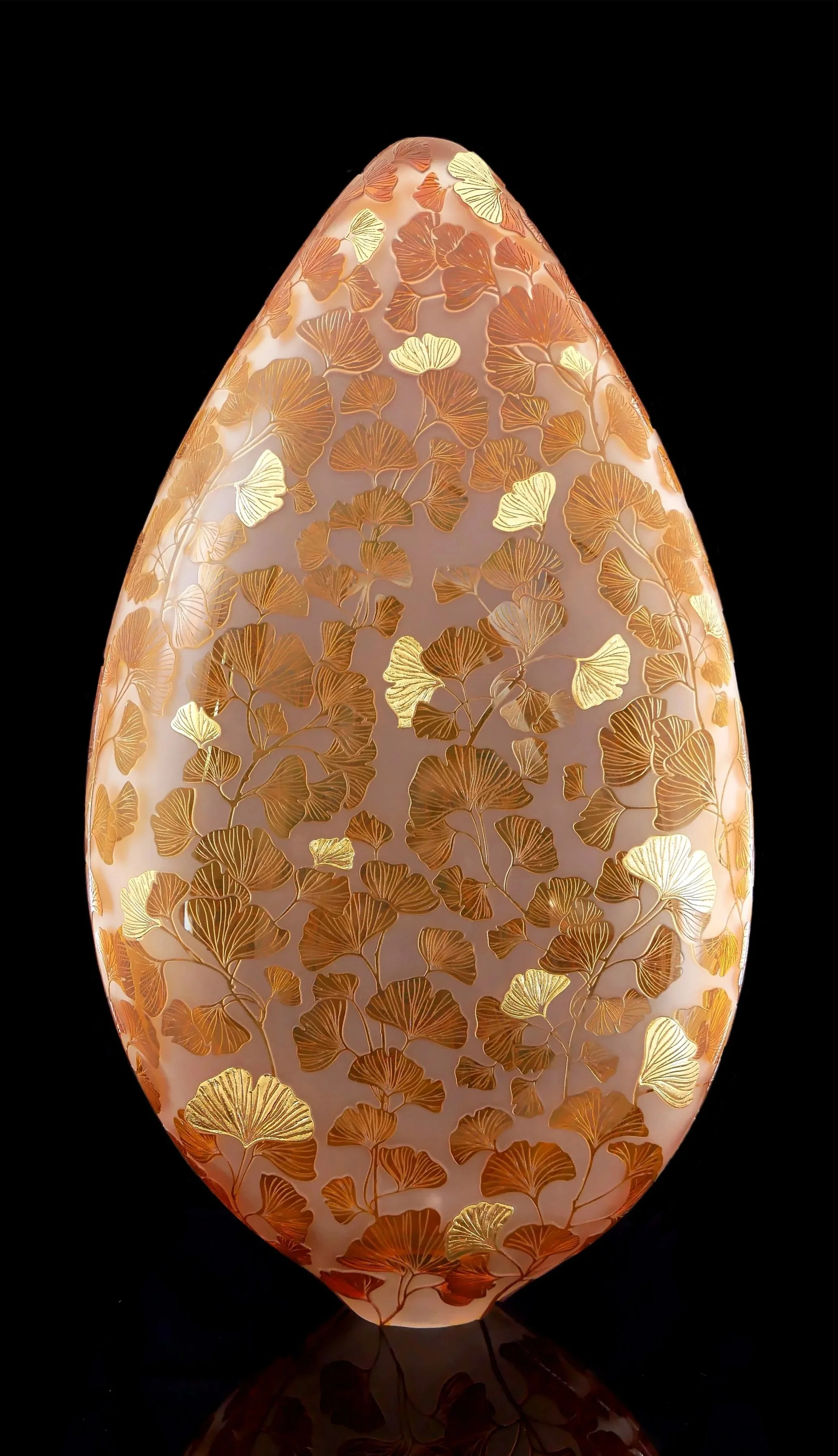
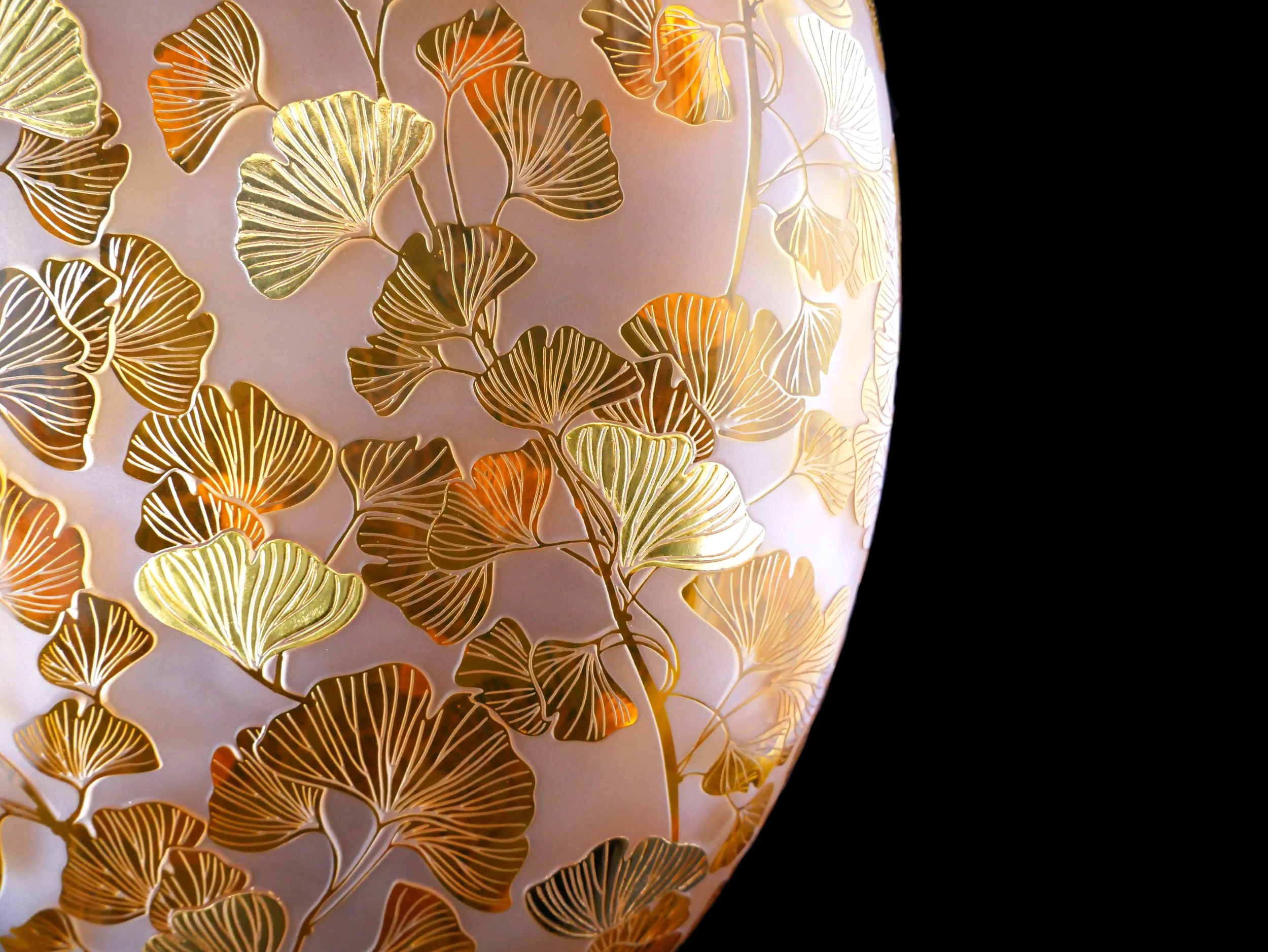
Golden Gingko, from the Botanical series.
Her work today can be found primarily in Australia, including in the permanent collection at the National Gallery of Victoria and the Powerhouse Museum. In the past year, she has also had shows in the US and Italy, and several times has been featured in New Glass Review by Corning Museum of Glass, arguably the most prestigious glass publication in the world.
For Murtagh herself, this recognition still fades into the everyday, which often includes an appointment with fire and an artistic process as unusual and physically taxing as any on earth.
